
Blockchain and Real Estate are two worlds colliding with big promises — faster transactions, smarter contracts, and tokenised ownership. But what’s actually working, what’s still theory, and what’s just hype? This article breaks down the real-world impact of blockchain on property markets, especially in Southeast Asia, with a clear look at use cases, legal barriers, and what’s coming next.
Table of Contents
Introduction
Blockchain and real estate. Two words that don’t naturally go together, yet they keep turning up side by side in startup decks, keynote slides, and crypto-flavored property ads.
The promise is bold. Buy property faster. Cut out the middlemen. Trade pieces of real estate like shares. Own a villa in Bali from your phone.
And to be fair, that pitch taps into real problems. Real estate is notoriously slow, expensive, and paper-heavy. In many Southeast Asian markets, title systems can be confusing, transactions are filled with friction, and trust is earned the hard way. Blockchain, at least in theory, offers a cleaner system.
But here’s the thing. Property doesn’t transform overnight. Governments don’t just put land titles on a blockchain because someone built a slick app. Legal frameworks matter. Cultural trust matters. So do contracts, banks, and the very human layers between offer and ownership.
This article is not here to dismiss blockchain. I’m bullish on its long-term potential. But I’m also wary of how it’s being sold right now. Too many projects overpromise. Too many terms get thrown around without clarity. And too many buyers are expected to make big decisions based on a token and a PDF brochure.
If you’re a foreign buyer thinking about investing in a tokenised property, or a developer curious about on-chain solutions, this piece is for you.
Let’s take a clear-eyed look at what’s real, what’s not yet, and what might be just around the corner.
Why Real Estate Needs Innovation
Before we talk about blockchain, let’s talk about real estate, and why it’s ripe for reinvention.
Property is one of the oldest asset classes on earth, but the way we buy, sell, and manage it hasn’t kept up with the rest of the world. In many countries, the process is slow, paperwork-heavy, and opaque. You might be required to sign contracts in person, wait weeks for title searches, and rely on lawyers or brokers to interpret basic facts.
In Southeast Asia, these challenges are even more pronounced for foreign buyers. Legal systems vary by country, ownership rules are complex, and land registries are often outdated or inconsistent. Even when everything goes smoothly, you’re still navigating a world built on trust, translation, and institutional lag.
From a developer’s perspective, the pain points stack up too. Handling off-the-plan payments, managing investor relationships, or executing rental agreements all take time and staff. There’s often no easy way to verify who owns what or to streamline how money flows through the project lifecycle.
Now overlay that with how people expect the world to work today — instant transfers, global reach, verified records, and low fees. The gap becomes obvious.
This is the space where blockchain enters the conversation. It promises transparency, security, automation, and access.
But the key question is: can it deliver that in real-world property markets — especially ones as complex as Thailand, Indonesia, or Vietnam?
Let’s explore the tools being built to try.
To see how digital transformation is already reshaping the industry, explore our breakdown of how technology is transforming real estate in Southeast Asia.
Real Estate x Blockchain: A Menu of Use Cases
Blockchain isn’t one single solution. It’s a set of tools that can solve different problems depending on how it’s applied. In real estate, we’re seeing several angles emerge — some already in use, others still theoretical.
Let’s break down the key use cases.
Title Systems and Land Registries
This is the most foundational and important application. Property ownership only works when the title is secure, verifiable, and recognised by law. In many countries, the title system is still paper-based, prone to fraud, or requires lengthy manual checks.
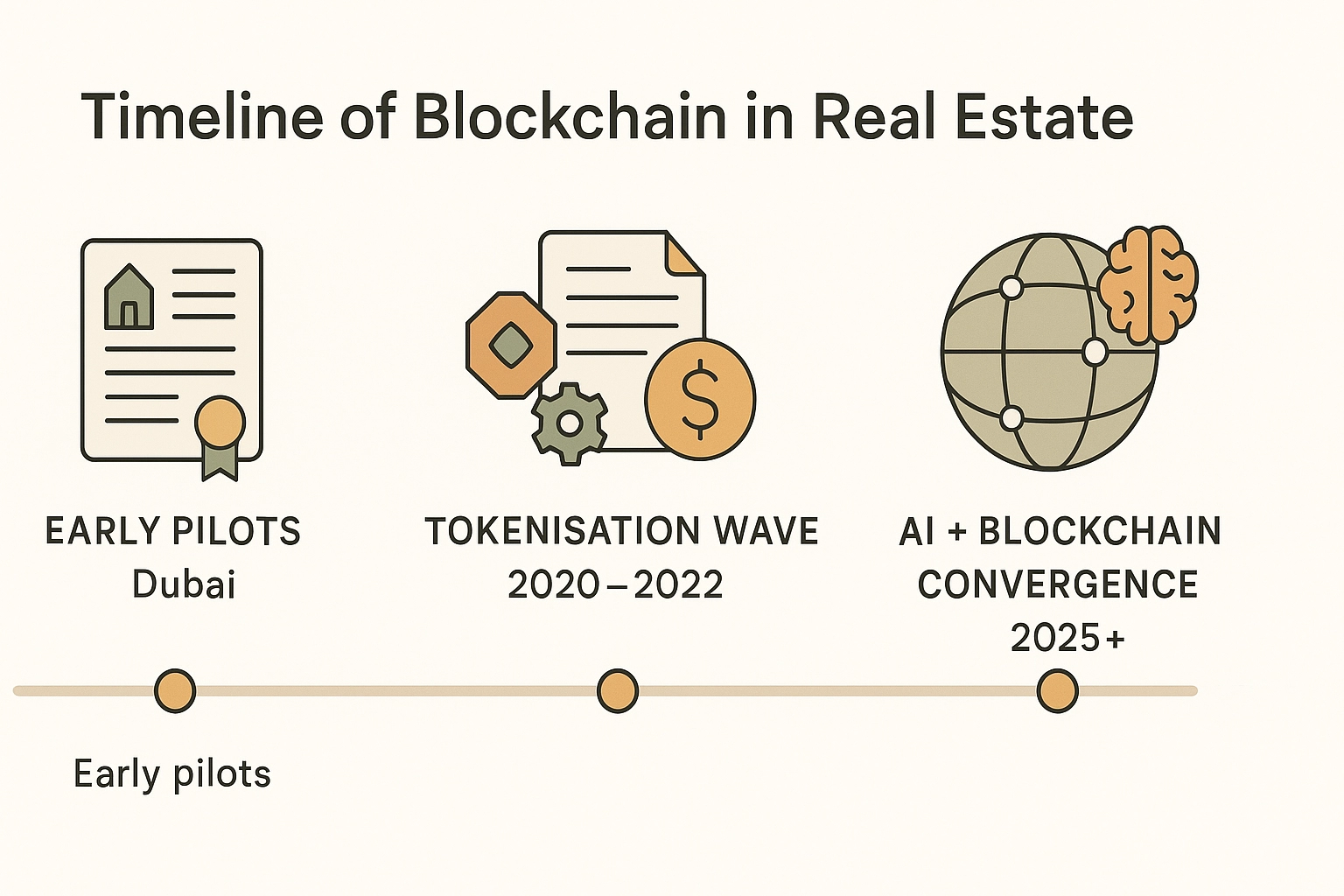
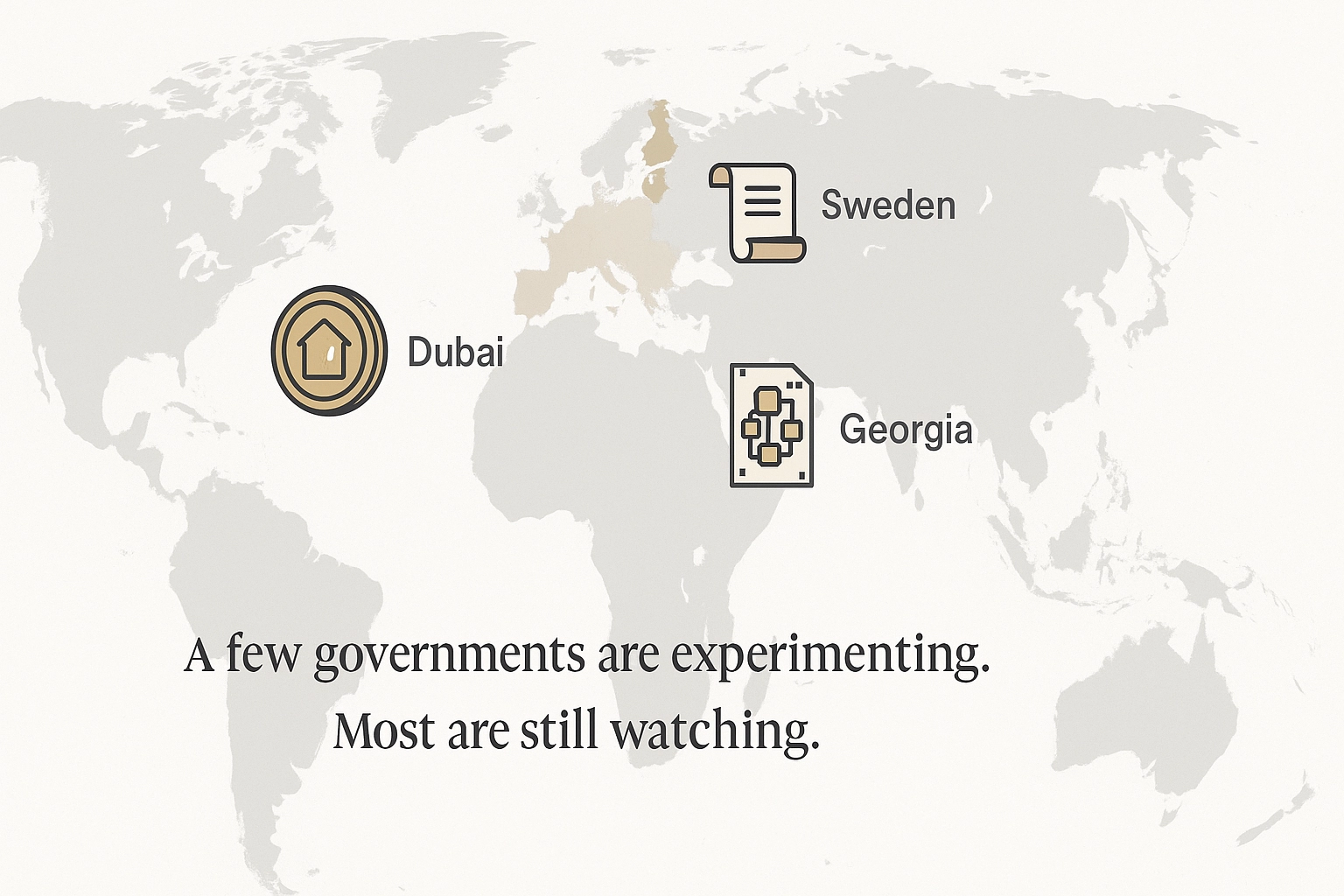
Blockchain offers a new model, a tamper-proof ledger that stores who owns what, when it changed hands, and under what conditions. Dubai has already launched a title tokenisation pilot. Georgia and Sweden have tested blockchain registries. But adoption is slow, because legal systems have to catch up.
In Southeast Asia, this is a future-looking use case. It will take political will and legal reform. But if governments do adopt it, title transparency could improve overnight.
Takeaway: Long term, this is where blockchain could make the biggest difference, but don’t expect your Thai chanote to be on-chain next year.
For more on ownership structures, our leasehold vs freehold guide clarifies the key differences that blockchain could one day impact.
Tokenisation and Fractional Ownership
Fractional ownership isn’t a new idea. People have been co-investing in property with friends and family for decades — pooling funds, splitting costs, and sharing rental income. Later, tech-enabled platforms made it easier to formalise that process through online dashboards, contracts, and investor portals.
What blockchain adds is liquidity, programmability, and transparency. By turning ownership shares into tokens, it becomes possible (in theory) to trade your portion more easily, automate income distribution, and reduce administrative overhead.
It’s a compelling step forward — but it’s still early. Most tokenised platforms are relatively new, lightly regulated, and don’t yet have large, trusted financial institutions backing them. That doesn’t mean they aren’t worth exploring, but it does mean you should tread carefully.
That said, if someone cracks the model — builds a widely adopted protocol that’s legally sound, easy to use, and backed by reputable real estate — it could unlock a massive shift in how people invest in property globally.
Today, platforms like Lofty, RealT, and Arrived already let retail investors buy small shares in real properties and earn rental income. Some offer payouts in USDC stablecoins. Others give platform-controlled dashboards with regular updates.
The potential upside of tokenised fractional investing:
- Lower barrier to entry (invest with $50–$100)
- Passive income from real assets
- Access to properties in different geographies or sectors
- Portfolio diversification without full ownership headaches
The caution flags:
- Limited secondary liquidity
- Varying legal structures — you may own tokens in an LLC, not the asset itself
- Regulatory uncertainty, especially outside the U.S.
- Still largely reliant on platform reputation and backend management
Takeaway:
Fractional ownership is evolving. Blockchain makes it more flexible and possibly more liquid — but legal protection, platform trust, and market maturity still matter. The tools are promising, but you’re not just betting on a property, you’re betting on the protocol behind it.
(Stay tuned we will review some of the leading platforms in the close future)
Considering where to invest in fractional or tokenised real estate? Here’s our guide to property investment opportunities in Phuket, Bali, and Vietnam.
Smart Contracts for Transactions
At their core, smart contracts are lines of code that automatically execute an action once certain predefined conditions are met. In real estate, that could mean:
- Releasing a deposit when both parties sign
- Triggering a stage payment when a construction milestone is verified
- Automatically sending rent to an owner on the first of each month
- Releasing escrow only once a final inspection is confirmed
In theory, they reduce the need for intermediaries, cut out delays, and eliminate disputes around “who’s supposed to do what, and when.” Smart contracts sit on the blockchain, are visible to all parties, and once deployed, can’t be changed without consensus.
Smart contracts can shine in off-the-plan developments, where payments are structured by milestones.
Where It’s Already Being Used
In commercial property and institutional settings, smart contracts are already in use — especially in jurisdictions where legal frameworks are more blockchain-friendly.
- Lease automation: Proptech firms are using smart contracts to manage leasing terms, automate rent collection, and enforce penalties or escalation clauses.
- Escrow and milestone payments: Some real estate funds and commercial developers use smart contracts to manage investor contributions and contractor disbursements, based on verified delivery checkpoints.
- REIT administration: Smart contracts are being explored to replace traditional fund admin — reducing overhead and improving reporting accuracy.
Platforms like Propy in the U.S. have processed fully blockchain-based closings for select properties, including smart contract-controlled escrows and on-chain signatures.
Even if these cases aren’t widespread yet, they show that smart contracts are more than a proof of concept — they’re starting to embed into serious real estate operations where efficiency matters.
What About Southeast Asia?
In Southeast Asia, smart contracts remain largely a back-office tool or theoretical idea. There are three main barriers:
- Legal recognition: Most governments in the region do not yet treat smart contracts as legally enforceable documents. A Thai or Indonesian land office will still require wet signatures and notarised paperwork to process a transfer.
- Manual steps: KYC, bank transfers, title updates — these all still rely on legacy systems. Even if the contract automates the logic, the institutions involved can’t yet interface with it.
- Professional trust gap: Lawyers, agents, and regulators are often wary of fully automated processes. The technology may work, but adoption is held back by a lack of comfort and training.
That said, there is real potential, especially in the off-the-plan segment where payments are made in stages. A smart contract system could securely hold deposits, release funds to the developer only after verified progress, and give buyers peace of mind.
Takeaway
Smart contracts won’t replace legal paperwork in Southeast Asia just yet. But in the right context, commercial deals, developer payment automation, pre-build liquidity and backend financial flows, they offer real efficiency gains.
As regulation matures and systems become more interoperable, we may see smart contracts shift from novelty to necessity. For now, treat them as powerful infrastructure, but not a substitute for trusted legal advice.
Crypto Payments and Remittance
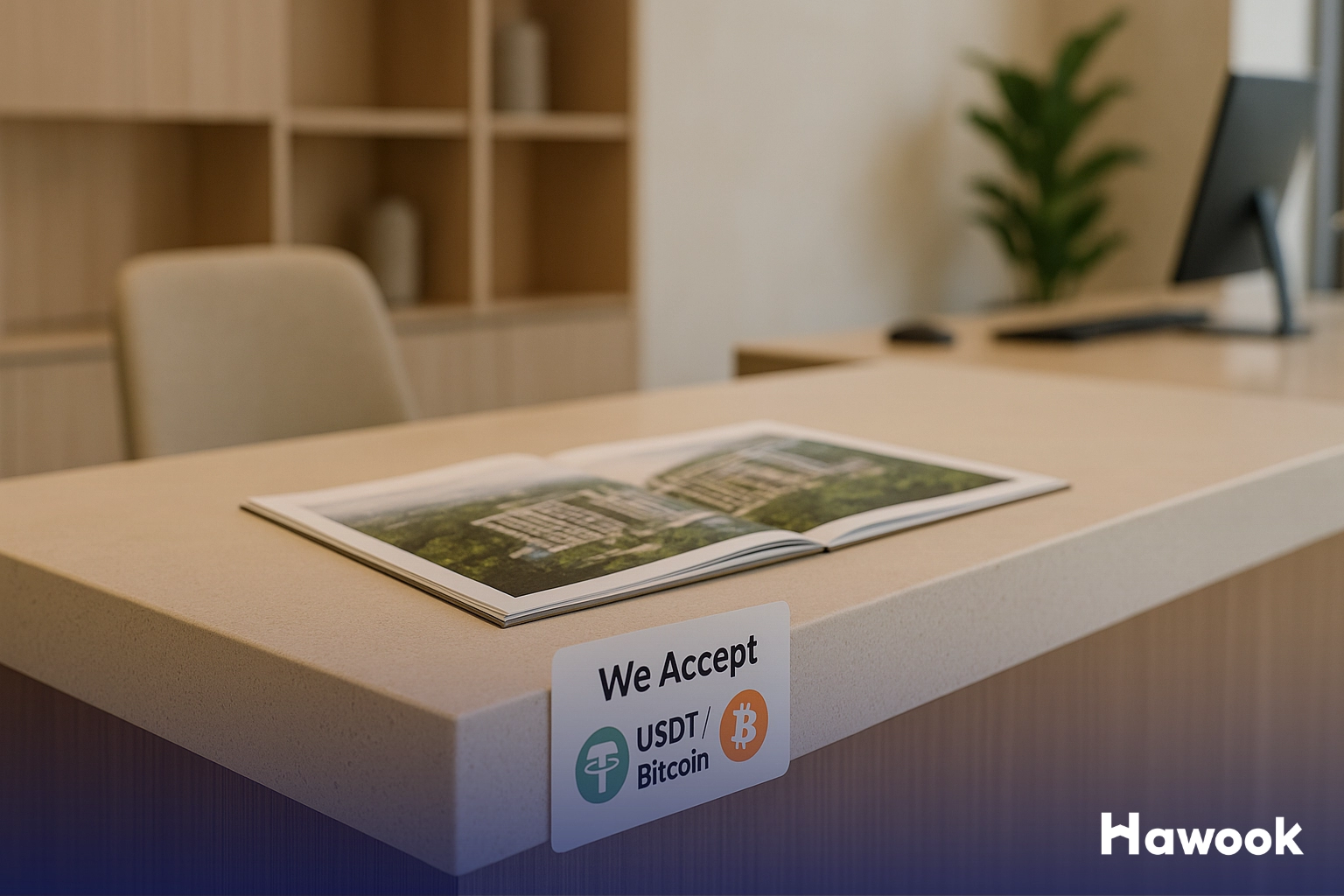
This is one of the few blockchain applications that’s already working in parts of Southeast Asia. Some developers in Phuket, Bangkok and Bali are now accepting crypto (usually USDT or BTC) for property purchases.
It’s especially useful for:
- Buyers living abroad
- Avoiding bank delays or currency fees
- Tapping into crypto wealth without converting to fiat first
However, you still need to settle the title and paperwork using fiat currency in most cases. Crypto may be used for the transaction — but it doesn’t bypass ownership laws, due diligence, or foreign restrictions.
Takeaway: Crypto payments are here. Just make sure you work with a broker or legal advisor who understands how to bridge crypto with local regulations.
Learn how to buy property with crypto in Thailand, and what legal steps are still required to secure the title.
Developer Tools and Infrastructure
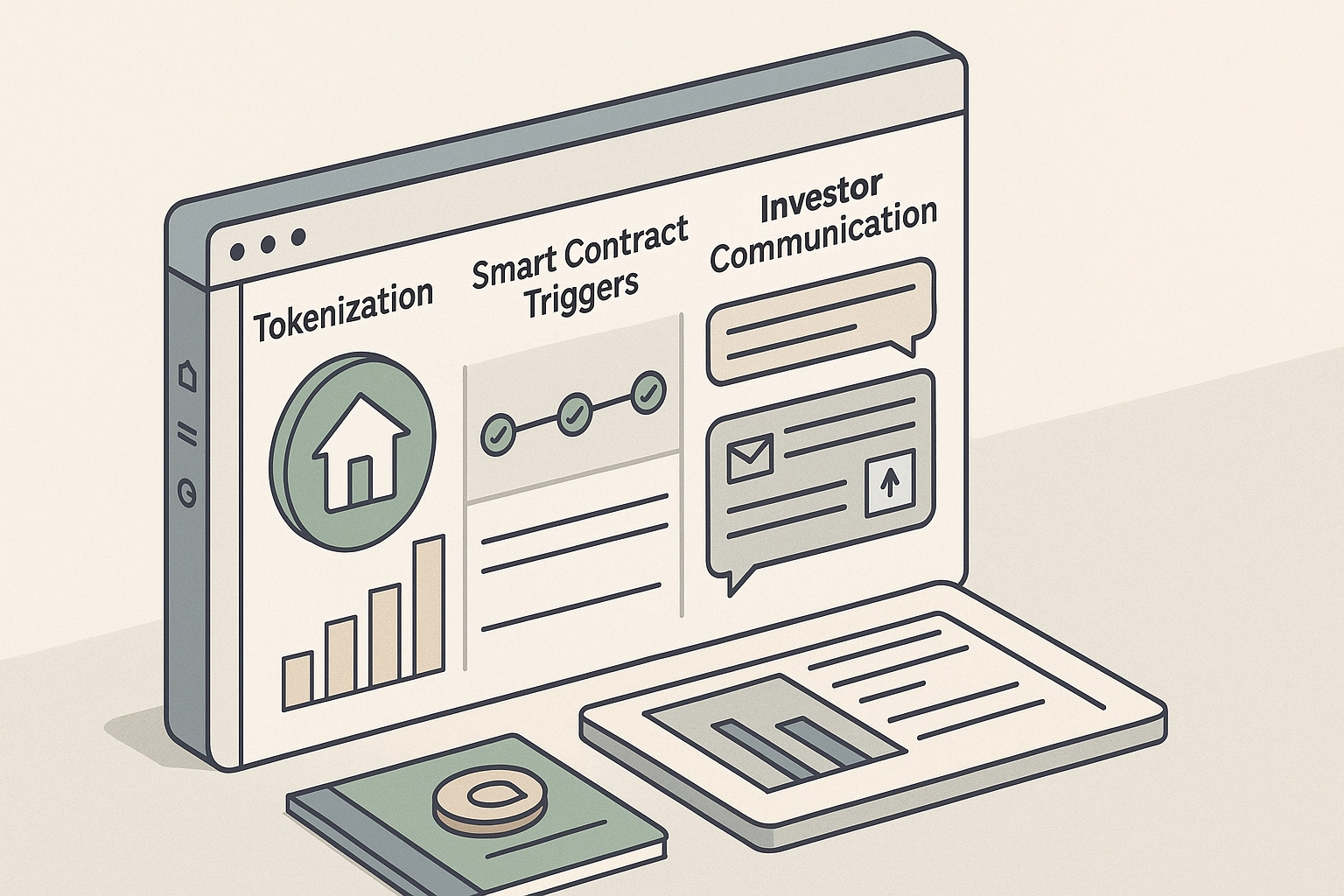
Not all blockchain innovation in real estate is buyer-facing. Some of the most interesting tools are being built for developers and property managers, quietly reshaping how projects are funded, managed, and communicated long before a property hits the market.
While these tools may not make headlines, they offer real potential behind the scenes, especially for developers selling to international buyers, or managing off-the-plan projects where trust and transparency are constant challenges.
What’s Happening Behind the Scenes
Some blockchain platforms are already offering modules to help developers:
- Tokenise future revenue to raise capital pre-construction
Instead of a single high-risk investor or a bank loan, developers can fractionalise early-stage equity or revenue rights to onboard multiple backers. - Automate payment milestones with smart contracts
Progress-verified payouts reduce disputes, increase transparency for buyers, and may lower reliance on escrow intermediaries. - Use NFT-style identity assets to give buyers access to gated project updates
This can improve engagement, reduce administrative overhead, and give buyers a sense of verified participation.
Tools like smart contracts and digital dashboards are helpful — but only if paired with a trustworthy builder. Here’s how to evaluate property developers in Southeast Asia.
A New Concept: Digital Property Passports
Now imagine this:
When a buyer commits to an off-the-plan unit, instead of a boring invoice and paper receipt, they receive a digital asset, a token or NFT that represents their specific villa or condo unit.
- This digital “passport” lives on the blockchain, only accessible via their wallet.
- As payments are made, its metadata updates to reflect progress.
- It unlocks access to a buyer dashboard, with construction updates, chat with the developer, payment logs, maybe even VR previews. (Yes this can be sent via email)
- In theory, it could even be transferable, giving buyers a flexible exit path if they encounter financial stress or need to sell mid-construction.
It’s not mainstream yet, and yes, there are big risks. Developers wouldn’t want people panic-selling before handover, however if demand is strong that increase in price could be easily reflected also. Resale regulation would be a concern. And legal recognition is still a hurdle. But this concept feels inevitable if tokenisation and smart contract infrastructure become standard.
It’s the bridge between speculative liquidity and emotional experience.
It gives buyers something to hold, even when the walls haven’t gone up yet.
So, Will These Tools Catch On?
The upside is clear, smoother capital flow, lower admin costs, and better buyer engagement.
The downside?
- Implementation is complex
- Legal clarity is lacking
- And many of these tools don’t reduce complexity, they just shift it into a new format (and one most developers aren’t trained in yet)
If you’re a developer, especially one marketing to global buyers, blockchain infrastructure is worth exploring. You don’t have to tokenize everything or build on-chain platforms overnight. But small steps, like smart-contract milestone payments or verified buyer dashboards, could improve trust and operational clarity.
Long term, if tokenisation becomes default and legal frameworks catch up, the real estate market could become radically more efficient, and more liquid.
And when that happens, the internet’s nerds won’t just be trading coins. They’ll be trading condos, apartments, and entire floors, in real time. Just don’t get ahead of yourself until the real-world rails are ready.
Who’s Doing What: Companies to Watch
The blockchain x real estate space is filled with ideas, but only a few companies are actually building products that are being used by real buyers, investors, or developers today. Below is a snapshot of platforms worth watching, grouped by use case. Some are more mature than others, and none are perfect, but they offer a glimpse into where this movement is headed.
🧾 Title + Land Registry
Dubai Land Department (DLD)
📍 Dubai, UAE
– Government-backed blockchain title registry
– Recently launched pilot for tokenised property deeds
🔗 smartdubai.ae
ChromaWay
📍 Sweden, India, Latin America
– Working with land offices to build blockchain-based registry systems
🔗 chromaway.com
📈 Tokenised Investment Platforms
Lofty
📍 USA
– Buy shares in rental properties
– Daily yield in USDC
🔗 lofty.ai
RealT
📍 USA
– Tokenised residential properties
– Monthly payouts, regulated offering
🔗 realt.co
Arrived
📍 USA
– Retail-accessible property investing
– Short- and long-term rentals
🔗 arrived.com
Elevated Returns
📍 Switzerland / SEA
– Security token issuance for high-end assets
– SEA-focused tokenisation including in Thailand
🔗 elevatedreturns.com
🏗️ Developer-Facing Capital + Infrastructure Tools
USP (United States Property)
📍 USA
– Helps developers raise pre-construction capital via tokenised offerings
– Focus on fractional equity for small investors
🔗 usp.io
RedSwan CRE
📍 USA / Global
– Commercial real estate tokenisation platform
– Raises capital via security tokens for CRE assets
🔗 redswan.io
Brickken
📍 Spain / Global
– Toolkits for real estate tokenisation and investor onboarding
– Suited for developers or project sponsors
🔗 brickken.com
⚙️ Smart Contracts + Escrow Automation
ShelterZoom
📍 USA
– Offers smart contract tools for secure digital real estate transactions
– Includes escrow management and contract tracking
🔗 learnblockchain101.com
Propy
📍 Global
– One of the first to offer blockchain-based closings and NFT title deeds
– Active in pilot transactions in the U.S. and abroad
🔗 propy.com
Uniksystem
📍 Portugal / EU
– Smart contract automation for legal workflows including real estate
– AI-powered documentation and payment triggers
🔗 uniksystem.com
🧾 NFT-Based Identity + Buyer Experience
Propy
📍 Global
– Uses NFTs to represent property ownership or buyer commitment
– Offers digital dashboard access to verified owners
🔗 propy.com
LynKey
📍 SEA focus
– Real estate + hospitality experience platform using NFTs
– NFT-holders access property-related perks and services
🔗 intelligenthq.com
TokenHouse
📍 Emerging / Global
– Uses NFTs to grant access to digital dashboards and ownership tracking
– Focus on transparent digital representation of investor participation
🔗 intelligenthq.com
💸 Crypto Payment Support in SEA
Sunway Estates / Crypto Property Thailand
📍 Thailand
– Brokers helping buyers pay with USDT/USDC
– Thai legal closing still required
🔗 sunwayestates.com
HOMA (emerging)
📍 Phuket, Thailand
– Early mention of blockchain-backed models for co-living/residence investments
– Worth watching if tokenised models emerge
🔗 homa.co
//Mention Phuket 9 properties and accepting crypto payments anywhere.
⚠️ What to Watch For
A few things to keep in mind when evaluating platforms:
- Legal standing: Can you actually own the underlying property, or just a token linked to it?
- Jurisdiction: Many platforms operate in legal grey zones or are limited to certain countries.
- Liquidity: Can you sell your tokens easily, or are you stuck waiting for a buyback?
- Regulatory compliance: Look for SEC exemptions, sandbox licenses, or regulatory audits.
What’s Not Real Yet….. and Why That Matters
If you’ve spent more than five minutes on Twitter or sat through a crypto pitch deck lately, you’ve probably heard that “blockchain is revolutionising real estate.” But let’s be clear: a lot of what’s being marketed right now isn’t real. Or at least, not real yet.
You Can’t Tokenise Away the Law
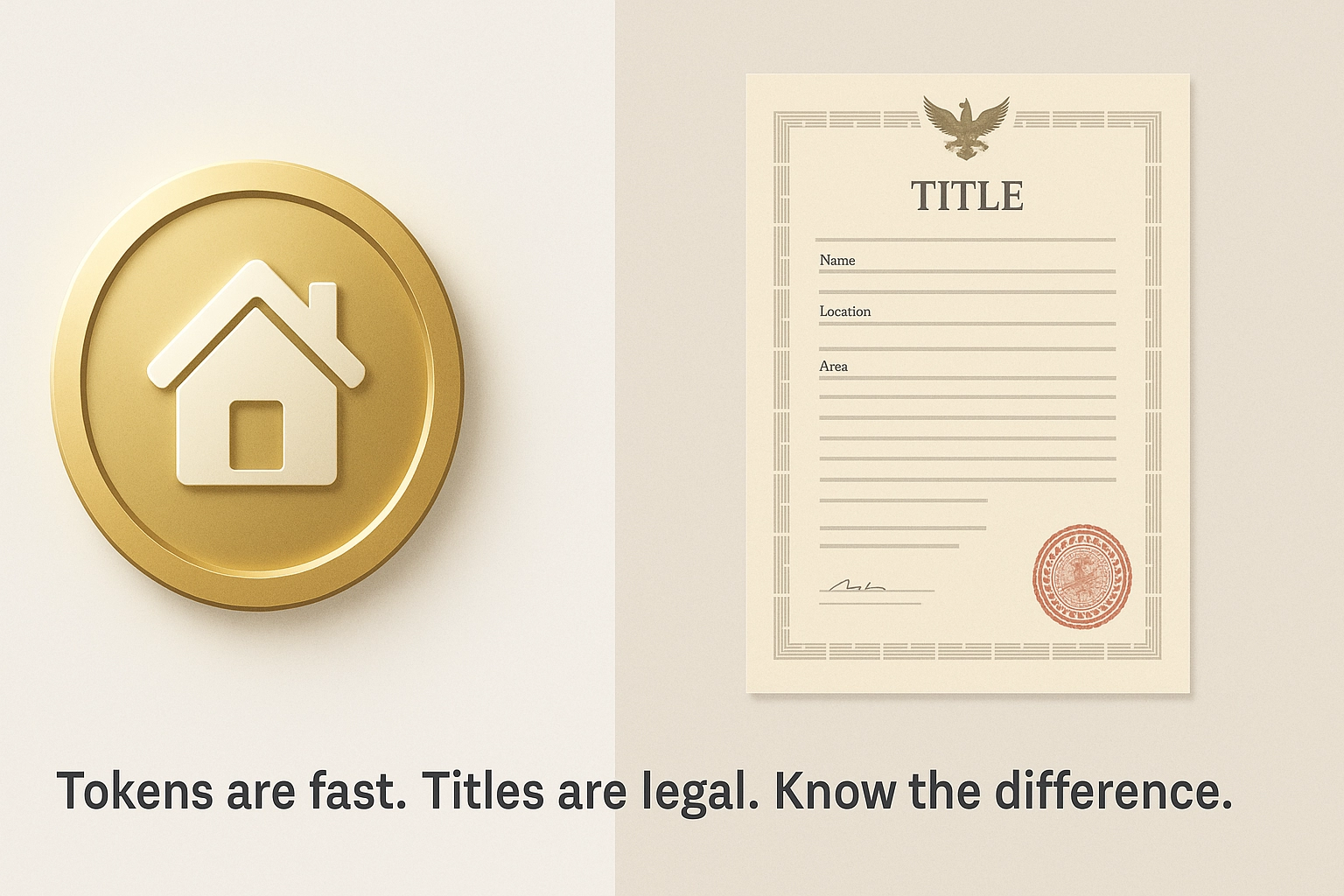
Tokenisation might make it easy to slice up a villa into 10,000 digital shares. But unless those shares are legally tied to a real-world asset, via recognised title, contracts, or regulation, you’re just holding a digital promise.
Most countries (including Thailand, Indonesia, and Vietnam) do not legally recognise on-chain property ownership. That means your token may represent a claim to ownership, or a revenue stream, but it isn’t a title deed. If the local land office doesn’t know who owns the property, the blockchain doesn’t matter.
Title on Chain? Not Yet.
Yes, Dubai and Sweden have made progress. But even in advanced markets, the process of putting national land registries on-chain is slow. It takes legal reform, political will, and deep tech integration.
In Southeast Asia, it’s even harder. Most countries operate through paper-based land departments with highly manual systems. In many cases, even getting a scanned copy of a chanote or strata title is difficult, let alone syncing it with a blockchain registry. This isn’t something a startup can fix overnight.
Fractional Ownership ≠ Ownership Security
Fractional investing sounds great, and it can be. But many platforms are still in early stages, and few are fully regulated. Some give you ownership in a company that owns the property. Others give you a claim on rental income.
In either case, if something goes wrong, legal disputes, management failure, or token devaluation, you may have no real recourse. Always check the structure. Always ask: “Do I actually own the property, or just a token that hopes to track it?”
Renderings, Tokens, and No Real Deliverables
One growing trend we’re seeing is the blending of off-the-plan property sales and blockchain marketing. A developer might issue NFTs or tokens for a yet-to-be-built villa, wrapped in smart contracts or DAOs. The problem? You’re still buying into a construction project, often in a foreign country, with no protection beyond the PDF brochure.
As with any pre-construction project, the usual risks still apply, delays, changes, insolvency, poor finishes. Blockchain doesn’t eliminate those. It just adds a new layer that needs just as much scrutiny.
💡 What to Do Instead
- Be excited about the tech, but invest in what’s real now, not just what’s promised.
- Work with brokers, lawyers, and developers who are crypto-aware but grounded.
- Ask tough questions. If a platform can’t explain how ownership is secured, it’s a red flag.
- If you’re a developer, focus on backend innovation and transparency, don’t just tokenize for the sake of it.
The Road Ahead: Signals Worth Watching
Blockchain is not going to fix real estate overnight. But behind the noise, smart people and serious projects are laying foundations for change. If you’re an investor, developer, or even just curious, here’s what’s actually worth keeping an eye on.
Governments Are Getting Involved, Slowly
When it comes to land and title, governments are the gatekeepers. Without their participation, there’s no legal recognition of ownership on-chain.
- Dubai is the benchmark. Their Land Department is already testing tokenised title deeds.
- Georgia and Sweden have run successful pilots.
- Thailand and Indonesia are nowhere close, but early conversations and sandbox programs could be steps in the right direction.
The intersection of AI and blockchain in real estate is also gaining traction, especially in data verification and risk scoring.
Signal to watch: If a national land office opens a blockchain-based registry pilot or allows tokenised titles to integrate with legal processes, it’s a big deal.
Institutional-Grade Tokenisation Is Growing
More platforms are targeting regulated, yield-producing assets with real documentation and investor protection. These aren’t meme coins or unregistered tokens, they’re fully audited, SEC-exempt offerings with stable returns.
This is where fractional ownership starts to look like a serious investment product, not a crypto experiment.
Signal to watch: Platforms offering Regulation D, S, or other compliant offerings. Look for real properties, documented yields, and working exit paths.
(We will be digging into this over the coming months)
Stablecoins and Cross-Border Payments
This is the most tangible blockchain benefit right now, especially in Southeast Asia. Stablecoins like USDT and USDC are already being used in real estate transactions to:
- Speed up deposits
- Avoid banking delays or high transfer fees
- Bridge international buyers with Thai developers
You still need a solid broker, and the legal paperwork doesn’t change. But the transaction layer is evolving, and it’s happening today.
Signal to watch: More developers openly accepting stablecoins, and more legal firms offering crypto-compatible escrow or settlement support.
Blockchain + AI + Data
In the background, AI and data platforms are beginning to blend with blockchain to improve:
- Title verification
- Property identity (on-chain “passports” for buildings)
- Developer reputation scoring
- Rental income tracking for investors
This space is still early, but promising, especially for off-the-plan or remote purchases where trust and transparency are critical.
Signal to watch: Startups that merge blockchain identity with AI-powered due diligence or valuation.
The Next Wave Will Be Quieter
In 2021, blockchain real estate hype was loud and messy. Now, the real work is happening quietly, in infrastructure, compliance, and legal frameworks. The next generation of builders won’t be trying to wow you with jargon. They’ll just make things work better.
The big transformation will come from slow-moving policy changes, serious builders, and boring-but-legal frameworks. That’s where to focus.
Conclusion
There’s no question that blockchain has the potential to transform real estate. The technology is built for the kind of problems this industry faces: slow processes, paper trails, opaque records, and limited access. On paper, it all makes sense.
But property doesn’t live on paper. It lives in legal systems, title deeds, construction timelines, and human relationships. And that’s where most blockchain real estate projects run into trouble.
If you’re a buyer, especially in Southeast Asia, the message is simple: don’t confuse innovation with infrastructure. Blockchain can enhance how you pay, how you access opportunities, and how platforms build trust, but it doesn’t replace due diligence, title checks, or sound legal advice.
If you’re a developer, there’s real opportunity to experiment, especially behind the scenes. Smart contracts for payment milestones, investor dashboards, stablecoin deposits… these things can improve how you operate, without overpromising to your buyers.
I’m bullish on the long game. I believe titles will eventually be stored on-chain. I think fractional ownership will become more regulated and accessible. And I think blockchain-backed transparency will be a powerful unlock for global property investment.
But I’m also cautious about where we are today. Too many projects are rushing to sell a token before they’ve built a house, or a legal foundation to support it.
So take the tech seriously. Ask better questions. And stay focused on the fundamentals.
Because in real estate, hype fades fast. Ownership lasts a lot longer.




Join The Discussion