

Buying property in Thailand isn't just about choosing between a condo and a villa. It's about understanding how ownership works over the long term. This guide explores Freehold vs Leasehold Thailand, breaking down purchase costs, ongoing ownership expenses, resale considerations, inheritance, and the financial trade-offs over a 30-year horizon. Whether you're buying a holiday home, retirement property, or investment, you'll gain a clearer understanding of which ownership structure best aligns with your lifestyle and financial goals.
Table of Contents
Imagine two friends arriving in Phuket in the same year.
Both have saved enough to buy a holiday home. Both plan to spend more time in Thailand, escape colder winters, and maybe earn some rental income while they’re away.
One chooses a modern freehold condo overlooking the sea.
The other falls in love with a private pool villa tucked away in a quiet hillside neighborhood.
At first, both feel they’ve made the right decision.
The condo owner appreciates the simplicity of apartment living. The villa owner enjoys morning coffee by the pool, surrounded by tropical gardens. They each have the lifestyle they wanted.
Now imagine fast-forwarding thirty years.
How have their finances changed? Which property has held its value? Which has cost more to maintain? What happens if they decide to sell, pass the property on to family, or simply move somewhere new?
Those are the questions this article explores.
This isn’t about proving that a freehold condo or a leasehold villa is the “better” choice. Lifestyle matters. Some buyers happily pay more for privacy and outdoor space, while others value convenience and long-term flexibility. Neither approach is automatically right.
Instead, we’ll look at what the numbers can tell us over a 30-year ownership journey. We’ll compare purchase costs, ongoing expenses, resale considerations, and how different ownership structures work under Thailand property ownership for foreigners.
Whether you’re buying property in Thailand as a foreigner for retirement, investment, or simply a place to enjoy a few months each year, understanding the financial trade-offs today can make tomorrow’s decisions much easier.
Before We Start: These Two Properties Aren’t Really Competing
It’s easy to compare a luxury condo with a private villa. They might sit in the same neighborhood, cost a similar amount, and even attract the same buyer.
You’re browsing listings in Phuket, for example, and you find a beachfront condo for 25 million baht. Just a few kilometres away, there’s a beautiful pool villa for 18 million baht.
At first glance, the villa feels like the better deal. More space. More privacy. Your own garden and swimming pool.
But beneath the photos and floor plans, these purchases work very differently.
One gives you the right to own your property indefinitely. As long as you follow the normal rules of ownership, there’s no expiry date attached to it.
The other gives you the right to use the land for a fixed period, typically up to 30 years. You may own the villa sitting on the land through a separate legal arrangement, but your right to occupy the land itself is tied to the length of the lease.
Only once you understand that difference do the legal terms become useful.
The first ownership structure is called freehold, where ownership doesn’t expire.
The second is called leasehold, where you’re purchasing the right to use the land for an agreed period rather than owning it outright.
Neither structure is unusual in Thailand. Both are widely used by foreign buyers. They simply solve different problems and come with different financial considerations.
| Feature | Freehold Condo | Leasehold Villa |
| Ownership | Own the property indefinitely | Lease the land for a fixed term, typically up to 30 years |
| Land rights | Shared ownership interest through the condominium | Right to use the land during the lease period |
| Financing | Generally easier to finance and refinance | Financing options are usually more limited |
| Resale | Often appeals to a broader pool of buyers | Buyer interest depends partly on the remaining lease term |
| Inheritance | Can usually be passed to heirs | Rights depend on the remaining lease and legal arrangements |
The key takeaway is simple: you’re not just comparing a condo with a villa. You’re comparing two very different ownership structures, each with its own long-term financial story.
The First Number Everyone Notices: Purchase Price
Picture yourself browsing property listings in Phuket.
You come across a modern freehold condo priced at 25 million THB. A few minutes later, you find a spacious leasehold villa with a private pool for 18 million THB.
For many buyers, the reaction is immediate.
“Why would I spend an extra 7 million baht for a condo?”
It’s a perfectly reasonable question. After all, the villa appears to offer more of everything. More living space. More privacy. A garden. A pool. Perhaps even better views.
When we’re making a large purchase, our brains naturally focus on the price tag. It’s the easiest number to compare, and it often feels like the biggest factor in the decision.
That’s one reason leasehold villas attract so much attention. They can look like exceptional value when placed beside a similarly located freehold condo.
But property ownership is a bit like buying a car. The purchase price gets you through the showroom door, but it doesn’t tell you what the next ten, twenty, or thirty years will look like.
A property’s financial story continues long after the keys are handed over. The ownership structure, ongoing costs, flexibility, and future options all play a role in what that initial purchase ultimately costs you.
| Example Purchase | Price |
| Freehold condo | 25 million THB |
| Leasehold villa | 18 million THB |
| Difference at purchase | 7 million THB |
That 7 million baht difference is real, and it can shape the decision from day one. But it’s only the opening chapter. To understand the full picture, we need to look beyond the purchase price and see how ownership unfolds over the decades ahead.
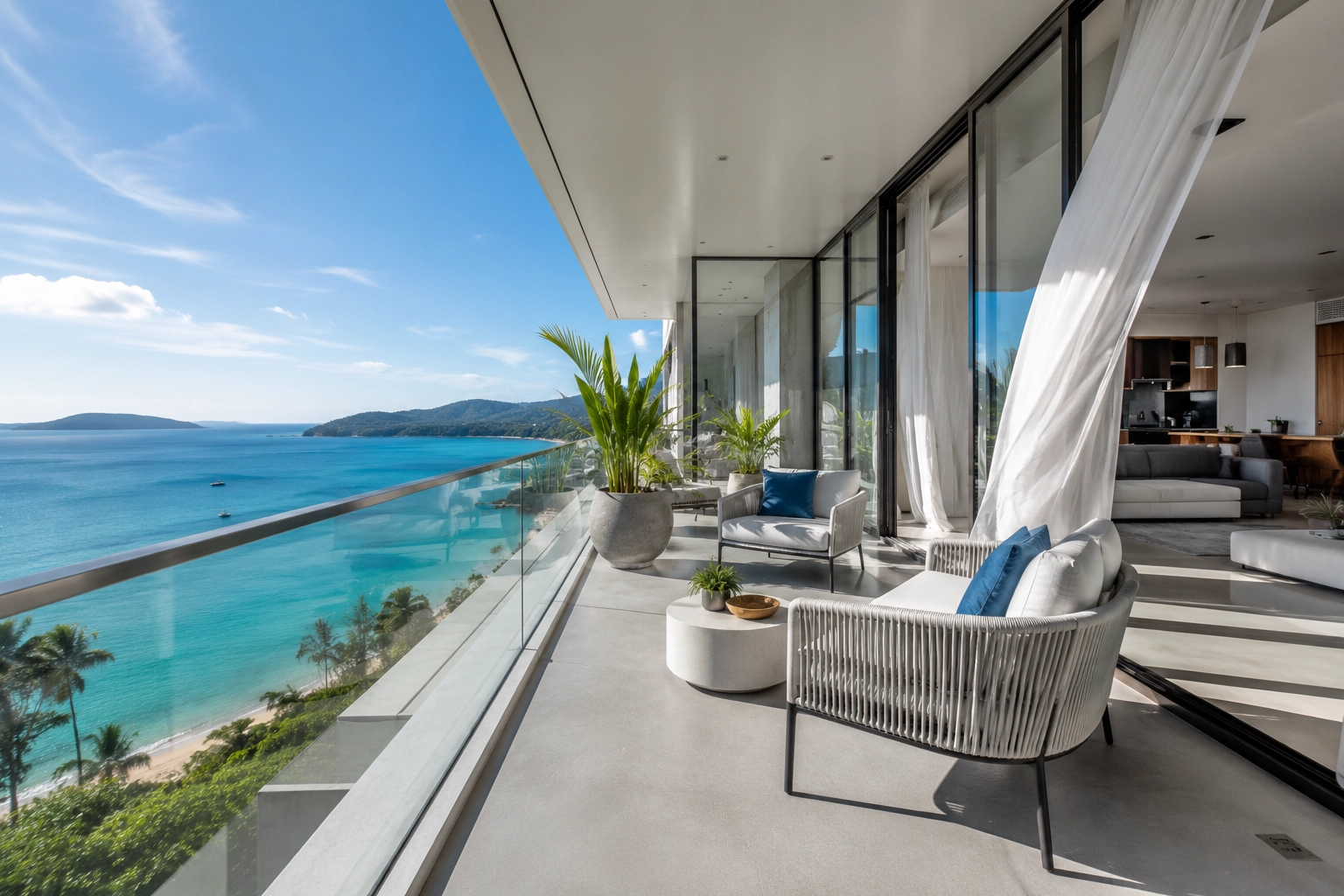
Why Does a Freehold Condo Often Cost More?
Once buyers understand that a freehold condo and a leasehold villa are different ownership structures, another question usually follows.
“If the condo is smaller, why is it more expensive?”
A large part of the answer comes down to something you can’t see in the floor plan.
Foreign buyers in Thailand can only purchase a limited number of condominium units under direct ownership. This limit is known as the foreign quota, and once it’s full, no additional freehold units in that building can be sold to overseas buyers until another one changes hands.
That scarcity naturally creates value.
It’s similar to buying a seat on a direct flight. The destination is the same, but when there are only a handful of seats available, people are often willing to pay more for the convenience and certainty.
The same idea applies to freehold ownership.
Many buyers are happy to pay a premium because they know they own the property indefinitely. There isn’t a countdown attached to their ownership, and they have greater flexibility if they decide to sell, refinance, or leave the property to their family in the future.
This doesn’t automatically make a freehold condo a better purchase. Some buyers would gladly exchange that legal certainty for the extra space, privacy, and lifestyle that a villa can offer.
The premium simply reflects what the market values. It’s the price many buyers are willing to pay for a limited ownership opportunity that offers long-term security.
Before comparing two properties, it’s worth looking beyond the obvious features.
Look beyond the brochure:
☐ Purchase price
☐ Number of bedrooms
☐ Swimming pool
☐ Sea or mountain view
Also compare:
☑ Ownership structure
☑ Length of ownership
☑ Future resale flexibility
☑ Inheritance options
☑ Your long-term plans
A beautiful property can capture your attention in minutes. Understanding what you’re actually buying takes a little longer, but it’s often the part that matters most years down the road.
The Hidden Costs Nobody Talks About
Imagine you’ve owned a beachfront condo in Phuket for a few years.
One morning you notice that one of the elevators isn’t working. A few months later, the building is being repainted. During the rainy season, the roof above the shared lobby develops a leak that needs repairing.
As the owner, you don’t have to organise any of it yourself.
The building’s management team arranges the contractors, oversees the work, and pays for these larger shared expenses using the monthly maintenance fees collected from all owners. These fees are commonly called CAM fees, short for Common Area Maintenance. Think of them as a shared household budget for everything everyone uses together, from lifts and gardens to security, swimming pools, and hallways.
Many developments also collect money into a sinking fund, which is simply a long-term savings account for major repairs that happen every decade or so, such as replacing lifts or repainting the entire building.
Now picture a different morning.
This time, you own a standalone villa.
After a heavy tropical storm, a few roof tiles have shifted. The pool water needs balancing after days of rain. The garden has grown quickly during the monsoon season, and you’ve spotted termites near a wooden fence. None of these jobs are unusual, especially in Thailand’s tropical climate, but someone still has to arrange them.
That someone is usually you, or a property manager you’ve hired.
Owning a villa often means having more control over your home. You decide when to repaint, who maintains the pool, and how the landscaping should look. Many buyers see that flexibility as part of the appeal. It also means more day-to-day decisions and a wider range of ongoing expenses.
| Ongoing Responsibility | Freehold Condo | Leasehold Villa |
| Building maintenance | Shared through management | Owner arranges repairs |
| Swimming pool | Shared if part of the development | Private pool requires regular servicing |
| Garden care | Shared landscaping | Owner manages private garden |
| Pest control | Usually coordinated for common areas | Owner arranges treatment as needed |
| Storm-related repairs | Shared for common structures | Owner manages repairs to the home |
| Security and common facilities | Covered through CAM fees | Varies by estate, with private responsibilities remaining |
Neither approach is inherently better. Some buyers enjoy the simplicity of shared management, while others are happy to trade that convenience for the privacy and independence of a villa.
The important point is that the purchase price is only one part of the financial picture. The annual cost of owning and caring for the property can have just as much influence on your budget over the years ahead.

How Ownership Changes Over Time
Buying a property is exciting because everything feels new.
But ownership isn’t a single moment. It’s a journey, and your relationship with the property naturally changes as the years pass.
Year 1: Settling In
The first year is usually about making the place your own.
You might buy new furniture, learn which café makes the best morning coffee, and discover that Phuket has two seasons rather than four. Financially, most of your attention is still on the purchase itself. The monthly costs feel manageable, and long-term ownership is probably the last thing on your mind.
At this stage, both a freehold condo and a leasehold villa can feel equally rewarding. You’re enjoying the lifestyle you imagined.
Year 10: The Routine Begins
A decade passes surprisingly quickly.
By now, the property has become familiar. Maintenance is no longer occasional. It’s part of regular ownership. Air conditioning systems need servicing, paint starts to fade, appliances are replaced, and you begin budgeting for repairs instead of simply reacting to them.
If you’ve rented the property occasionally, you’ve also learned what guests notice first and which improvements are worth making.
Year 20: Looking Further Ahead
Around the twenty-year mark, your priorities often shift.
Perhaps you’re thinking about retirement. Maybe your children are grown, or your lifestyle has changed. Questions that once felt distant start becoming practical.
Would you keep the property for another decade? Would you sell? Would you renovate before putting it on the market?
Ownership becomes less about the excitement of buying and more about flexibility for whatever comes next.
Year 30: A Different Perspective
Thirty years after collecting the keys, you’re likely looking at the property very differently than you did on day one.
You’re thinking about the years you’ve enjoyed there, the money you’ve spent maintaining it, and the options available to you moving forward. By this point, the ownership structure itself becomes much more important than it seemed at the beginning.
That’s why looking beyond the purchase price matters. The experience of owning a property isn’t defined by the day you buy it. It’s shaped by hundreds of small decisions, expenses, and life changes that unfold over decades.
Why Time Matters So Much
Think about two things you probably own.
The first is a gym membership with no expiry date.
The second is a 30-day visitor pass.
On the first day, both let you walk through the same front door. But as each week passes, the visitor pass becomes a little less valuable because there’s less time left to use it. Once it expires, its value is gone.
Property ownership can work in a similar way.
A freehold property doesn’t have an expiry date attached to your ownership. As long as you continue to own it, the ownership rights remain yours. That doesn’t mean its value will always go up, but time itself isn’t working against you.
A leasehold property is different. You have the right to use the land for an agreed period, often up to 30 years. As that period becomes shorter, the remaining time available to a future buyer also becomes shorter. That’s one reason buyers often pay close attention to how many years are left on a lease.
This doesn’t mean every leasehold property loses value steadily, or that every freehold property increases in value. Local demand, market conditions, the quality of the development, and the condition of the property all continue to play important roles.
The ownership structure is simply another piece of the puzzle.
Here’s a simplified illustration of how the two ownership structures may evolve over time.
| Ownership Timeline | Freehold Condo | Leasehold Villa |
| Purchase | Full ownership begins | Lease period begins |
| Around Year 10 | Ownership continues without a time limit | Plenty of lease term remains, but the remaining period is shorter than when purchased |
| Around Year 20 | Ownership remains unchanged | Remaining lease becomes a more noticeable consideration for future buyers |
| Around Year 30 | Ownership continues | Original lease term may be approaching or reaching its end, depending on the agreement |
This is an illustrative example, not a prediction of future prices.
In a hypothetical scenario, a well-located freehold condo might continue attracting buyers because its ownership rights remain unchanged. A leasehold villa may also remain highly desirable if it offers a great location or lifestyle, but buyers will usually consider the remaining lease term as part of their decision.
Ultimately, property values are shaped by many factors, including location, market conditions, supply and demand, maintenance, and the broader economy. Ownership structure is an important consideration, but it’s only one part of the long-term financial picture.

What If You Sell Before 30 Years?
When people buy property, they often picture themselves keeping it forever.
In reality, life has a habit of changing the plan.
A couple who planned to retire in Phuket may decide to move closer to grandchildren. A remote worker might relocate to another country after a new job opportunity. Someone who bought a holiday home may simply find themselves visiting less often than they expected.
Selling after 8, 12, or 20 years is far more common than many buyers imagine.
That’s why it’s worth thinking about your exit strategy before you even collect the keys.
For a freehold condo, the resale process may be relatively straightforward because the ownership structure remains the same regardless of how long you’ve owned it. Future buyers are purchasing an ownership right that doesn’t have a built-in expiry date. Banks and lenders also tend to be more familiar with financing freehold properties, which may widen the pool of potential buyers.
A leasehold villa can also attract strong interest, particularly if it’s in a desirable location or part of a well-managed development. However, buyers will often look closely at how many years remain on the lease. Someone purchasing with 25 years remaining may see the opportunity differently from someone looking at a property with only 10 or 15 years left.
Financing can also be different. Because the remaining lease becomes part of the purchase, some lenders may be more cautious, which can reduce financing options for future buyers. In those situations, the market may lean more toward cash purchasers.
| Resale Consideration | Freehold Condo | Leasehold Villa |
| Ownership for the next buyer | Continues indefinitely | Depends on the remaining lease term |
| Buyer demand | May appeal to a broader range of buyers | Often influenced by location, price, and years remaining on the lease |
| Financing | Typically more widely available | May be more limited depending on the lender and lease length |
| Questions buyers often ask | Location, condition, management | Location, condition, management, and remaining lease term |
Neither ownership structure guarantees an easier sale. Market conditions, pricing, presentation, and location will always matter. But understanding how future buyers are likely to evaluate each type of property can help you make a more informed decision from the very beginning.
What If You Invested the Difference Instead?
Let’s imagine two buyers standing in front of the same decision.
One buys the 25 million THB freehold condo.
The other chooses the 18 million THB leasehold villa.
That leaves the villa buyer with an extra 7 million baht still sitting in the bank.
Now comes the interesting question.
What if they didn’t spend that money at all?
Instead, they invested it. Perhaps in a diversified portfolio, a business, or another long-term investment. If that money grew steadily over the years, it could become a meaningful asset in its own right.
This is the idea behind opportunity cost.
In simple terms, every time you spend money on one thing, you’re also giving up the chance to use it somewhere else. It’s not about making the “right” choice. It’s about recognising that every decision comes with alternatives.
Of course, the story doesn’t end there.
As the years pass, both properties continue to require care. Whether it’s monthly management fees, repairs, insurance, or maintaining a private pool and garden, ownership comes with ongoing expenses. Some of those costs are shared, while others fall entirely on the owner.
Those annual costs may gradually reduce how much money is available to keep investing elsewhere.
That’s why comparing only the purchase price can sometimes be misleading.
The villa buyer starts with more cash available. The condo buyer starts with a different ownership structure. Over twenty or thirty years, both decisions continue to evolve as investment returns, ownership expenses, and personal circumstances all interact.
The interesting part is that there isn’t a universal winner.
A buyer who values extra living space today may happily accept different long-term financial outcomes. Another buyer may place more importance on flexibility decades from now.
Looking at the purchase price alone is a bit like judging a book by its cover. The opening chapter is important, but it doesn’t tell you how the whole story ends. To make a confident decision, it’s worth considering not just what you spend on day one, but how your money might work for you, and what your property may ask of you, over the years that follow.
Which Ownership Structure Fits Different Buyers?
One of the biggest misconceptions in property is that there’s a single “best” choice.
In reality, the right decision often depends less on the property itself and more on the person buying it.
Two buyers can purchase similar homes, make completely different decisions, and both walk away happy because those decisions reflect their own goals.
Here are four common buyer profiles.
The Lifestyle Buyer
For this buyer, daily life comes first.
They picture quiet mornings by the pool, entertaining friends, or having enough outdoor space for family and pets. Investment returns matter, but they’re only one part of the equation.
Questions to ask:
- Where do I see myself spending most of my time?
- How much privacy is important to me?
- Am I comfortable managing a property more directly?
Ownership characteristics that offer more space or greater long-term flexibility may both have appeal, depending on what matters most to them.
The Long-Term Investor
This buyer spends as much time looking at spreadsheets as property photos.
They think about holding periods, future resale, rental demand, and preserving capital over many years.
Questions to ask:
- How long do I expect to own this property?
- Will resale flexibility matter?
- How important is long-term ownership certainty?
Their decision often starts with financial objectives before lifestyle preferences.
The Retiree
Retirement changes the conversation.
Some buyers want a simple home they can lock up when travelling. Others dream of a spacious villa where children and grandchildren can visit during holidays.
Questions to ask:
- Will this property still suit me in 15 or 20 years?
- How much ongoing maintenance am I comfortable with?
- Could my plans change over time?
Comfort, convenience, and peace of mind often become just as important as the purchase itself.
The Holiday Home Owner
Not everyone plans to live in Thailand year-round.
Some buyers may spend a few weeks or months each year enjoying the property while renting it out when they’re away.
Questions to ask:
- How often will I actually use the property?
- Who will look after it while I’m overseas?
- Does the ownership structure fit my long-term plans?
For these buyers, ease of management can become just as valuable as the property itself.
| Buyer Profile | Main Priority | Questions Worth Asking | Ownership Characteristics to Consider |
| Lifestyle Buyer | Space and everyday enjoyment | How do I want to live? | Privacy, convenience, ongoing management responsibilities |
| Long-Term Investor | Financial goals | What matters at resale? | Ownership duration, flexibility, future marketability |
| Retiree | Comfort and simplicity | Will this suit my future lifestyle? | Maintenance commitments, accessibility, long-term ownership plans |
| Holiday Home Owner | Part-time use | Who manages the property while I’m away? | Ease of management, lock-up-and-leave convenience, future flexibility |
The most suitable ownership structure isn’t determined by a headline or a brochure. It’s shaped by your lifestyle, your financial priorities, and the life you expect to be living years from now. The more honest you are about those goals today, the easier the decision tends to become.
Before You Buy: 10 Questions Worth Asking Yourself
Before comparing floor plans or negotiating a price, take a step back and think about what you want this property to do for you over the years ahead.
These questions don’t have right or wrong answers. They simply help you have more productive conversations with your lawyer, property agent, and financial adviser.
- ☐ How long do I realistically expect to own this property?
- ☐ Am I buying primarily for lifestyle, investment, or a combination of both?
- ☐ What annual ownership costs am I comfortable budgeting for?
- ☐ If my circumstances change, how important will it be to sell the property easily?
- ☐ Could I see myself passing this property on to family in the future?
- ☐ Do I understand exactly what I’m buying and how long those ownership rights last?
- ☐ Have I planned for ongoing cash flow, not just the purchase price?
- ☐ Who will look after the property if I’m living overseas or travelling frequently?
- ☐ Have I asked an independent lawyer to explain the ownership structure before signing anything?
- ☐ Does this property still make sense if my plans look different ten or twenty years from now?
The answers will look different for every buyer. The goal isn’t to reach a particular conclusion. It’s to make sure your decision is based on a clear understanding of your finances, your future plans, and the ownership structure you’re choosing.
Final Thoughts
Choosing between a freehold condo and a leasehold villa in Thailand isn’t about finding a universal winner.
It’s about understanding what each ownership structure offers, and how that fits with your own plans.
Over time, the purchase price becomes just one part of a much bigger picture. The way ownership works, the costs of holding the property, your options if you decide to sell, and your long-term financial goals all shape the experience just as much as the property itself.
For some buyers, a private villa delivers the lifestyle they’ve always imagined. For others, the certainty and flexibility of a freehold condo align more closely with their future plans. Both can be sensible choices when they’re matched with the right expectations.
Perhaps the most valuable lesson is that property should never be judged by photos, brochures, or headline prices alone.
A beautiful swimming pool, a sea view, or a lower purchase price can capture your attention in an instant. Understanding what you’re actually buying, how long those ownership rights last, what responsibilities come with them, and how the property may fit into your life years from now takes a little more time.
That extra time is rarely wasted.
The more clearly you understand the ownership structure behind the property, the easier it becomes to make a decision that feels right not just on the day you buy, but throughout the years that follow.
Frequently Asked Questions
1. Can foreigners own a villa in Thailand?
Foreigners generally cannot own land directly in Thailand. Instead, many buyers purchase a villa using a leasehold, which gives them the right to use the land for a fixed period, often up to 30 years. In some cases, they may also own the building itself through a separate legal arrangement. Before buying, it’s important to have an independent lawyer explain exactly what ownership rights are included.
2. What is the difference between freehold and leasehold in Thailand?
A freehold gives you ownership without a fixed end date, while a leasehold gives you the right to use a property or land for an agreed period. In Thailand, foreign buyers can own eligible condominium units freehold, while villas are commonly purchased using leasehold structures because foreigners cannot usually own land directly.
3. Is a freehold condo a better investment?
Not necessarily. A freehold condo may appeal to buyers who value long-term ownership and resale flexibility, while a leasehold villa may suit buyers who prioritise lifestyle, space, or a lower purchase price. The better choice depends on your financial goals, expected ownership period, and how you plan to use the property.
4. Can a leasehold property be renewed?
Some lease agreements include renewal provisions, but renewal is not automatic. Whether a lease can be extended depends on the agreement, the parties involved, and the legal framework at the time. Because lease renewals can be complex, buyers should ask an independent lawyer to explain what is contractually promised and what is legally enforceable.
5. What happens when a 30-year lease expires?
When the lease period ends, the right to occupy the land also ends unless a new agreement is reached. What happens next depends on the terms of the lease and any new arrangements between the landowner and the leaseholder. Buyers should understand these possibilities before purchasing rather than assuming a renewal will always be available.
6. Why are freehold condos more expensive?
Freehold condos often command higher prices because relatively few units can be owned directly by foreign buyers. This limited availability, sometimes called the foreign quota, creates scarcity in many developments. Buyers may also value the certainty of ongoing ownership, which can influence pricing alongside location, quality, and market demand.
7. Which is easier to resell?
There isn’t a universal answer, but freehold condos often appeal to a broader range of buyers because ownership continues indefinitely. Leasehold villas can also sell well, particularly in desirable locations, although buyers will usually consider the remaining lease term as part of their decision. Pricing, presentation, and market conditions remain important for both.
8. Are villas more expensive to maintain?
They often are, but it depends on the property. A standalone villa may require private pool servicing, garden care, roof maintenance, pest control, and general upkeep. In a condominium, many building-related expenses are shared among owners through management fees. Buyers should compare ongoing ownership costs as carefully as they compare purchase prices.
9. Can foreigners inherit Thai property?
In many cases, yes. Freehold condominiums can generally be inherited according to Thai inheritance laws and the owner’s estate planning. Leasehold interests may also be transferable in some situations, depending on the lease agreement and applicable laws. Because inheritance rules vary, it’s wise to seek professional legal advice when planning long-term ownership.
10. Which property type is better for rental income?
Rental income depends on much more than ownership structure. Location, property condition, management quality, seasonality, and guest demand all influence returns. Some travellers prefer the convenience of a condo, while others are willing to pay more for the privacy of a villa. Before buying, compare expected rental income alongside occupancy rates and ongoing ownership costs rather than relying on headline yield figures alone.
If you want to keep learning without the noise, we share one clear perspective each week in The Hawook Weekly.
It’s focused on Southeast Asia property, written for people who want to understand how things actually work, not chase headlines.
- Practical property intelligence
- Delivered every Tuesday
- Because knowledge is leverage, and leverage creates wealth
You can subscribe here: https://www.news.hawook.co



Join The Discussion