

The Future of Property in Southeast Asia: A Proptech Revolution
This article explores The Future of Property through the lens of proptech — the dynamic convergence of property and technology. With a special focus on Southeast Asia, it unpacks how innovative digital tools are transforming the real estate landscape for investors, developers, agents, and buyers alike. From AI-powered platforms to blockchain-based transactions, the piece highlights the technologies shaping tomorrow’s property ecosystem.
ToC
Table of Contents
📌 Introduction
Real estate is one of the oldest industries in the world — and for a long time, it didn’t change much. But in the last five years, a wave of new tools, platforms, and ideas has started to reshape how we search, buy, build, and invest in property.
From drone-mapped developments and virtual showrooms to AI chat assistants and blockchain-based land registries, real estate is getting smarter — fast. And nowhere is this transformation more interesting than in Southeast Asia.
Why here?
Because the region is growing fast, but still fragmented. Because cross-border investment is rising, but trust and transparency are still uneven. And because so many people — from first-time buyers to seasoned developers — are looking for faster, more modern ways to operate.
Whether you’re an agent trying to serve remote clients, a builder managing a dozen sites, or a buyer investing from overseas, proptech is becoming part of the equation.
In this article, we’ll break down:
- The tools available to different players — investors, developers, agents
- How technology is reducing friction in cross-border and off-plan transactions
- What’s real (and what’s still hype) when it comes to blockchain, AI, and automation
- And where Southeast Asia’s property ecosystem might be heading next
This is your guide to the future of real estate — and how to stay ahead of it.
1. 🧠 Smart Tools for Property Investors
Better data, faster deals, and fewer blind spots.
Off-the-plan and international property investment has always required a bit of faith — but now, investors have far more tools to validate deals, compare options, and manage risk from a distance.
The rise of proptech is quietly transforming how savvy buyers operate across Southeast Asia, especially those who want to move faster than traditional agents can keep up with.
Here’s what’s making the difference:
🔍 Deal Discovery Platforms
Platforms like FazWaz, DotProperty, PropertyGuru, and others let you:
- Compare off-plan vs resale prices
- Filter by yield, developer, or location
- View virtual tours, drone footage, and interactive masterplans
Some even connect directly with agents or offer verified developer listings — a big help in markets where transparency can be hit or miss.
📈 Investment Calculators & ROI Models
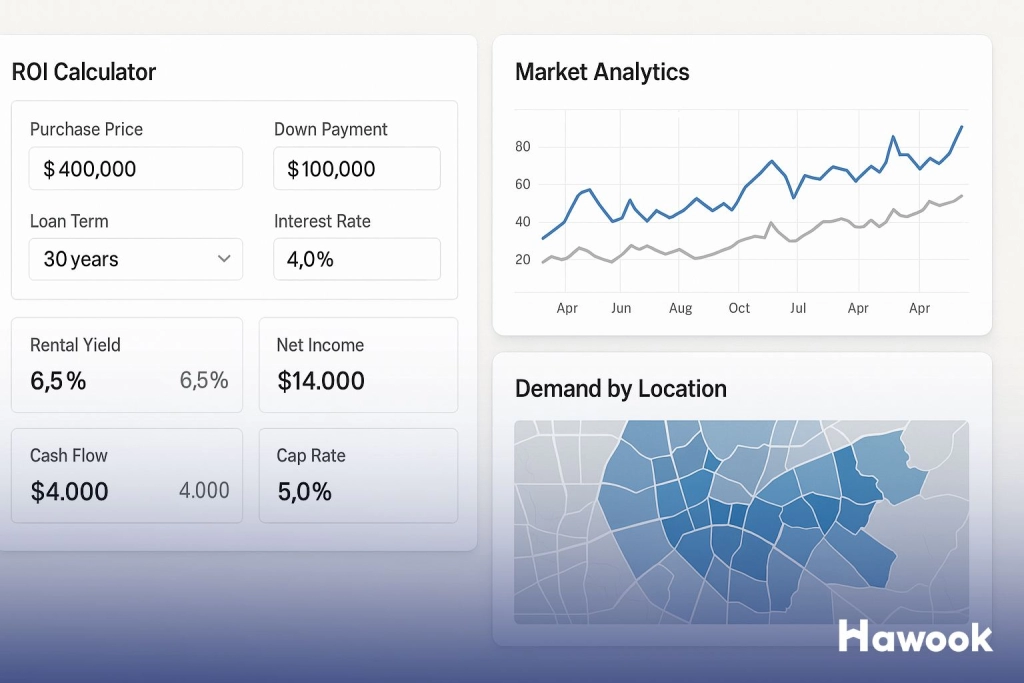
A growing number of real estate calculators now allow you to:
- Estimate annual rental yield, monthly net income, and 5–10 year ROI
- Factor in management fees, furnishing costs, and vacancy assumptions
- Compare multiple units side by side
Some are built into developer platforms, others are third-party tools — but either way, they’re miles better than relying on verbal “guaranteed returns.”
📊 Data & Market Analytics Platforms
One of the most valuable shifts is access to real-time rental and occupancy data.
Tools like AirDNA (focused on short-term rentals) and Transparent offer:
- Historical and forecasted occupancy rates
- Nightly rate trends by area and property type
- Seasonality and booking lead time insights
- Demand heatmaps by neighborhood
Originally built for professional property managers, these platforms are now used by serious investors to size up ROI before committing — especially in Airbnb-friendly markets like Phuket, Bali, and Danang.
Pro tip: Don’t just look at what agents are saying — compare it to the actual market behavior using platforms like AirDNA. It’ll give you a far more realistic baseline for your yield calculations.
🪙 Tokenized Property Investment (Optional/Experimental)
Platforms like RealT and Lofty are experimenting with fractional ownership and real estate tokenisation, where investors buy digital shares in properties and receive rental income proportionally.
This is still early-stage for Southeast Asia, but could become more relevant in cross-border contexts as blockchain regulation evolves.
Note on AI: Tools using artificial intelligence for valuation, deal sourcing, or portfolio automation are emerging fast — but they’ll be covered later in this article, where we explore AI’s role across the real estate value chain. It’s growing at the speed of compute, and we’re only scratching the surface.
Bottom line?
Modern investors don’t just rely on agents or developer promises. They layer multiple tools — listings, calculators, market data — to make better decisions, even from abroad.
👉 Want more? Read:
Investing in off-the-plan properties
2. 🏗️ Tech for Developers & Builders
Efficiency, visibility, and smarter pre-sales.
In many parts of Southeast Asia, property development is still surprisingly manual behind the scenes. But the best developers — especially those catering to international buyers — are increasingly turning to tech to improve how they design, manage, and market their projects.
Here are some of the key technologies changing how developers build and sell:
🧱 Building Information Modelling (BIM) & 3D Design
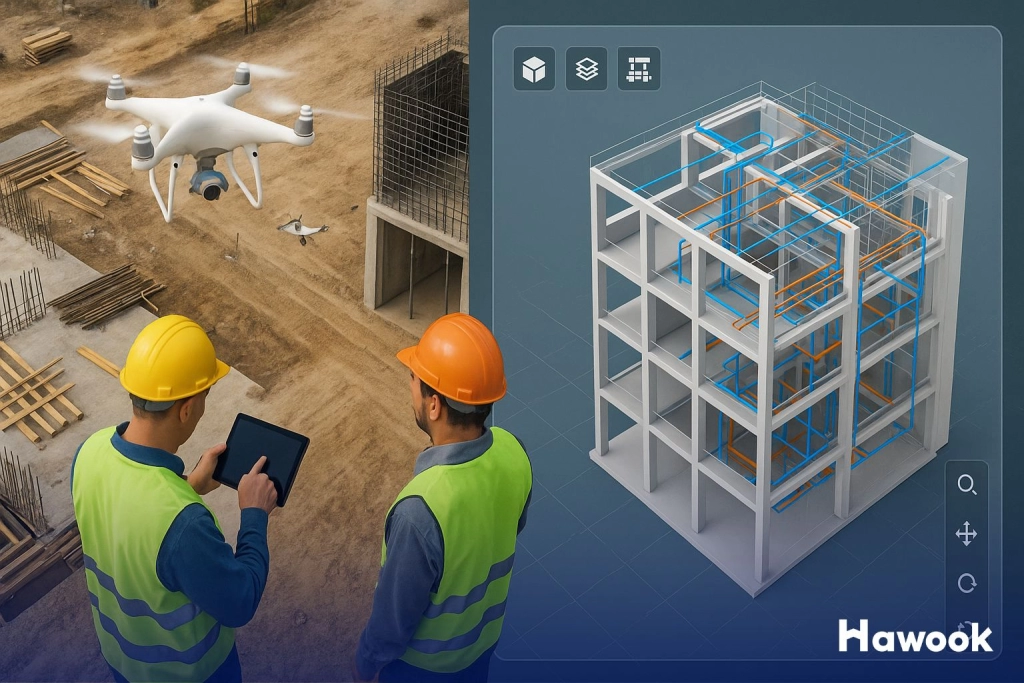
BIM software allows architects, engineers, and contractors to collaborate on a single intelligent model — from structural plans to mechanical systems.
It reduces errors, streamlines communication, and makes it easier to:
- Adjust unit layouts for buyer feedback
- Plan MEP systems without clashes
- Speed up approvals and compliance
Many large-scale developers are now using Autodesk Revit, Archicad, or regional BIM solutions to keep teams aligned from design to delivery.
🌐 Virtual Tours, Digital Twins & Interactive Sales Tools
With overseas buyers often unable to visit showrooms in person, developers are investing in:
- High-quality virtual walkthroughs
- 3D interactive masterplans
- Web-based configurators to explore floor plans, upgrades, and views
These aren’t just about flash — they’re becoming essential sales tools. A well-made digital twin can reduce sales cycles dramatically, especially when paired with multilingual or AI-powered sales support.
🧰 Construction Project Management Software
Managing multiple contractors, timelines, and materials across a site (or many sites) is where good projects can rise or fall.
Platforms like Procore, PlanRadar, and Buildertrend are helping developers:
- Track construction stages in real-time
- Centralise documentation and inspections
- Monitor costs, RFIs, and subcontractor performance
This is especially helpful for groups managing builds in rural or spread-out areas (think luxury villas in Phuket, Bali, or Lombok).
📈 Pre-Sales & CRM Integration
Top developers are now using end-to-end platforms that integrate:
- Lead capture from listing portals
- Automated follow-up via WhatsApp or email
- Dynamic pricing and inventory visibility for agents
- Sales velocity dashboards for internal teams
Some even offer white-labeled agent portals, allowing co-brokers to reserve units live during sales events or virtual launches.
🚁 Drone Mapping & Site Monitoring
Drones are being used for:
- Progress documentation
- Marketing visuals
- Land surveys and elevation mapping
- Security and site inspection
For off-the-plan buyers, drone updates during construction build trust — especially when shared via monthly emails or investor dashboards.
Bonus Insight: While not widely adopted yet, some developers are exploring AI-powered tools to optimise unit layouts, predict buyer preferences, or flag supply chain delays. This space is likely to expand rapidly over the next few years.
Takeaway:
In today’s market, it’s not just about beautiful design — it’s about delivery, communication, and agility. Tech is helping serious developers reduce friction at every stage, from blueprint to build to buyer handover.
3. 🏢 Tech for Agents & Agencies
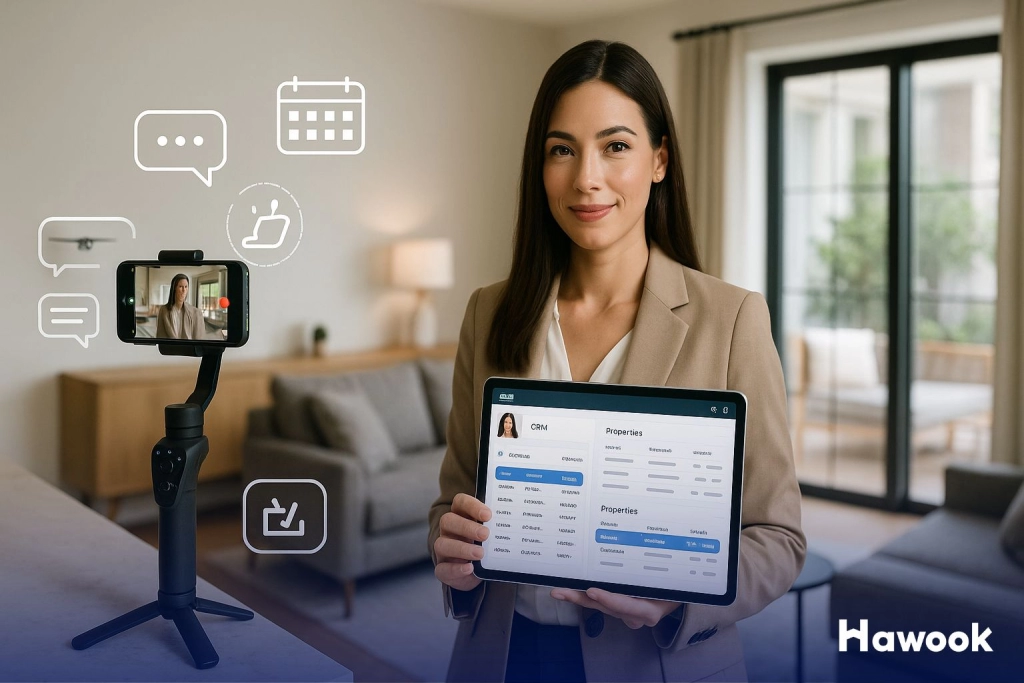
Modern tools to serve global clients, scale smarter, and close faster.
Being a real estate agent in Southeast Asia today isn’t just about showing properties and handling paperwork. You’re dealing with international time zones, remote buyers, TikTok-savvy leads, and developers pushing hundreds of units before the first brick is laid.
To stay competitive — and sane — agents and small agencies are turning to tools that streamline their workflow, automate follow-ups, and expand their reach across platforms.
Here’s what’s making a real difference:
🧠 Smart CRMs & Lead Automation
Modern CRMs do more than just store contacts — they help you move buyers through a funnel with:
- Automated WhatsApp/email follow-ups
- Lead scoring and tagging
- Appointment scheduling + reminders
- Deal stage tracking across multiple projects
Platforms like HubSpot (with real estate templates), Propertybase, and regional tools like Juwai IQI Atlas are designed to handle large volumes of leads from portals, events, and social.
📸 Virtual Tours & Video-First Listings
With more clients buying sight-unseen — or at least remotely — agents are now expected to provide:
- 360° Matterport-style virtual tours
- Short-form walk-through videos (perfect for TikTok, YouTube Shorts, or Instagram)
- Drone shots of the area, not just the property
Even a decent phone and a gimbal can go a long way in giving overseas buyers peace of mind — especially for off-the-plan or resale villas.
📱 Social Media Scheduling & Listing Distribution
If you’re still manually uploading listings to every portal and social platform… there’s a better way.
Tools like Later, Buffer, or real estate-specific content planners can:
- Push listings across Facebook, Instagram, LinkedIn, and TikTok
- Auto-add hashtags, links, and CTAs
- Track clicks, shares, and engagement per platform
Some CRM systems also integrate with major Southeast Asian listing portals, saving time and reducing double entry.
🤖 Chat Assistants & Client Pre-Qualifiers
AI-powered chatbots can now pre-qualify leads by:
- Asking their budget, location, and property type
- Offering instant answers to FAQs
- Booking a consultation directly into your calendar
This is especially helpful if you’re working with international clients who browse listings while you sleep.
🌍 Localisation & Global Buyer Support
Agents serving international buyers increasingly need:
- Multilingual communication tools
- Secure e-signature and document portals
- Currency converters, tax estimators, and payment tracking integrations
Platforms that support cross-border transactions and compliance are becoming essential, especially for off-the-plan and resort-style properties with foreign demand.
Note: As AI continues to evolve, expect more tools that write listing descriptions, translate on the fly, and even suggest pricing strategies based on current demand and inventory levels. This will be covered in the AI section later in the article.
Bottom line?
Agents and agencies that embrace proptech aren’t just working faster — they’re serving better, scaling smoother, and standing out in a noisy, crowded marketplace.
👉 CTA: Emerging proptech tools
4. 🧾 Blockchain & Real Estate
Transparency, tokenisation, and what’s actually real.
There’s been a lot of buzz around blockchain disrupting real estate — and like most tech trends, the hype can sometimes get ahead of the reality. But underneath the buzzwords, there are real use cases starting to take hold — especially in ownership, payment processing, and fractional investing.
Here’s what’s worth knowing (and watching):
🪙 Tokenisation & Fractional Ownership
Tokenisation allows real estate assets to be divided into digital shares, or tokens, that can be bought, sold, or traded. Instead of needing $300,000 to buy a villa, investors might be able to buy in with $5,000 and earn proportional rental income.
Platforms like:
- Lofty (USA)
- RealT (USA/Global)
- HoneyBricks (Asia-facing)
…are already offering tokenised property investments, with real-time income paid via stablecoins.
It’s still early-stage in Southeast Asia, but fractional ownership could play a major role in opening access to cross-border investment — especially for younger, yield-seeking investors priced out of full ownership.
🧾 Smart Contracts for Sales & Leasing
In theory, blockchain-based smart contracts could automate:
- Purchase agreements
- Lease terms
- Escrow and fund release
- Developer milestone payments
This could reduce paperwork, middlemen, and settlement delays — particularly for off-the-plan deals where timelines and trust are critical.
In practice, smart contract real estate deals are still rare, mostly due to regulatory uncertainty. But the infrastructure is being built, and countries like the UAE, Singapore, and Thailand are beginning to explore frameworks for implementation.
🧭 Title Management & Land Registries
Perhaps the most game-changing (but least flashy) use of blockchain is title transparency.
Some governments are experimenting with blockchain-based land registries to reduce:
- Fraud
- Double selling
- Corrupt back-door transfers
- Manual errors and lost documents
For buyers — especially foreigners — a blockchain-backed title registry could dramatically improve trust when buying in less regulated markets.
“If the land title is on-chain and tied to a verified national ID, the need for expensive lawyers and endless verification loops drops dramatically.”
— Alina Voronina, investor & contributor at Hawook
💸 Crypto Payments & Settlement
In Thailand and Bali, some developers already accept stablecoin or crypto payments.
It’s convenient for overseas buyers, but can introduce new risks — like price volatility, AML flags, and tax complexity.
The key here is clarity and legality — if crypto is used, make sure it’s paired with proper receipts, tax treatment, and escrow protections.
🚧 Still a Work in Progress
While the potential is real, blockchain adoption in Southeast Asian real estate is still nascent. You’re more likely to see tokenisation or crypto payment options than you are to sign a smart contract-backed villa sale tomorrow.
That said, the direction of travel is clear — toward more transparency, faster settlement, and new forms of fractional ownership.
👉 For the deep dive:
Blockchain & Real Estate in Southeast Asia — What’s Real, What’s Hype?
5. 🤖 The Rise of AI-Powered Real Estate Platforms
Faster search, smarter listings, and early signs of serious disruption.
Artificial Intelligence is touching almost every industry — and real estate is no exception. While we’re still in the early innings, AI is already starting to change how people search for homes, how agents manage leads, and how platforms price, match, and describe properties in real time.
Here’s how it’s showing up today — and where it might go next:
🔍 Predictive Search & Smart Matching
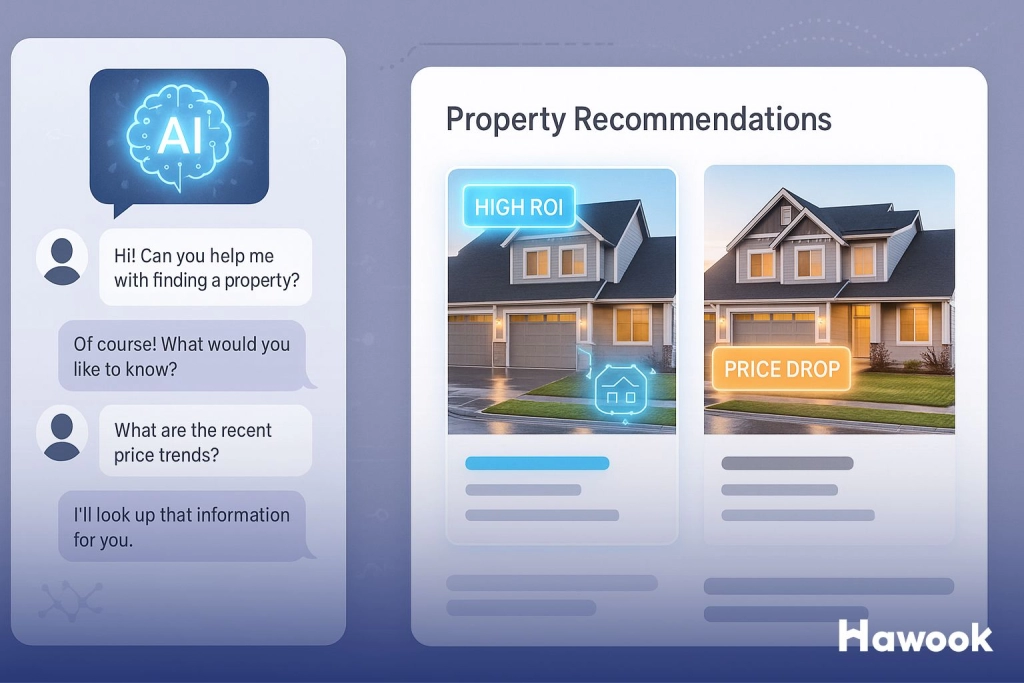
Instead of filtering manually through endless listings, some platforms now use AI to suggest properties based on user behavior — clicks, location views, price tolerance, and even inferred lifestyle preferences.
This means buyers may start discovering units they didn’t think to search for — but that actually match what they want. It’s subtle, but powerful — especially for overseas buyers who aren’t familiar with local submarkets.
🏷️ Auto-Generated Listings & Description Tools
Platforms (and some agencies) are using AI to:
- Generate property descriptions based on floorplans
- Suggest listing headlines and SEO keywords
- Highlight selling points automatically
- Translate listings into multiple languages
This helps agents move faster and standardises quality — especially across high-volume developments.
🧮 AI-Based Valuation & Pricing Tools
We’re seeing early-stage tools that can:
- Suggest listing prices based on comps, trends, and condition
- Optimise short-term rental pricing in real time (e.g. Beyond, PriceLabs)
- Flag over- or under-priced units for buyers and agents alike
This is especially helpful in markets like Bali or Phuket, where pricing can vary wildly between listings.
💬 Chat-Based Assistants & Conversational Search
AI-powered chat interfaces are becoming common on developer and portal sites — helping:
- Qualify leads
- Answer basic questions
- Walk buyers through payment terms, ownership structures, or nearby amenities
At Hawook, we’ve even seen AI assist in off-the-plan education — answering “What happens after I pay the deposit?” with calm, helpful breakdowns 24/7.
🔮 What’s Coming Next?
As compute gets cheaper and LLMs improve, expect:
- AI-powered buyer pipelines
- Real-time ROI scenario testing
- Smart nudges to complete a deal or refinance
- Virtual assistants tailored to expat investors, agents, or developers
“AI will become the quiet co-pilot for every property transaction — sitting behind the scenes, crunching the numbers, suggesting the next step.”
— Codi, Founder of Hawook
Bottom line?
AI won’t replace real estate professionals — but it will increasingly amplify the best ones. The winners will be those who combine local knowledge with tech-enabled workflows that scale.
🌍 Cross-Border Real Estate & Remote Transactions
The dream: buying from abroad without losing sleep — or control.
One of the biggest shifts in Southeast Asian real estate over the past five years isn’t just what people are buying — it’s where they’re buying from.
More than ever, investors are based overseas. They’re not walking through showrooms or sitting down with agents in person. They’re sending deposits from Singapore, Hong Kong, Dubai, London, or LA — and relying on digital tools to guide the whole journey.
Fortunately, the infrastructure to support this is finally catching up.
✅ e-KYC & Remote Buyer Onboarding
Developers and agencies are adopting tools to:
- Verify ID documents remotely (passport scans, selfie checks)
- Run AML screening
- Digitally store buyer records for compliance
This is especially important for buyers from multiple jurisdictions, where banks and developers need to tick different legal boxes.
✍️ Digital Signatures & Secure Document Handling
Instead of scanning PDFs and waiting for DHL envelopes, more deals now close with:
- Secure e-signatures (DocuSign, HelloSign, Adobe)
- Timestamped contracts
- Cloud storage for all transaction records
Some developers and lawyers are even experimenting with blockchain-stamped agreements for added traceability.
💸 Escrow Platforms & Cross-Border Payment Gateways
Sending large sums internationally used to be a pain. Now buyers can use:
- Licensed escrow accounts
- Regulated transfer services like Wise Business, SWIFT, or Xendpay
- Crypto-friendly payment portals (with caution)
As trust in off-plan deals depends heavily on payment security, this part of the ecosystem is critical.
🏠 Remote Walkthroughs & Inspections
Using drones, 3D scans, and mobile livestreams, buyers can now:
- View construction progress monthly
- Send inspectors or reps for snag list checks
- Approve handover without flying in
Some developers even provide client dashboards with photo updates, build milestones, and expected handover dates.
🧳 Remote Rental Setup & Local Management
For buyers planning to rent out units:
- Management apps help track occupancy, income, and reviews
- Key handover, cleaning, and maintenance can be automated
- Services like Airbnb property management, guest experience platforms, and yield dashboards are emerging for regional hotspots
This turns a remote villa into a managed asset, rather than a constant inbox headache.
Takeaway:
Buying property remotely is no longer a fantasy — but it still requires the right tech stack and trusted local support.
The goal isn’t to eliminate humans. It’s to eliminate friction, so you can invest confidently from anywhere.
👉 CTA: How to Buy Property Remotely in Southeast Asia – Full Guide
🔮 What’s Next for PropTech in Southeast Asia?
From laggard to leapfrog — the real estate tech wave is just getting started.
Southeast Asia has all the ingredients for a proptech explosion: fast-growing cities, digital-savvy populations, foreign investment flows, and a real estate industry that still relies on PDFs, spreadsheets, and hand-signed forms far too often.
That’s starting to change — and fast.
Here’s where things could be headed:
🧩 More Vertical Integration
Expect to see platforms offering end-to-end ecosystems — from listing to legal to land registry — especially in countries like Thailand, Vietnam, and Malaysia where foreign buyers need extra support.
Portals won’t just show properties; they’ll close the loop on deals.
🤝 PropTech Meets FinTech
From buy-now-pay-later models to embedded home insurance and mortgage pre-approvals inside listing portals, we’ll likely see real estate and finance blend into all-in-one buyer experiences.
Think: browse, buy, pay, and rent — all from one dashboard.
🪙 Blockchain & Title Clarity
Governments in Indonesia, Thailand, and the Philippines are exploring digitised land registries. If even one of them gets it right, it could open the door to:
- Faster property transfers
- On-chain title verification
- Fraud-resistant ownership structures
Combined with tokenisation, this could reshape how people invest — especially across borders.
🤖 AI Will Quietly Take Over the Back End
Not with fanfare, but with function. Expect:
- Auto-generated listings
- Smart pricing tools
- Buyer intent scoring
- Contract summarisation and negotiation support
Agents and developers who use AI well will outperform — not because they’re louder, but because they’re quieter (and more efficient).
🛠️ More Local Solutions, Not Just Global Tech
While global tools like DocuSign, HubSpot, and AirDNA play a big role, the real winners will be regional platforms built with Southeast Asia’s quirks in mind — language, ownership laws, and buyer behavior.
We’re already starting to see this with cross-border agent networks, Thai/English CRM hybrids, and Southeast Asia-specific listing engines.
✅ Final Thought
Real estate in Southeast Asia is getting more digital, more transparent, and more competitive.
Whether you’re buying, selling, or building — the people using tech the right way are moving faster and sleeping better.
This is just the beginning.



Join The Discussion