
The most expensive Southeast Asia property myths aren't obscure edge cases - they're the standard pitch. Nominee structures, 90-year lease guarantees, and off-plan "discounts" have cost foreign buyers hundreds of millions of dollars across Thailand, Bali, Vietnam, and the Philippines. This guide cuts through five of them using 2025-2026 court decisions, enforcement data, and the specific laws that closed the grey areas for good.
Table of Contents
The sales rep will usually frame it as a “flexible structure.” There’s a local partner involved, some paperwork gets signed, and you end up with something that functions – in their words – “just like ownership.” Thousands of people who came to buy property in Southeast Asia as a foreigner heard exactly that pitch, nodded, and wired the money. A growing number of them are now dealing with the consequences.
In June 2026, Thailand’s Department of Business Development and Department of Lands ran a coordinated audit across tourism hubs including Phuket, Koh Samui, and Koh Phangan. They reviewed over 11,400 business entities, flagged more than 7,000 suspected nominee setups, and prosecuted over 850 companies. The assets frozen in that single operation exceeded 15 billion Thai Baht – roughly USD 450 million. That’s not a crackdown on edge cases. That’s the mainstream model getting dismantled.
Bali tells the same story at a larger scale. Indonesia’s Nominee Crisis Working Group found approximately 10,500 land parcels on the island held under illegal nominee structures, representing an estimated USD 7 billion in exposure. These weren’t backroom deals – they were the standard product being sold to foreign buyers through licensed agents and developer showrooms for years.
Foreign property investment in Southeast Asia remains compelling. But the informal arrangements that made it “work” for a decade have a closing date, and in most markets that date has already passed. The grey areas that buyers relied on are no longer grey – they’re documented liability. What follows are the five Southeast Asia real estate myths doing the most damage right now, and the specific laws, court decisions, and hard numbers that finally put them to rest.
Myth 1: Bali Leasehold Is “Basically the Same” as Owning the Land
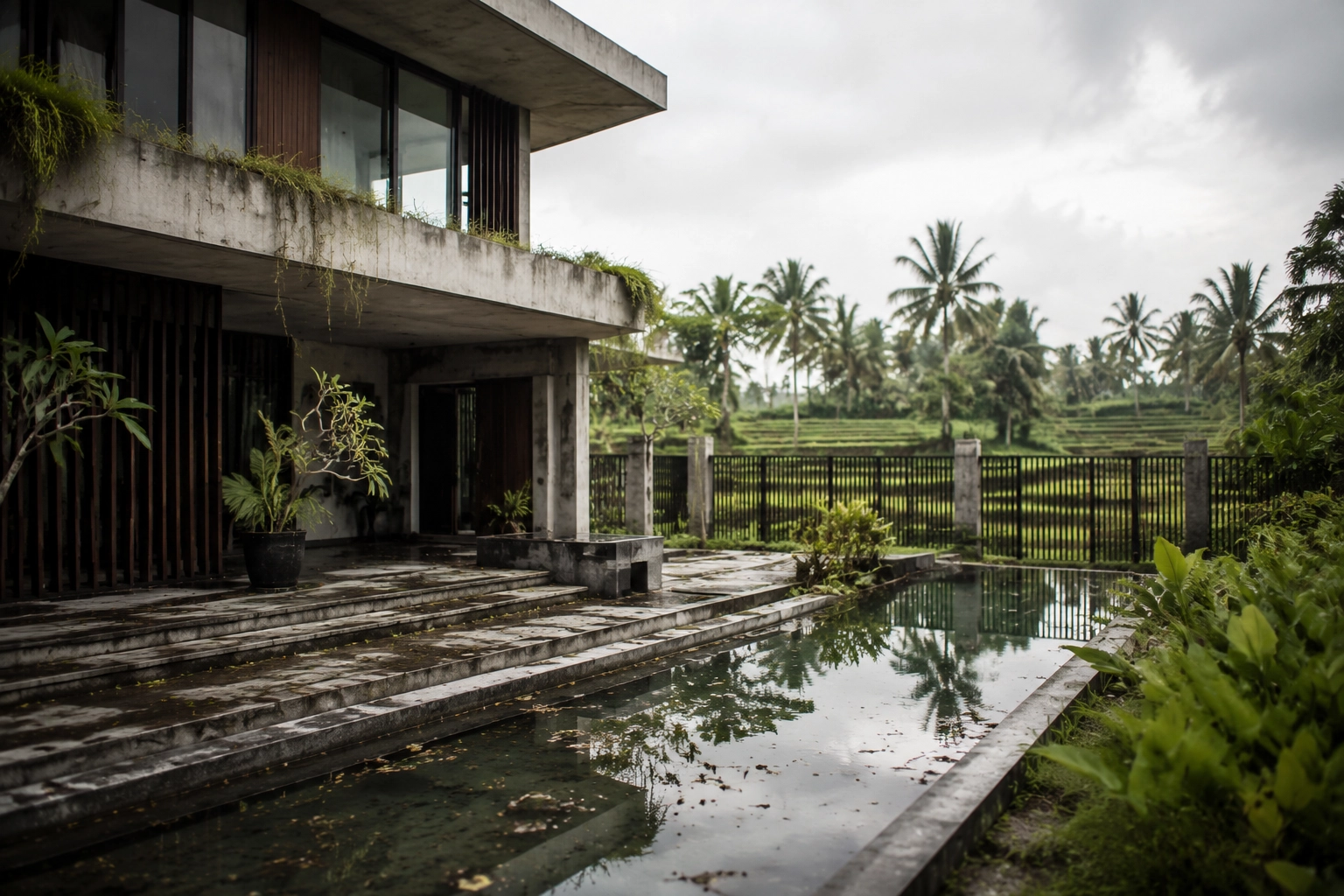
The pitch comes in a few versions. The softer one goes: “30-year lease, extendable to 25, renewable for another 25 – effectively yours for 80 years.” The more aggressive version involves a nominee package, where an Indonesian national holds the freehold title on paper while signing a bundle of side documents – a loan agreement, a power of attorney, a lease agreement – that together are supposed to give the foreign buyer real control. Developers and agents have sold both arrangements for years as practical equivalents to ownership. They are not.
Under Article 21 of Indonesia’s Basic Agrarian Law (UUPA No. 5/1960), Hak Milik – the strongest form of registered land title, the one that gives you freehold ownership – is reserved exclusively for Indonesian citizens. A foreigner cannot hold it. Any transaction attempting to transfer Hak Milik to a foreign buyer isn’t just legally questionable; under Article 26(2) of the same law, it is void from inception, and the land automatically reverts to the state. Not voidable with the right paperwork. Void. The distinction matters enormously when things go wrong.
The nominee bundle is where the Bali leasehold vs freehold debate gets particularly dangerous. Indonesian courts don’t read those side documents at face value – they look at what the arrangement was actually designed to do. When the substance is clearly an attempt to transfer freehold rights to someone legally prohibited from holding them, courts classify the whole package as legal smuggling and render it null from the start. No licensed PPAT notary – a Pejabat Pembuat Akta Tanah, the official who registers land transactions – can make an illegal purpose enforceable by attaching their stamp to it. And as of February 2026, the risk profile of these arrangements changed from “legally unenforceable” to something considerably worse.
What Changed in 2026: Bali’s Perda No. 4/2026
On February 24, 2026, the Governor of Bali signed Provincial Regulation No. 4/2026 on the Control of Productive Land Conversion and the Prohibition of Nominee Land Ownership Transfer. Before this, a nominee structure in Bali was primarily a civil problem – legally unenforceable, financially ruinous if it collapsed, but not something that put anyone in handcuffs. Perda No. 4/2026 changed that. Nominee arrangements are now a criminal offense under Balinese provincial law.
The regulation doesn’t just target the local nominee. It targets the foreign beneficial owner, the Indonesian national holding title on their behalf, and any facilitator who helped set the arrangement up – brokers, non-compliant notaries, intermediaries of any kind. Everyone in the chain carries liability now. For anyone still wondering whether to buy property in Bali as a foreigner through a borrowed name, that’s the answer.
The motivation behind the law isn’t hard to find. Bali’s arable land fell from 70,996 hectares in 2019 to 64,474 hectares by February 2026 – a loss of more than 6,500 hectares in seven years. The Subak irrigation system, a UNESCO World Heritage site that has sustained Balinese agriculture for centuries, is being eaten by villa developments built on land that was never legally available to the people funding them. Indonesia’s Nominee Crisis Working Group put the scale of the problem in numbers: approximately 10,500 land parcels in Bali held under illicit nominee structures, with structural asset exposure of IDR 109.2 trillion – roughly USD 7 billion. The regulation is a direct response to that data.
Enforcement sits with the Civil Service Police (Satpol PP), who now have authority to audit, suspend business permits, freeze operating licenses, and carry out mandatory building demolitions on non-compliant properties. Under Law No. 41 of 2009, unauthorized conversion of protected agricultural land carries up to five years in prison and fines up to IDR 1 billion. The nominee structure illegal Bali conversation used to be about whether your side agreements would hold up in a civil court. It’s a different conversation now.
The Legal Paths That Actually Work
There are three compliant ways for a foreigner to hold property rights in Indonesia, and they’re not interchangeable – which one makes sense depends on your residency situation, your investment size, and how much legal infrastructure you want around the purchase. None of them involve a local holding title on your behalf.
Hak Pakai – the Right to Use – gives a foreigner a registered title held directly in their own name with the National Land Agency (BPN). It runs for up to 80 years structured as a 30-year initial grant, a 20-year extension, and a final 30-year renewal. The catch is residency: you need a valid KITAS, KITAP, or Golden Visa to hold it. Hak Sewa is a contract-based leasehold registered through a licensed PPAT notary rather than BPN, which means no registered state title but also no residency requirement. The PT PMA route – establishing a foreign-owned Indonesian company to hold a Hak Guna Bangunan title, the Right to Build – also delivers an 80-year registered title through BPN and doesn’t require personal residency, though it sponsors an Investor KITAS.
| Structure | Legal Basis | Max Term | Registered With | Residency Required? |
| Hak Pakai (Right to Use) | PP 18/2021 | 80 years (30+20+30) | National Land Agency (BPN) | Yes – KITAS, KITAP, or Golden Visa |
| Hak Sewa (Leasehold) | PP 44/1994 | Contractual – no statutory cap | Private Notary (PPAT) | No |
| PT PMA (Foreign-Owned Company) | BKPM Reg. No. 5/2025 | 80 years (30+20+30) via HGB title | National Land Agency (BPN) | No (sponsors Investor KITAS) |
The PT PMA route got meaningfully more accessible in late 2025. Ministry of Investment Regulation No. 5/2025, effective October 2, 2025, cut the minimum paid-up capital for a PT PMA operating in the property and accommodation sector from IDR 10 billion down to IDR 2.5 billion – approximately USD 150,000. The value of the land and buildings acquired counts toward the required IDR 10 billion total investment per project location, which reduces the cash burden further. It’s still a real financial commitment, but for buyers who were previously priced out of the PT PMA structure entirely, that 75% reduction in the capital threshold is a genuine change worth knowing about.
What Nominee Defaults Actually Look Like
The word “irrevocable” in a nominee power of attorney is doing less work than buyers think. Under Article 1813 of the Indonesian Civil Code, a power of attorney can be revoked at any time by the person who granted it. An “irrevocable” clause tied to an arrangement that exists to bypass statutory law isn’t enforceable – courts don’t uphold protections built into illegal contracts. The nominee can walk away from the side agreements whenever they choose, and there’s no legal mechanism to stop them.
The death scenario is quieter but just as final. If the nominee dies, the property passes to their heirs under Indonesian inheritance law. The foreign buyer holds no enforceable claim against those heirs. They inherited legal title to a piece of land – they didn’t inherit an obligation to honor a side contract that was void from the day it was signed. Indonesian courts apply the unclean hands doctrine consistently in these disputes: because the entire arrangement was designed to circumvent the agrarian law, the courts won’t enforce any part of it. You can’t sue to recover what you were never legally entitled to hold. Typical losses in nominee defaults represent a full write-off of the invested capital, averaging between USD 200,000 and USD 1.5 million per villa.
Transitioning out of an existing nominee structure into a compliant Hak Pakai title is possible, but it’s not free. The process requires executing an Akta Jual Beli – a formal Sale and Purchase Deed – before a licensed PPAT notary. That transaction triggers a 2.5% seller’s income tax (PPh), a 5% buyer’s transfer tax (BPHTB), and notary fees ranging from IDR 10 million to IDR 30 million. It’s an expensive fix, but it’s considerably less expensive than finding out the alternative the hard way.
Quick Check – Is Your Bali Deal Compliant?
- Does your name appear on a registered title with the National Land Agency (BPN)?
- Are you holding a valid residency permit (KITAS, KITAP, or Golden Visa) if your title is Hak Pakai?
- Is your PT PMA registered with minimum IDR 2.5 billion in paid-up capital?
- Did you use a licensed PPAT notary for the transaction?
- Did any part of the deal involve a local holding title “on your behalf”?
If that last one is a yes, you’re not the owner of that property – you’re an unsecured creditor with a document package that Indonesian courts have seen before and consistently refused to enforce.
Myth 2: You Can Get Around Vietnam’s 30% Ownership Quota
Vietnam’s foreign ownership cap is a hard number: foreigners can collectively own no more than 30% of the total apartment units in any single condominium building. For landed projects, that drops to 10%, with an absolute ceiling of 250 detached houses, townhouses, or villas within a single ward-level administrative area. Once those quotas fill – and in desirable developments they fill fast – developers don’t stop selling to foreign buyers. They change what they’re selling. The product becomes a Long-Term Lease Agreement, a 50-year tenancy contract that gets marketed as “equivalent to ownership.” It isn’t, and the gap between those two things is where a lot of money gets lost.
What an LTLA Actually Gives You
Under the Law on Real Estate Business 2023, effective January 1, 2025, a Long-Term Lease Agreement is classified as a tenancy agreement. That classification has direct legal consequences. An LTLA buyer cannot obtain the Certificate of Land Use Rights and Ownership – known as the Pink Book – because the Pink Book documents ownership, and an LTLA doesn’t confer it. The Vietnam Pink Book property distinction isn’t a technicality; it’s the entire difference between owning an asset and renting one for a fixed term.
Without the Pink Book, you cannot legally sell the unit on the open market, cannot use the property as mortgage collateral, and are classified under Vietnamese law as a tenant rather than an owner. When a developer tells you an LTLA is “basically the same” as an SPA, ask them to explain why the bank won’t lend against it.
The Beneficiary Owner Registry (July 2025 Onward)
The nominee workaround – using a Vietnamese national as a paper owner while the foreign buyer provides the capital – ran into a specific problem on July 1, 2025, when Decree No. 168/2025/ND-CP came into force. The decree established a mandatory Beneficiary Owner registry requiring any individual who directly or indirectly owns 25% or more of a company’s charter capital, voting shares, or exercises de facto control over management to be formally declared. That registry is integrated with both the National Land Database and the Population Database, which means provincial Departments of Construction can flag and invalidate transactions where foreign capital flows through a local proxy automatically, not after the fact.
The enforcement framework tightened further from March 1, 2026, on two fronts. The Law on Investment 2025 mandates that licensing authorities terminate any investment project or property transaction identified as a sham setup designed to bypass foreign ownership caps. Decree No. 357/2025/ND-CP, effective the same date, assigned a unique 40-character electronic identification code to every residential unit in the country, making quota allocation tracking transparent and automated at the provincial level. Buying property in Vietnam as a foreigner through a nominee used to be a risk that depended on whether anyone was paying close attention. The system now pays attention by default.
Court Cases That Should Settle the Debate
A case handled by CNC Counsel puts the registration requirement in concrete terms. An international buyer purchased a plot of land with a constructed house and used a bailiff-witnessed document – a Thừa phát lại – instead of a licensed notary, specifically to avoid going through the mandatory property registration process. The courts ruled that a bailiff’s document carries evidentiary value only: it confirms that a signing ceremony took place, nothing more. It cannot substitute for the statutory registration and notarization that Vietnamese law requires for a valid land transfer. The transaction was declared legally invalid, the seller was found to have lacked lawful transfer rights, and the buyer lost the property entirely.
Appellate Commercial Business Judgment No. 36/2024/KDTM-PT, handed down June 27, 2024 by the High People’s Court in Ho Chi Minh City, dealt with a nominee arrangement directly. The court held that a foreign beneficial owner who established a nominee setup to bypass statutory ownership restrictions is ineligible to claim ownership over the underlying asset. The investor’s legal entitlement reduces to a civil debt claim for the documented principal paid – no appreciation, no rental income, no capital gains. Those are forfeited, and Vietnamese courts have shown a pattern of awarding a portion of them to the nominee as a compensation fee. The Dong Mai Craft Village case added another dimension: a Chinese investor operating through a Vietnamese nominee saw the nominee face direct criminal and civil liability for the investor’s own operational violations. The arrangement offered the investor no protection and delivered liability to the person they thought was just a name on a document.
Under an invalidated nominee structure or an LTLA that doesn’t survive legal scrutiny, the exposure on a mid-range apartment typically runs between USD 80,000 and USD 250,000 in forfeited capital. Independent legal counsel to pursue recovery costs USD 1,500 to USD 3,000 on top of that. A compliant transaction, by comparison, carries a 0.5% registration tax and 10% VAT – costs that look very different once you’ve seen what the alternative can produce.
Vietnam Property Quick Checklist
- Is the unit within the 30% foreigner quota for that building?
- Have you received (or been promised) a formal SPA rather than an LTLA?
- Did you confirm the current quota status directly with the provincial Department of Construction?
- Is the transaction documented through a licensed notary public – not a bailiff?
- Does any part of the deal involve a Vietnamese national holding title “on your behalf”?
If that last question gives you any pause, the answer to proceeding without independent legal review is no.
Myth 3: Your Reservation Deposit Is Refundable If You Change Your Mind
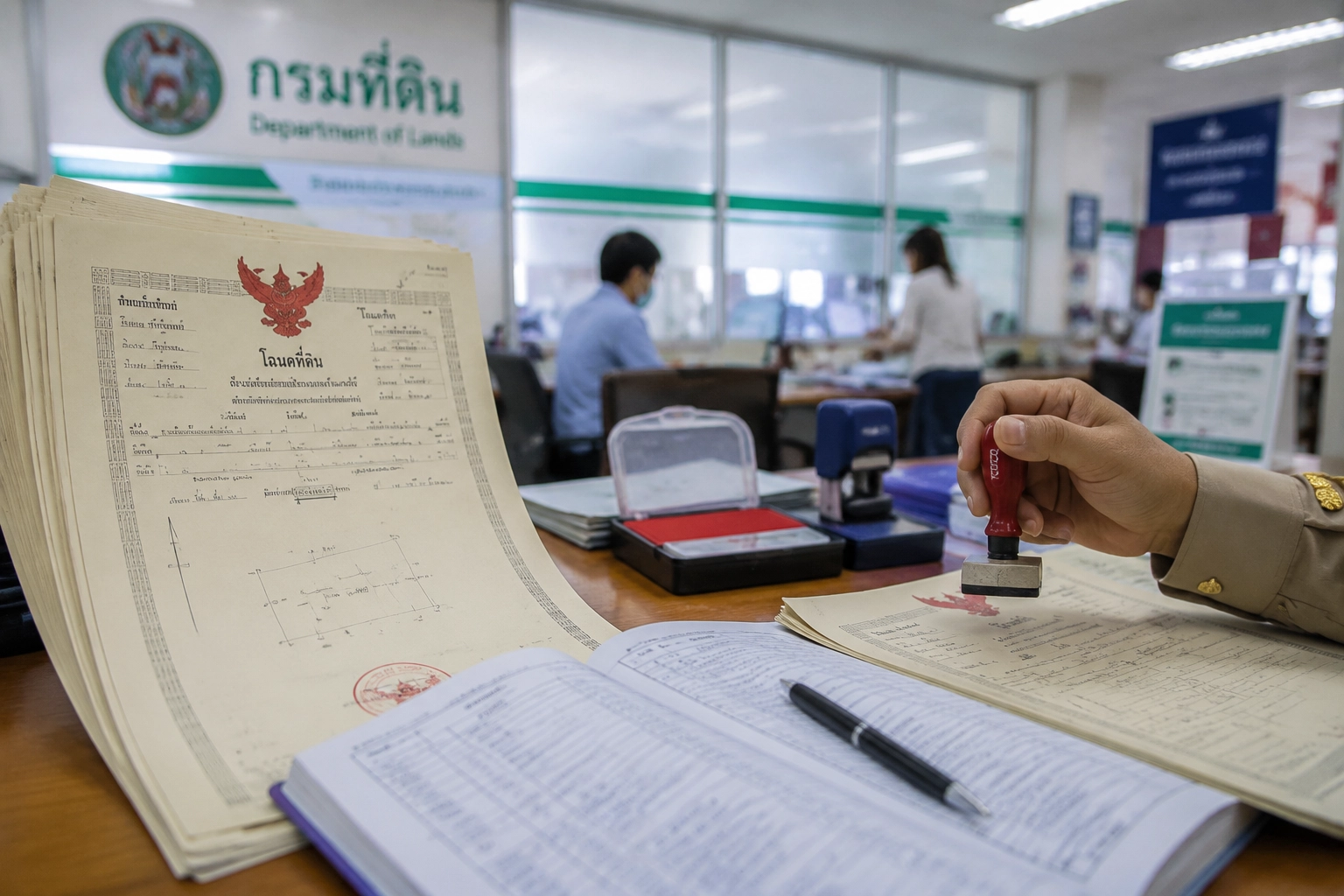
A lot of foreign buyers treat a reservation deposit like a test drive – pay a fee, hold the unit, walk away clean if the deal doesn’t feel right. That assumption is wrong across Southeast Asia, and it costs people money regularly. Contract law in this region defaults toward developers at the pre-signing stage, and “I changed my mind” does not trigger a refund in any of the major markets. What determines whether you get your money back is not your intentions – it’s whose fault the deal fell apart.
Thailand – New Rules Since January 2025
Thailand’s OCPB Notification B.E. 2567 came into full force on January 31, 2025, and it made a genuine difference to how reservation deposits work. The regulation designates condo reservation contracts as a contract-controlled business, which means developers can no longer write their own rules on refunds and enforcement. Reservation contracts must now be drafted in Thai with a dual-copy requirement, and developers are explicitly prohibited from confiscating reservation fees when the buyer has not defaulted on the agreement.
The OCPB Thailand deposit rules introduced real refund triggers on the developer side. If a project fails to obtain the necessary building permits or EIA – Environmental Impact Assessment – clearance, the developer must return 100% of the reservation fee within 15 days for cash or wire transfers, or 45 days for credit card payments. Non-compliance carries penalties of up to one year in prison and fines up to THB 200,000. WSR Law Group advises confirming a project’s EIA status before making any pre-contractual payment, which is sensible advice given that EIA failure is now a mandatory refund trigger.
The gap worth understanding: buyer’s remorse is not covered. Whether a reservation deposit is refundable in Thailand depends entirely on who is in default. If the buyer simply decides not to proceed, or fails to submit required documentation within the reservation window, the developer retains the full legal right to keep the fee. The 2025 regulation fixed the part of this equation where developers were confiscating deposits arbitrarily. It did not fix the part where you pay and then change your mind.
Vietnam – The 5% Cap
Vietnam limits pre-contractual exposure through a hard statutory cap under the Law on Real Estate Business 2023: developers cannot collect more than 5% of the total selling price before a formal Sales and Purchase Agreement is signed. Article 48(2) adds a transparency requirement – all payments must route through domestic bank accounts, which creates a documented financial trail. If the project fails to meet commercial eligibility criteria, meaning no completed foundation works or unresolved land-use rights issues, the developer is legally required to refund. That protection is real.
What it doesn’t cover is a buyer who simply walks. Back out of a compliant project for any reason that isn’t developer default, and that 5% is gone. On a standard USD 200,000 apartment, that’s a USD 10,000 immediate loss before you’ve owned anything. The cap limits how much you can lose at the pre-signing stage – it doesn’t make the deposit returnable on request.
Philippines – PD 957 and the Maceda Law
The Philippines has the most detailed statutory framework for buyer protection on reservation deposits in the region. Under Presidential Decree No. 957, developers are prohibited from collecting any fee – reservation or otherwise – before obtaining a License to Sell from the Department of Human Settlements and Urban Development. Collection without that license is illegal, and the remedy is a 100% refund plus legal interest at 6% per annum under BSP Circular No. 799. Checking the LTS before paying anything is not optional due diligence – it’s the first step.
Once a buyer moves into installment payments, the Maceda Law (Republic Act No. 6552) governs what happens if the deal unravels. Pay two or more years of installments and cancellation entitles the buyer to a 50% cash surrender value. Pay less than two years and the statutory refund on the reservation fee disappears – though a 60-day grace period applies before the developer can formally cancel. If the developer delays construction beyond the promised turnover date, Section 23 of PD 957 guarantees a 100% refund of all payments plus legal interest, regardless of how much has been paid.
The framework looks strong on paper because it is strong on paper. The practical complication is enforcement speed. Securing a refund through the Housing and Land Use Regulatory process requires filing a verified complaint with the Human Settlements Adjudication Commission, and that process typically runs six to twelve months from filing to resolution. A Maceda Law Philippines refund is a right, not an automatic return – it requires formal action to enforce, and the timeline matters when capital is tied up.
| Market | Governing Law | Pre-Contract Deposit Cap | If Buyer Backs Out | Mandatory Refund Triggers (Developer Default) |
| Thailand | OCPB Notification B.E. 2567 | None | Full forfeiture of reservation fee | Failure to secure building permits or EIA clearance |
| Vietnam | Law on Real Estate Business 2023 | 5% of property price | Full forfeiture of the 5% deposit | Failure to meet commercial eligibility criteria |
| Philippines | PD No. 957 and RA No. 6552 | None (collection before LTS is illegal) | Full forfeiture of option money | Absence of LTS, or construction delayed past promised date |
Across all three markets, the pattern is consistent: the law protects you when the developer is at fault, and largely doesn’t when you’re the one changing your mind. The reservation deposit across Southeast Asia is a commitment, not a placeholder.
Before You Pay Any Deposit – Run This Check
- Thailand: Does the project have EIA clearance and a valid building permit before you pay?
- Vietnam: Has the developer confirmed the project meets commercial eligibility criteria?
- Philippines: Does the developer hold a valid License to Sell issued by DHSUD?
- Everywhere: Does your reservation contract specify refund conditions in writing?
- Everywhere: Has independent legal counsel reviewed the contract before you signed?
Myth 4: Thailand Condo Freehold Means You Own It Outright – Forever
Thailand’s Condominium Act gives foreign buyers something genuinely rare in Southeast Asia: direct freehold title registered in their own name on the Chanote, the gold-standard Thai title deed. That’s real ownership, legally recognized, bankable, and transferable. No nominee, no corporate wrapper, no borrowed name required. For a foreigner looking to hold property in this region with clean legal title, a Thai condo within the foreign quota is the most straightforward path available anywhere in Southeast Asia. The complications don’t start with the ownership structure itself – they start with what happens when the quota fills, and with a 2025 Supreme Court ruling that reframed what “guaranteed” actually means in a Thai leasehold contract.
The 49% Rule – How It Actually Works
Under Section 19 of the Condominium Act, foreign nationals can collectively own no more than 49% of the total saleable floor area in any registered condominium project. The calculation runs by square meters, not by number of units – a detail that matters because larger units consume quota faster than smaller ones, and a building’s foreign quota can be effectively exhausted well before 49% of the unit count changes hands. [INTERNAL LINK: “what the 49% quota actually means” -> Thailand foreign quota explainer]
In high-demand locations – central Bangkok, Phuket, Pattaya – the Thailand condo foreign ownership 49% quota fills quickly on projects with strong sales momentum. When it does, developers don’t stop selling to foreigners. They convert the remaining units to leasehold transactions: a 30-year lease registered on the reverse side of the Chanote title deed rather than a freehold transfer. The Chanote itself stays in the Thai landowner’s name. The foreign buyer gets a registered lease, not registered ownership.
That leasehold product gets marketed as a “90-year guaranteed leasehold,” structured as three consecutive 30-year terms. The word “guaranteed” is doing considerable work in that phrase, and a March 2025 Supreme Court decision established exactly how much legal weight it actually carries – which turns out to be considerably less than buyers were told. The leasehold renewal Thailand void question isn’t theoretical anymore. It’s been ruled on, with a specific outcome that anyone buying a leasehold unit in Thailand needs to understand before signing.
Supreme Court Decision No. 4655/2566 – The 90-Year Lease Is Not What It Looks Like
On March 18, 2025, the Thai Supreme Court handed down Decision No. 4655/2566, and the case it resolved started in Phuket in 1990. Two parties executed a 30-year land lease that year, with a prepaid extension agreement for two additional 30-year terms – 90 years in total, the same structure developers across Thailand have been selling to foreign buyers for decades. At year 30, in 2020, the landlord refused to register the renewal and filed for eviction. The lessee had a prepaid agreement, a signed contract, and what they believed was a guaranteed right to two more decades. The Supreme Court disagreed.
The ruling turned on a distinction that most buyers in Thailand have never been told about. Under Section 540 of the Civil and Commercial Code, property leases carry a hard statutory cap of 30 years per period. The court found that pre-agreed automatic renewal clauses signed on the same date as the initial lease are void – not voidable, void – because they constitute a deliberate attempt to circumvent that statutory cap. The court then drew a line between two categories of right: a Registered Property Right, which is the initial 30-year lease recorded against the title, and a Personal Contractual Right, which is the renewal promise. The first binds the land regardless of who owns it. The second binds only the original parties to the contract. Siam Legal International described the Thailand Supreme Court lease ruling 2025 as “a massive wake-up call for foreign property investors,” and the reasoning behind that assessment is in what the Personal Contractual Right category actually means in practice.
It means that if the original landowner dies, goes bankrupt, or sells the land at any point during or after the first 30-year term, the new owner carries no legal obligation to honor the extension. The renewal promise exists only between the original lessor and lessee. It doesn’t travel with the land. The 90-year lease Thailand illegal framing overstates it slightly – the initial 30 years is valid and registered. But years 31 through 90 are a personal promise from a specific individual, and that promise evaporates the moment the land changes hands or the original owner’s estate is settled differently than the lessee assumed.
The outcome in the Phuket case was specific: the lessee was ordered to vacate the property, dismantle all built structures at their own expense, and pay monthly damages of THB 30,000. The leasehold renewal Thailand void ruling didn’t just affect their right to stay – it cost them everything they’d built. What developers market as a “90-year guaranteed lease” is, under current Supreme Court precedent, a 30-year lease with two contractual promises attached that do not bind third parties and cannot be enforced against a new landowner. That’s not a technicality buried in the fine print. It’s the exact legal structure being sold in showrooms across Phuket, Bangkok, and Pattaya right now.
The Quota Expansion That Hasn’t Happened
Since late 2024, Thailand’s Pheu Thai-led government has floated proposals to raise the Thailand condo foreign ownership 49% quota to 75% in designated tourism zones and extend the maximum registrable lease term from 30 years to 99 years. As of mid-2026, neither proposal is law. Both face sustained political and public opposition centered on land sovereignty and domestic housing affordability, and there is no confirmed legislative timeline for either. Plan under the rules that exist, not the ones that have been discussed.
Corporate Nominee Structures Under AI Scrutiny
The Thai Limited Company structure – foreigner holds 49% of shares, Thai nationals hold 51% – was already illegal under the Foreign Business Act before any of the recent changes. What changed is how consistently it gets caught. In October 2025, the Department of Business Development launched real-time AI screening across corporate registries, automatically flagging companies that show nominee indicators: matching addresses across shareholders, zero active business operations, passive local shareholders with no evident commercial role. The Thailand nominee company structure that previously depended on nobody looking closely now gets reviewed by a system that looks at everything.
From January 1, 2026, all newly incorporated Thai companies with foreign shareholders must demonstrate that Thai shareholders personally funded their own share capital contributions, with bank statements as supporting documentation. That closed the practice of foreigners funding the entire company while Thai nominees appeared on paper as co-investors. From April 1, 2026, those same checks extended to amendment filings on existing companies – meaning any land-holding company that tries to change its directors, adjust share allocations, or modify its capital structure now triggers the same scrutiny applied to new incorporations.
The penalties sit at the serious end: up to three years in prison, fines ranging from THB 100,000 to THB 1 million, forced liquidation of the company, and mandatory sale of the underlying land within 180 days. The enforcement mechanism is no longer discretionary. [INTERNAL LINK: “Thailand’s nominee company crackdown” -> Thailand Property Ownership For Foreigners In 2026 article]
Thailand Freehold vs. Leasehold – Know Your Position
- Is the unit within the 49% freehold quota? (Get written confirmation from the developer or the land office – don’t take the sales rep’s word for it)
- If leasehold, is the 30-year term registered on the Chanote – not just referenced in a side agreement?
- Are you relying on a “90-year guarantee”? (Under current Supreme Court precedent, treat years 31 to 90 as legally uncertain)
- If holding via Thai company, did Thai shareholders fund their own capital contributions with documented proof?
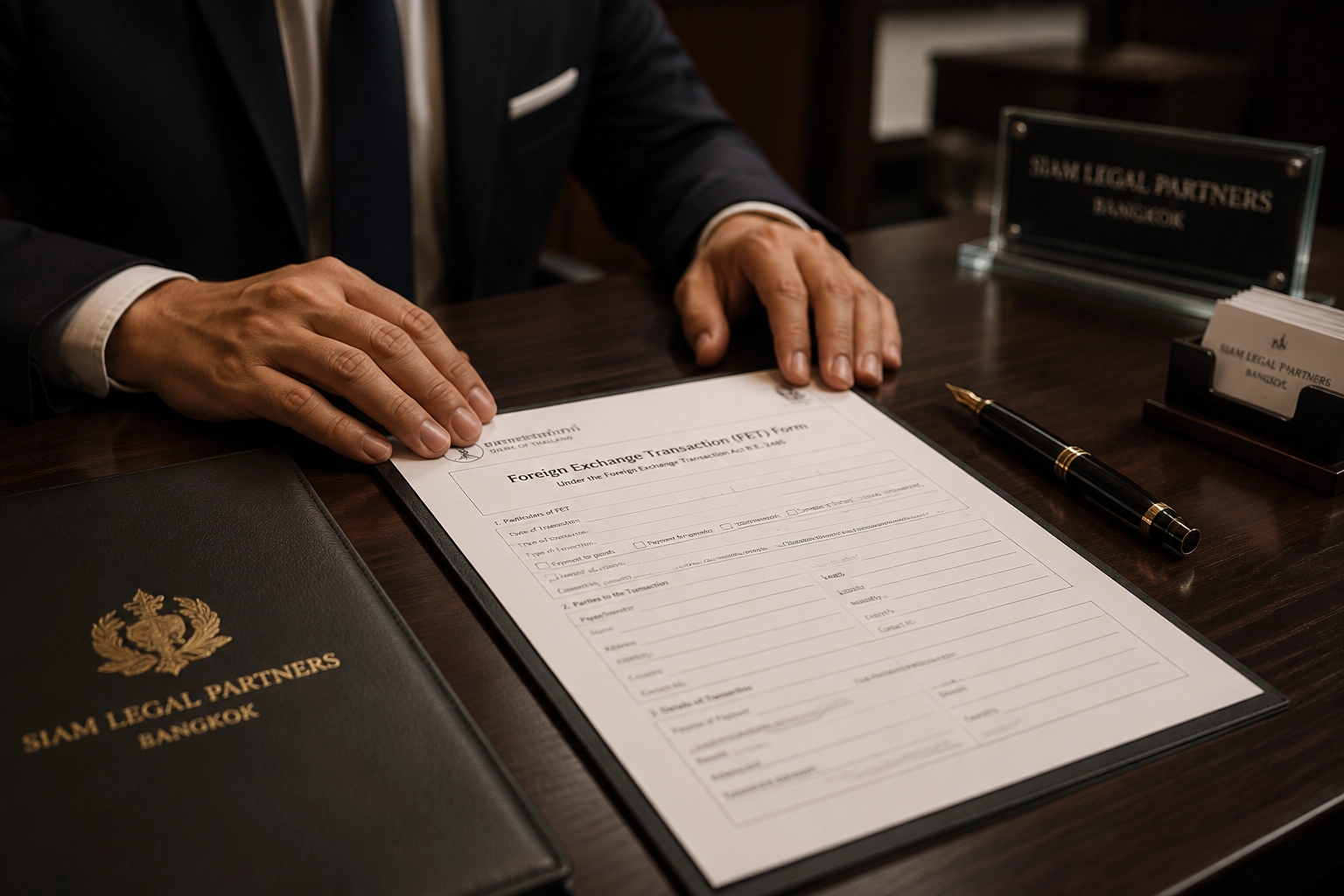
- Have you received a valid Foreign Exchange Transaction (FET) form for your incoming funds? (Required for legal repatriation on future sale – missing this at purchase is an expensive problem to discover when you’re trying to exit)
Myth 5: Off-Plan Pre-Construction Is the Safe Way to Get in Below Market
The off-plan pitch is consistent across every market in the region: buy now at 20% to 35% below secondary market value, appreciate during construction, sell or rent at a profit once the keys are handed over. It’s a compelling model, and in the right market with the right developer it has worked. It has also been one of the primary mechanisms for destroying foreign capital across Southeast Asia over the past two years, and the conditions driving those losses haven’t resolved. The pre-construction property risk picture looks different market by market, but the direction across Vietnam and Cambodia is the same.
Vietnam – USD 127 Billion Trapped in Frozen Projects
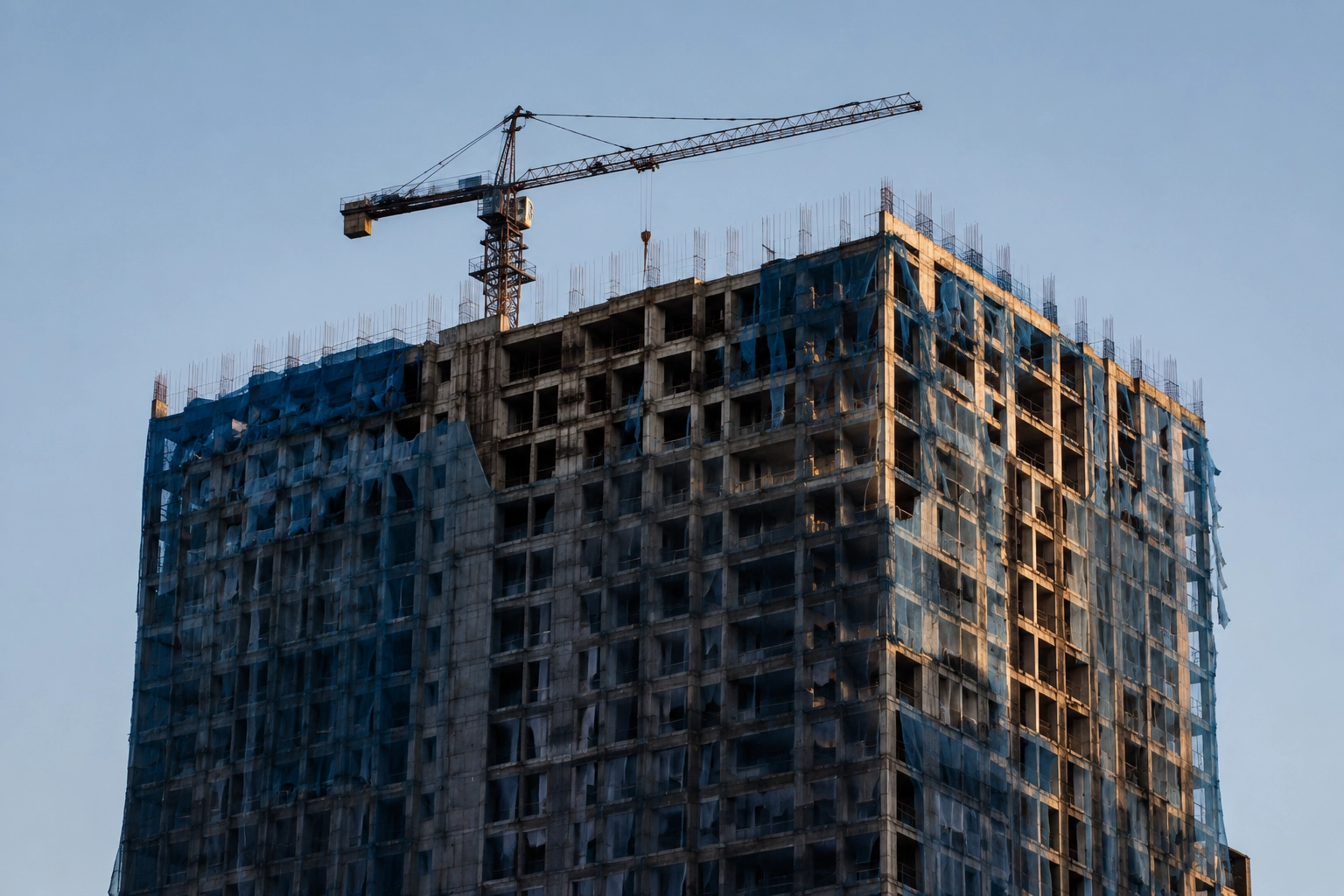
The scale of Vietnam’s off-plan problem is not easy to convey without the numbers, so here they are: approximately 4,500 real estate projects across the country are currently frozen due to legal bottlenecks, with VND 3.3 quadrillion – roughly USD 127 billion – in capital trapped inside them. That’s not a wave of isolated developer failures. That’s a structural seizure across the market, driven by land-use certificate delays, unresolved legal titles, and a corporate bond market that reached VND 1.1 quadrillion by late 2025 and left developers facing debt maturities they couldn’t service.
At Quoc Cuong Gia Lai Joint Stock Company’s Annual General Meeting on June 20, 2026, CEO Nguyen Quoc Cuong described 2026 as a “disaster year” for the Vietnamese real estate industry. Raw construction costs surged 25% to 30% from 2025. Legal delays in securing land-use certificates for projects that have been in development for years show no sign of clearing quickly. The developer insolvency risk Vietnam Cambodia conversation often focuses on smaller operators, but QCG is a listed company – the problems aren’t confined to the fringe of the market.
The detail that catches most foreign buyers off guard is the bank guarantee waiver. The Law on Real Estate Business 2023 requires developers selling off-plan projects to secure a commercial bank guarantee that protects buyers’ deposits if the developer defaults. That protection exists specifically because developers go under. Article 26 of the same law, however, permits buyers to voluntarily waive the guarantee in exchange for a lower purchase price. Many do, because the saving feels immediate and the risk feels abstract. It isn’t abstract – it’s the exact scenario the guarantee was designed for, and waiving it to save two or three percentage points on entry price is a trade the math doesn’t support when the developer stalls three years later.
Cambodia – A Market Still Absorbing the Damage
Cambodia’s residential property market entered a severe downturn in late 2022 and hasn’t come out of it. The National Bank of Cambodia’s Residential Property Price Index fell 3.8% across 2025 and a further 3.67% year-on-year in January 2026. A report from the Non-Bank Financial Services Authority found that 63% of real estate developers in the country reported negative cash flows – meaning the majority of the sector is operating without the liquidity to complete what it started. S&P Global Ratings projects non-performing loans in the Cambodian banking system will peak at 7.7% in 2026, concentrated in lending to property and tourism.
The off-plan property risk in Southeast Asia is structural in most markets, but Cambodia adds a specific mechanism that makes it worse than it looks on the surface: there is no regulatory escrow framework to protect buyer deposits. Developers use buyer installment payments as their primary source of construction financing. When a buyer pays a 30% deposit and subsequent installments, that money funds the construction of the building they’re buying into. When the developer’s cash flow turns negative – as it has for 63% of the sector – construction stops, because the funding source stopped. The buyer has no completion guarantee, no recourse mechanism, and no secondary market to exit into while the project sits unfinished.
Sihanoukville makes the outcome visible. Hundreds of condominium developments along Cambodia’s coastal strip sit unfinished, stalled at various stages of construction, with buyers holding contracts on units that may never be delivered. The developer insolvency risk Vietnam Cambodia framing sometimes implies the two markets carry similar risk profiles – they don’t. Cambodia’s combination of negative developer cash flows, absent escrow protection, and a financing model that turns buyers into involuntary construction lenders makes off-plan purchases in secondary and coastal markets a category that warrants a fundamentally different risk assessment than buying in a regulated escrow environment.
Philippines – The Process Is Slow, and Developer Bankruptcy Makes It Worse
The Philippines offers stronger statutory protections for off-plan buyers than most markets in the region, and that’s genuinely true. Under Presidential Decree No. 957, developers must hold a valid License to Sell before collecting any payments, and the Maceda Law provides real cash surrender value rights once installments have been running for two years. The problem isn’t the law – it’s the clock. When a developer defaults, the buyer’s path to recovery runs through the Human Settlements Adjudication Commission, and the process from verified complaint to resolution typically takes six to twelve months. That’s six to twelve months of capital locked up with no certainty of outcome. If the developer enters bankruptcy proceedings before resolution, the situation gets worse: buyers become unsecured creditors under the Financial Rehabilitation and Insolvency Act (RA No. 10142), which means they sit at the back of the repayment queue behind secured lenders who will collect first, and often in full.
A case that circulated on Philippine legal forums in 2026 shows how the informal logic of walking away from a bad deal collides with what the law actually says. A buyer purchased a PHP 4 million condominium from DMCI, ran into financial difficulty while overseas, and simply stopped making monthly payments without issuing any formal written notice. The developer issued a Notice of Cancellation under the Maceda Law. The buyer assumed the contract was dissolved and the matter was closed. What they didn’t know is that a developer’s cancellation is legally invalid unless the developer simultaneously pays the mandatory 50% cash surrender value to the buyer – and DMCI hadn’t done that. Firms like Respicio and Co. are clear on this point: the correct response is a formal demand letter through legal counsel followed by a verified complaint with the HSAC to void the cancellation and enforce the refund. Stopping payments and going quiet isn’t a strategy. It’s a way of accidentally surrendering rights you still legally held.
The Real Math on Off-Plan Delays
A standard one-bedroom unit in Cambodia’s coastal markets generates approximately USD 750 per month in rental income when it’s occupied and operating. A three-year construction delay costs the buyer USD 27,000 in opportunity cost before they’ve collected a single month’s rent – and that figure often exceeds the pre-construction discount that made the purchase look attractive in the first place. If the developer defaults entirely, buyers typically lose whatever they paid in construction installments, which runs between 30% and 50% of the property value – direct write-offs between USD 30,000 and USD 100,000 or more depending on the purchase price. The pre-construction discount gets priced in one direction only.
Off-Plan Due Diligence Checklist
- Vietnam: Has the developer secured a bank guarantee? Are you being asked to waive it?
- Philippines: Does the developer hold a valid License to Sell from DHSUD?
- Cambodia: What is the developer’s verified track record of completed, occupied projects?
- Everywhere: What percentage of the total purchase price is paid before completion?
- Everywhere: What is your contractual recourse if the project is delayed by more than 12 months?
- Everywhere: Has independent legal counsel confirmed the project has valid land-use rights?
The Regulatory Timeline That Explains Why This Is All Happening Now
These five myths survived as long as they did because governments across the region tolerated the arrangements behind them. Informal structures drove real estate transaction volume, attracted foreign capital, and generated tax revenue – and for years, enforcement was light enough that the risk of running a nominee package or selling a void 90-year lease fell almost entirely on buyers rather than developers or intermediaries. That tolerance has ended, and the shift has been faster and more coordinated than most buyers following the market from the outside have registered. The table below covers the legislative changes and court decisions from 2025 and 2026 that define the environment anyone buying property in this region is now operating in.
| Country | Law / Ruling | Effective Date | Key Impact |
| Indonesia | Bali Perda No. 4/2026 | Feb 24, 2026 | Criminalizes nominee structures – buyers, nominees, and agents all face liability |
| Indonesia | BKPM Regulation No. 5/2025 | Oct 2, 2025 | Reduces PT PMA minimum capital from IDR 10B to IDR 2.5B (approx. USD 150,000) |
| Vietnam | Decree 168/2025 (Beneficiary Owner Registry) | Jul 1, 2025 | Mandates BO disclosure for 25%+ ownership – auto-flags nominee capital flows |
| Vietnam | Law on Investment 2025 | Mar 1, 2026 | Authorizes termination of “sham” property transactions |
| Thailand | Supreme Court Decision 4655/2566 | Mar 18, 2025 | Voids automatic 30+30+30 lease renewals under Civil and Commercial Code Sec. 540 |
| Thailand | OCPB Notification B.E. 2567 | Jan 31, 2025 | Designates condo reservations as contract-controlled; bans arbitrary deposit confiscation |
The pattern running through every entry in that table is the same: something previously left to discretion got formalized. AI screening in Thailand’s corporate registry, automated electronic identification codes on individual Vietnamese residential units, criminal liability for everyone in the chain of a Bali nominee arrangement – these are enforcement mechanisms that don’t rely on an inspector having a reason to look. They look by default. The practical recommendations that follow are built around that reality.
What to Do Instead: 5 Practical Rules for Foreign Buyers in Southeast Asia
Reject Nominee Structures Without Exceptions
The “grey area” framing for nominee arrangements doesn’t hold anywhere in the region anymore. Bali’s Perda No. 4/2026 made them a criminal offense with liability extending to the foreign buyer, the local nominee, and the facilitator who set the deal up. Thailand’s Department of Business Development now runs automated AI screening against corporate registries. Vietnam’s Beneficiary Owner registry flags nominee capital flows without anyone having to file a complaint. The infrastructure for tolerating these arrangements is gone.
The compliant alternatives exist and are workable. In Indonesia, that’s a registered Hak Pakai title or a properly capitalized PT PMA. In Thailand, it’s a condo unit within the 49% freehold quota. In Vietnam, it’s a Sales and Purchase Agreement on a unit with available foreign quota, documented with a Pink Book. None of these are workarounds – they’re the actual legal frameworks, and they’re the only ones that hold up when enforcement arrives.
Verify Zoning and Licensing Before You Pay Anything
In Indonesia, check the KKPR zoning designation before any payment changes hands. The KKPR – Kesesuaian Kegiatan Pemanfaatan Ruang, the land-use activity suitability framework – confirms whether the land is registered as agricultural green space. If it is, building on it is illegal regardless of what the seller’s documents say, and Bali’s demolition enforcement under Perda No. 4/2026 is not theoretical. In the Philippines, a reservation deposit paid to a developer without a valid License to Sell from DHSUD is an illegal collection – the developer hasn’t earned the right to take your money yet. In Vietnam, get written confirmation of the building’s current 30% foreign quota status directly from the provincial Department of Construction before signing anything, because the developer’s verbal assurance and the official figure are not always the same number.
None of these checks cost money. They cost a direct question and the patience to wait for a written answer. The buyers who skip them aren’t saving time – they’re just finding out later.
Price Any Leasehold Deal on 30 Years Only
Following Supreme Court Decision No. 4655/2566, the only legally certain horizon in a Thai leasehold transaction is the first registered 30-year term. Pre-paid automatic renewal clauses for years 31 through 90 are void under the Civil and Commercial Code, and they don’t bind any landowner other than the one who signed them. Run the financial analysis on 30 years. If the numbers don’t work on 30 years, the 90-year marketing pitch isn’t fixing the problem – it’s concealing it.
For buyers who need genuine long-term security on a leasehold structure, the conversation worth having with independent legal counsel is about supplementary registered rights – a Right of Superficies or a Usufruct. These offer stronger inheritance protections and long-term occupancy rights than a renewal clause that the Supreme Court has already ruled unenforceable. They’re not a perfect substitute for freehold, but they’re registered instruments with legal weight, which is more than a pre-paid extension agreement can claim right now.
Don’t Waive Developer Protections for a Small Discount
Vietnam’s bank guarantee requirement on off-plan purchases exists because the legislature looked at the developer insolvency rate and decided buyers needed protection. Walking away from that guarantee to save 2% to 3% on entry price means accepting the full default risk personally in exchange for a saving that disappears the moment construction stalls. With approximately 4,500 projects currently frozen across Vietnam, that’s not a hypothetical scenario being traded against a real saving. It’s a real risk being traded against a marginal one.
In Cambodia, the framing to apply before any off-plan purchase is simple: if a developer cannot point to multiple completed, occupied projects with verifiable tenants or owners in them, the pre-construction discount isn’t a market opportunity. It’s compensation for a construction and delivery risk you are absorbing on the developer’s behalf, without the escrow protections that would make that risk manageable.
Use Independent Legal Counsel – Not the Developer’s Notary
Developer-provided legal support serves the developer’s transaction. It exists to make the deal close, not to identify the reasons it shouldn’t. Property due diligence in Southeast Asia at any purchase price requires three things from independent counsel: a formal title search, a contract review for regulatory compliance with current foreign buyer protection laws, and confirmation of the correct foreign currency transfer protocol for the jurisdiction you’re buying in.
In Thailand, that last point has a specific and commonly missed component. A valid Foreign Exchange Transaction form – the FET form – must be obtained for incoming purchase funds at the time of transfer. That document is required to legally repatriate sale proceeds when you eventually sell. Buyers who skip it at purchase discover the problem at the exit, when reversing the oversight is considerably more complicated and expensive than it would have been on day one.
Independent legal counsel is not an optional line item in a cross-border acquisition budget. It is the cost of knowing what you’re actually buying.
Frequently Asked Questions
Can foreigners own land in Thailand?
Generally, no. Foreigners cannot hold freehold land title in Thailand. The practical options are condominium units within the 49% foreign quota, which do come with genuine freehold title, and registered 30-year leases on land. The Thai Limited Company structure gets suggested regularly as a workaround, but using Thai nominee shareholders to hold land on a foreigner’s behalf violates the Foreign Business Act and carries criminal penalties – and as of 2026, the Department of Business Development is running automated screening to find exactly these arrangements.
Is Bali leasehold safe for foreigners?
A Hak Sewa – a contractual leasehold registered through a licensed PPAT notary – is a legal structure in Indonesia. What is no longer safe, or legal, is a nominee arrangement where an Indonesian national holds freehold title on behalf of a foreign buyer. Bali’s Provincial Regulation No. 4/2026, signed February 2026, criminalized that practice and extended liability to the foreign buyer, the nominee, and anyone who facilitated the deal. For buyers who want registered title rights backed by the National Land Agency, Hak Pakai and PT PMA are the compliant routes.
What is Vietnam’s 30% foreign ownership quota and can I get around it?
The cap limits foreign buyers collectively to no more than 30% of the total units in any single condominium building. When that quota fills, developers switch to offering Long-Term Lease Agreements – but an LTLA doesn’t give you a Pink Book, can’t be used as mortgage collateral, and classifies you as a tenant rather than an owner under Vietnamese law. As for getting around it through a local nominee, Vietnam’s Beneficiary Owner registry has been active since July 1, 2025, and it automatically flags transactions where foreign capital flows through a local proxy.
Is a reservation deposit in Thailand refundable?
It depends on why the deal fell apart. Since January 31, 2025, the OCPB Notification B.E. 2567 prohibits developers from confiscating reservation fees when the buyer hasn’t defaulted, and if the project fails to obtain building permits or EIA clearance, a 100% refund is mandatory within 15 days. What isn’t covered is buyer’s remorse – change your mind without a developer-side trigger and the developer keeps the fee. Check the project’s permit and EIA status before paying anything.
How risky is off-plan property in Southeast Asia?
Risk varies by market and developer, but the current conditions across the region are not favorable for pre-construction purchases without serious due diligence. Vietnam has approximately USD 127 billion trapped in roughly 4,500 frozen projects, and the CEO of a listed developer publicly called 2026 a “disaster year” for the sector. Cambodia has over 63% of developers reporting negative cash flows, with no regulatory escrow framework to protect buyer deposits when projects stall. In the Philippines, recovering money from a defaulting developer requires filing with the HSAC and waiting six to twelve months – and if the developer goes bankrupt, buyers become unsecured creditors. Verify the developer’s completed project track record, confirm the existence of a bank guarantee where the law requires one, and don’t waive that guarantee for a purchase price reduction.
Do I need a lawyer to buy property in Southeast Asia?
Yes – and specifically not the one the developer’s sales team recommended. Developer-provided legal support is there to close the transaction, not to protect your interests in it. Independent legal counsel conducts a proper title search, reviews the contract against current foreign buyer protection laws, and confirms the correct foreign currency transfer procedure for the market you’re buying in. In Thailand, that last point matters more than most buyers realize: a valid Foreign Exchange Transaction form needs to be obtained for incoming purchase funds at the time of transfer, because it’s the document required to legally repatriate your proceeds when you eventually sell. Skip it at purchase and you’ll find out why it mattered at exactly the wrong moment.
If you want to keep learning without the noise, we share one clear perspective each week in The Hawook Weekly.
It’s focused on Southeast Asia property, written for people who want to understand how things actually work, not chase headlines.
- Practical property intelligence
- Delivered every Tuesday
- Because knowledge is leverage, and leverage creates wealth
You can subscribe here: https://www.news.hawook.co or check out our app here: https://app.hawook.com




Join The Discussion