
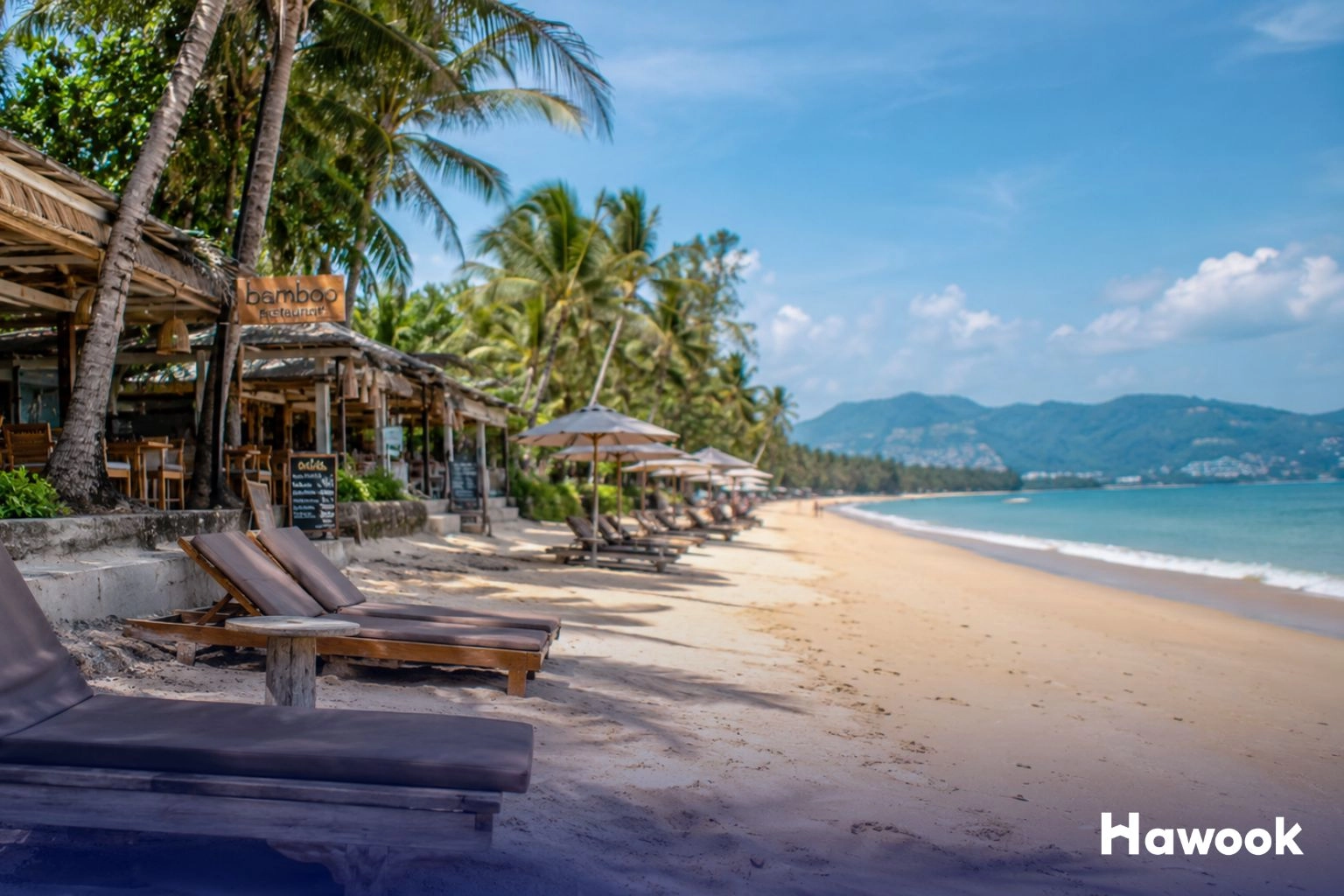
The Bang Tao Land Seizure marks a major turning point in Phuket’s ongoing crackdown on illegal beachfront development, disputed land ownership, and restricted public beach access. From seized restaurants at Bang Tao Beach to growing pressure on nominee business structures and investor accountability, this story reveals how Phuket’s coastline, tourism industry, and luxury property market are quietly changing in real time.
Table of Contents
A few tourists stood near the sand at Bang Tao Beach staring at what looked like the aftermath of a rushed renovation. Power cables hung loose beside shuttered beach bars. Pieces of timber and corrugated roofing sat piled beside the palms. A couple wearing linen resort clothes stopped to ask a security officer if the restaurants would reopen by sunset. He just shrugged and wiped sweat from his forehead.
Further down the beach, officials in long sleeves and hats walked slowly across the sand with measuring equipment, stopping every few meters to mark boundaries most visitors probably never realized existed in the first place.
For years, parts of Phuket’s coastline operated in a strange gray zone where beachfront businesses expanded little by little, fences appeared where there used to be open pathways, and “temporary” structures somehow stayed permanent long enough to install cocktail menus and WiFi routers. Locals complained about shrinking public beach access. Tourists mostly assumed the private-looking sections belonged to resorts. Business carried on.
Then the Bang Tao land seizure happened.
What started as a Phuket beach crackdown involving 16 illegal beachfront structures quickly turned into something much bigger. The operation exposed illegal subleasing networks, questionable land claims, and the quiet influence of investor groups that had been operating around some of Phuket’s most valuable coastal land for years.
But what makes this story different is not just the enforcement itself. Phuket has done beach sweeps before. Chairs disappear. Vendors relocate. Headlines come and go.
This feels more structural than cosmetic.
The conversation now stretches beyond illegal beachfront structures and into bigger questions about who actually has access to Phuket’s beaches, how land ownership is enforced, and whether the island is entering a more serious accountability movement after decades of selective enforcement and quiet compromises.
Around Bang Tao Beach, people are watching closely. Not because they miss a few beach bars, but because the rules suddenly seem less flexible than they used to.

What Actually Happened at Bang Tao Beach?
The Bang Tao land seizure did not happen overnight, even if it looked sudden from the outside.
By the time officials started disconnecting electricity and water lines at beachfront restaurants in late April, the investigation had already been moving quietly for months. Local authorities had been surveying land boundaries in Cherng Talay since January, following complaints about Phuket beachfront encroachment along one of the island’s most valuable stretches of sand.
If you spend enough time around Bang Tao Beach, you notice how blurry the line between public space and private business can sometimes feel. A beach bar adds a few extra tables each season. A bamboo fence appears near the sand. Someone starts charging parking or “access” fees that nobody remembers existing before. Over time, temporary setups start behaving like permanent property.
That gray zone is exactly what officials targeted during the Bang Tao Beach crackdown.
Authorities eventually reclaimed around five rai of public beachfront Phuket land, roughly 8,000 square meters. The operation focused on 16 illegal restaurants Bang Tao authorities said had been built on protected public land. Some structures reportedly blocked beach access entirely. Others were connected to informal subleasing arrangements where operators paid investors for rights that may not have legally existed in the first place.
The enforcement itself unfolded in stages rather than one dramatic sweep.
At first, survey teams mapped out disputed areas and checked boundary points. Then came inspections, document reviews, and monitoring of commercial activity along the beach. By late April, officials moved in with a larger multi-agency operation.
One local expat described the atmosphere as “strangely calm but tense.” Tourists were still ordering coconuts a few hundred meters away while officials photographed structures and utility workers cut power lines in the midday heat.
Here’s a simplified timeline of how the operation unfolded:
| Timeline | What Happened |
| January 2026 | Authorities begin land surveys in Cherng Talay |
| February to March 2026 | Officials monitor businesses and map disputed areas |
| April 2026 | Multi-agency enforcement operation approved |
| April 29 2026 | Teams move into Bang Tao Beach to reclaim land |
| April 30 2026 | Electricity and water disconnected at beach structures |
| Early May 2026 | 16 beachfront restaurants formally seized |
One reason this Phuket beach crackdown caught so much attention is because officials appeared willing to push enforcement beyond symbolic warnings. Utilities were disconnected while businesses were still operating nearby. Structures were marked publicly. Investigators also started looking deeper into illegal subleasing networks instead of treating the issue like simple trespassing.
That shift matters.
In Phuket, land disputes often disappear into paperwork, court delays, or quiet negotiations. This time, authorities seemed determined to make the process visible. Not aggressive. Just visible enough that everyone paying attention understood the message.
Public beachfront land was no longer being treated like negotiable space.
Why This Crackdown Matters More Than Previous Phuket Beach Sweeps
Phuket has always had a slightly complicated relationship with its beaches.
Officially, beaches are public. In practice, things have often felt more negotiable than that.
Over the years, parts of the coastline slowly shifted into these strange semi-private spaces where tourists could still technically walk through, but not without feeling like they were entering someone else’s territory. A rope barrier here. Reserved loungers there. Security guards standing beside restaurants built so close to the sand that people naturally assumed the beach belonged to the business behind it.
Bang Tao was hardly the only example. You saw similar patterns in parts of Surin, Kamala, Rawai, and smaller corners of the island where development moved faster than enforcement. Some places added “temporary” structures that somehow survived multiple rainy seasons. Others introduced parking fees or unofficial beach access charges that locals quietly complained about but visitors often accepted without question.
Most longtime Phuket residents became used to this slow creep.
That is partly why the Bang Tao land seizure feels different.
Previous Phuket beach crackdowns often focused on surface-level cleanup. Beach chairs disappeared for a while. Vendors relocated. Structures were trimmed back just enough to satisfy regulations before business eventually settled into another version of the same arrangement.
This Phuket land crackdown appears more willing to go deeper into the ownership networks behind the businesses themselves.
Authorities are not just targeting bamboo bars sitting on disputed sand. They are looking at illegal subleasing systems, investor-controlled beachfront operations, and the informal power structures that allowed certain businesses to operate comfortably in legal gray zones for years.
People around Phuket notice that distinction.
You hear it in casual conversations at cafés in Cherng Talay or from local business owners who suddenly sound more careful discussing leases and land documents than they did a year ago. There is less confidence that “connections” alone can smooth everything over quietly.
That does not mean everyone supports every enforcement action. Phuket coastal disputes are rarely simple. Some operators insist they acted in good faith. Others claim regulations shifted over time or that unclear land boundaries created confusion long before they arrived.
And honestly, Phuket’s land history is messy enough that both things can sometimes be true at once.
Still, the broader Phuket accountability movement seems to be changing the mood around public beach access. The conversation now feels less focused on removing a few illegal structures and more focused on deciding what kind of island Phuket wants to become over the next decade.
Luxury tourism keeps expanding. Beachfront land keeps getting more valuable. Investors keep arriving.
At some point, the old habit of treating public coastline like flexible private inventory was probably going to collide with reality.
Bang Tao just happened to become the place where that collision finally became impossible to ignore.

The Strange World of Phuket Land Titles Explained Simply
Trying to understand Phuket land ownership laws for the first time can feel a bit like opening a drawer full of old cables and hoping one of them still works.
Everything looks important. Half the labels are confusing. Nobody explains it the same way twice.
And somewhere in the middle of all that confusion sits some of the most expensive Phuket beachfront land in Thailand.
That is partly why land disputes happen here so often.
Most people assume land ownership is simple. You buy land, you own it, end of story. But Thai land titles come in different categories with different legal strengths, different survey standards, and very different levels of risk. Once you add old paperwork, changing coastlines, tourism money, and decades of development pressure into the mix, things get messy fast.
The gold standard is the Chanote title Phuket buyers are always told to look for.
A Chanote title is basically the cleanest and clearest version of land ownership available under Thailand beachfront law. The land boundaries are properly surveyed and GPS verified. You know exactly where the plot starts and ends. Banks like Chanote titles. Lawyers like them too. Real estate agents mention them so often in Phuket that it almost becomes background noise after a while.
Then you move into the grayer territory.
Nor Sor 3 titles still provide recognized rights of possession, but the land boundaries are not always as precise. In some older areas, measurements were based on aerial surveys or neighboring plots rather than modern GPS systems. Most of the time, that is manageable. Until suddenly it is not.
A local property consultant once joked that some Phuket land maps look like they were drawn after a long lunch and a few beers. He was exaggerating. Probably.
Then there is Sor Kor 1.
This is where many Phuket coastal disputes start becoming more complicated than they first appear.
A Sor Kor 1 document was originally more like a notification of land use for agriculture rather than full ownership. In theory, it was never meant to support luxury beachfront developments or commercial beach clubs. But over time, some of these documents allegedly became the starting point for increasingly ambitious land claims.
That process is sometimes called “document blooming.”
The term sounds strangely peaceful for something that creates so many legal headaches.
The basic idea is that an older low-level land document gradually evolves into stronger ownership claims over time through surveys, upgrades, or disputed boundary adjustments. Critics of Phuket land practices argue that certain plots mysteriously “expanded” toward valuable beachfront areas over the years, especially during the island’s tourism boom.
To be fair, not every land dispute comes from corruption or fraud. Phuket changed incredibly fast. Fishing villages became luxury real estate zones almost overnight. Old records were inconsistent. Coastal geography shifted. Different agencies interpreted boundaries differently.
Still, the pressure around Phuket beachfront land created plenty of opportunities for blurry lines to become profitable ones.
Public land classifications add another layer to the puzzle. Beaches, dunes, mangroves, and certain coastal areas are legally protected for communal use. At least on paper. The challenge is proving exactly where public land ends and private ownership begins, especially in places where development arrived faster than proper oversight.
That is why recent crackdowns focus so heavily on land verification, aerial surveys, and GPS boundary checks.
In Phuket, a few meters of sand can be worth millions of baht.
And when that much money sits beside the ocean, paperwork suddenly becomes very important.
What Is a Chanote Title?
If you spend enough time around Phuket property investment circles, you start hearing the word “Chanote” almost immediately. Usually spoken with the kind of relief people reserve for finding parking near Boat Avenue on a Friday night.
That is because a Chanote title is considered the safest and clearest form of Phuket land ownership available in Thailand.
In simple terms, it means the land has been properly surveyed and officially recorded with precise boundaries. Modern Chanote title maps use GPS coordinates, so everyone can clearly see where the property begins and where it ends. No guessing. No “roughly somewhere near that coconut tree” conversations.
For buyers, investors, and restaurant operators, that clarity matters a lot.
In places like Bang Tao or Surin, where beachfront land values can climb incredibly fast, even a small boundary dispute can become expensive very quickly. A few extra meters toward the sand might not sound dramatic until lawyers, developers, and government survey teams all start showing up with clipboards.
That is one reason investors strongly prefer Chanote titles when buying villas, opening businesses, or signing long leases in Phuket. Banks also tend to favor Chanote land because ownership records are easier to verify and disputes are generally less complicated.
Of course, a Chanote title does not magically eliminate every possible issue. Phuket still has zoning rules, environmental laws, and public land restrictions that owners need to respect. But compared to older or less precise Thai land titles, Chanote documents usually offer the clearest legal footing.
In a place where tourism money and beachfront development move fast, certainty has value.
And in Phuket, certainty can sometimes feel surprisingly rare.
Why Sor Kor 1 Documents Keep Appearing in Land Disputes
Sor Kor 1 documents sit at the center of many Phuket land disputes partly because they come from a very different version of Phuket.
Long before luxury villas, beach clubs, and rooftop cocktail bars arrived, much of the island was agricultural land, rubber plantations, fishing villages, or undeveloped coastal terrain. Sor Kor 1 documents were originally created as basic notifications of land use for farming purposes. They were never intended to function like modern luxury beachfront ownership papers.
That is where things start getting complicated.
A Sor Kor 1 does not provide the same level of ownership certainty as stronger Thai land titles like Chanote. The boundaries were often loosely defined decades ago, sometimes using natural landmarks or rough descriptions instead of precise surveys.
Which sounds manageable until tourism money enters the picture.
As Phuket property values exploded over the years, especially around beachfront areas, older land claims suddenly became much more valuable. In some cases, critics allege boundaries were gradually adjusted, upgraded, or interpreted in ways that pushed claims closer toward high-value coastal land.
That process became known locally as “document blooming.”
The phrase almost sounds harmless. Like gardening.
In reality, it refers to the idea that lower-level land documents slowly “bloomed” into stronger ownership claims over time through upgrades, disputed surveys, or questionable paperwork trails. A plot that may have once covered inland agricultural land somehow appears connected to premium beachfront space years later.
To be fair, not every case involves wrongdoing. Phuket developed incredibly quickly, and older records were not always consistent or carefully mapped. Some confusion came from poor surveys, changing coastlines, or overlapping government agencies trying to interpret outdated information.
Still, Sor Kor 1 documents continue appearing in cases involving beachfront encroachment Thailand authorities are now investigating more aggressively.
Partly because once beachfront land becomes worth millions, even blurry paperwork starts attracting serious attention.
And Phuket has never exactly been short on people willing to test blurry lines.
If You’re Renting or Investing in Phuket, Check These First
Anyone entering the Phuket property market, especially near the beach, should probably slow down long enough to check a few basics first. The island moves fast. The paperwork should not.
Here are a few things experienced investors and operators quietly pay attention to:
- Verify the land title directly through the Land Office, not just through copies or screenshots
- Confirm the property boundaries with proper GPS boundary checks
- Review the master lease carefully if you are subleasing from another operator
- Be cautious around vague claims about “private beach rights” or exclusive beach access
- Use independent legal advice instead of relying only on local connections
- Double-check zoning rules before signing Phuket restaurant leases
- Ask whether the structure extends onto protected public land
- Treat unusually cheap beachfront deals with healthy skepticism
A lot of Phuket real estate risk comes from people rushing through details because the view looks amazing at sunset.
Which, to be fair, is understandable.
The Real Estate Side Nobody Wants to Talk About
At first glance, the Bang Tao crackdown looks like the kind of thing that would make investors nervous.
Police inspections. Seized beachfront businesses. Questions about land ownership. Utility lines getting disconnected in full view of tourists carrying iced coffees and beach towels.
None of that exactly screams “stable investment environment.”
But quietly, beneath the headlines, a lot of people inside the Phuket real estate world seem to understand something else is happening too.
Legal clarity has value.
Especially in places where land becomes more expensive every year.
Bang Tao is no longer just another beach town in Phuket. The area around Laguna Phuket has evolved into one of Southeast Asia’s more mature luxury lifestyle markets. Branded residences, wellness-focused communities, private villas, co-working cafés filled with digital nomads pretending they are definitely not checking crypto prices every fifteen minutes. The whole ecosystem has changed fast.
And buyers spending serious money on Phuket luxury villas usually care about one thing more than almost anything else: certainty.
Not flashy brochures. Not influencer drone videos. Certainty.
That is why clean Chanote titles matter so much in the Bang Tao property market. Investors want to know the land boundaries are verified, the ownership records are clear, and the beachfront path they walked during sunset drinks is not suddenly going to become part of a legal dispute three years later.
For a long time, some of the illegal beachfront structures around Phuket quietly damaged that sense of confidence. Not always in obvious ways. Sometimes it was subtle.
A luxury resort marketing itself around tranquility and open beachfront views loses a bit of credibility when neighboring businesses start blocking public access with fences, oversized seating areas, or semi-permanent structures that look one complaint away from demolition.
High-end buyers notice those things.
So do long-term investors.
Ironically, reopening parts of the coastline to proper public beach access may actually strengthen the area’s luxury image over time. Wealthy buyers are often drawn to places that feel protected, organized, and legally stable. They like beaches that still feel open and natural, not carved into awkward private zones where nobody seems fully sure what is legal anymore.
That does not mean the transition will be painless. Some business owners will lose money. Some investors may discover their lease structures were riskier than they realized. Phuket investment risk has always existed beneath the island’s polished marketing campaigns, especially in fast-growing beachfront areas.
But there is also a growing sense that Phuket’s luxury market is maturing.
A decade ago, rapid development alone was enough to attract buyers. Now many lifestyle buyers are asking different questions. They care about infrastructure, environmental protection, zoning enforcement, and long-term legal stability. The pandemic probably accelerated that shift. So did the arrival of more remote workers and long-stay residents treating Phuket less like a holiday and more like home.
In that environment, a tighter approach to beachfront enforcement may actually help the market more than it hurts it.
At least in the long run.
Because once property prices reach a certain level, people stop paying only for ocean views.
They start paying for predictability too.
Phuket’s “Accountability Era” Is Bigger Than Bang Tao
The Bang Tao land seizure did not appear out of nowhere.
If you have been following Phuket closely over the last couple of years, the island has slowly been moving toward a different kind of mood. Not stricter exactly. Just more aware of how visible everything has become.
Phuket used to operate with a certain level of tolerated ambiguity. Small rule violations were often treated as background noise. A questionable land boundary here. A nominee-owned business there. Beach access blocked “temporarily” for six years. People complained, shrugged, and carried on with dinner reservations.
Now those same issues are landing directly in headlines, viral Facebook posts, and government meetings.
The Cape Yamu controversy probably became one of the clearest turning points. What started as a local dispute involving beachfront access and a confrontation with a foreign resident quickly spiraled into a national conversation about privilege, public space, and whether influential people were being treated differently from everyone else.
Around Phuket, people noticed how fast the story spread.
Taxi drivers talked about it. Café owners talked about it. Expats talked about it while pretending not to gossip. Suddenly Phuket public beach access stopped feeling like a niche legal issue and started becoming part of a bigger conversation about fairness and accountability on the island.
The government seems to understand that shift too.
That is partly why the recent Phuket accountability push feels broader than just land enforcement. Authorities are also increasing pressure around immigration checks, work permits, nominee business structures, and tourist behavior concerns that might damage Phuket’s image internationally.
The Phuket nominee crackdown is a good example.
For years, nominee arrangements quietly existed in parts of the local business scene. Foreign investors would sometimes operate through Thai shareholders or layered ownership structures that everybody loosely understood but rarely discussed openly. Restaurants, property holdings, tour companies, even schools occasionally sat inside these gray zones.
Now enforcement agencies appear more willing to investigate those structures directly.
Again, not dramatically. Just more visibly.
At the same time, Phuket tourism regulation has become tighter in other ways too. Authorities have become increasingly sensitive to incidents involving disruptive tourist behavior, illegal businesses, or anything that risks making the island feel chaotic online. Social media changed the equation. A beach dispute that once stayed local can now become international news before sunset.
That pressure matters because Phuket’s economy depends heavily on perception.
Luxury tourism, real estate investment, wellness travel, remote workers, long-stay retirees. They all rely on the island feeling attractive, stable, and professionally managed. Government image management is part of that whether officials openly say it or not.
Nobody wants Phuket associated too closely with corruption investigations, illegal beachfront businesses, or mafia-style land disputes. Especially not while competing for high-spending visitors against places like Bali or Dubai.
Still, the situation remains complicated.
Some locals support the tougher enforcement completely. Others worry about selective crackdowns or inconsistent rules. Small operators sometimes feel squeezed while larger players continue adapting behind the scenes. That tension probably will not disappear anytime soon.
But something does feel different now.
There is less patience for the old assumption that influential people can quietly bend the rules forever without consequences. Phuket accountability has become part public pressure, part political strategy, and part economic necessity.
And once that kind of shift starts happening publicly, it becomes very difficult to reverse quietly.
What This Means for Tourists, Expats, and Business Owners
The Bang Tao crackdown will probably affect different groups in very different ways.
Some people will barely notice anything beyond a few missing beach bars. Others are quietly rechecking lease agreements, business structures, and land documents while pretending everything feels completely normal.
Which, in Phuket, is often how major transitions happen anyway.
For Tourists
Most visitors coming to Phuket for a week or two will likely experience the changes in fairly simple ways.
Cleaner beach access. Fewer awkward fenced-off sections. Possibly fewer businesses spilling directly onto public sand.
For years, parts of Phuket’s coastline operated in this strange in-between space where beaches were technically public but sometimes felt semi-private once you walked past enough loungers, beach club signs, or security staff watching people too carefully.
That atmosphere may start shifting.
The Phuket tourism experience increasingly revolves around openness, walkability, and natural beachfront space, especially in areas like Bang Tao where luxury tourism overlaps heavily with lifestyle travel. Visitors paying premium hotel rates generally want beaches that feel beautiful and relaxed, not beaches that feel tangled in ownership disputes.
At the same time, tourists may notice stricter enforcement around behavior, permits, and beach activity moving forward. Phuket tourism regulation is becoming more visible because the island’s reputation now travels online faster than ever.
One badly handled incident can become international news before the next sunset cocktail special starts.
For Restaurant Operators
This is where things become more complicated.
The Phuket beachfront businesses caught in recent enforcement actions are a reminder that operating near the sand comes with more scrutiny than it used to. Especially in high-value areas like Bang Tao, Surin, and parts of Rawai.
For restaurant operators, business compliance suddenly matters in a more practical way.
Land boundaries are being checked more carefully. Utility access can be disconnected quickly. Lease agreements that once felt informal are now being examined much more seriously. Even operators who acted in good faith may discover that the land structure underneath their business is not as secure as they assumed.
A lot of Phuket restaurant leases historically relied on local relationships and verbal assurances alongside paperwork. Sometimes that worked fine for years. Until regulations shifted or enforcement priorities changed.
Now there seems to be less tolerance for vague arrangements involving public land or illegal subleasing systems.
Which honestly makes some operators nervous.
Not because every business is doing something illegal, but because Phuket’s development history has always involved a fair amount of blurry lines and evolving interpretations.
For Foreign Investors
Foreign investors are probably watching this situation more closely than anyone.
Phuket investment has expanded rapidly over the last few years, especially around luxury villas, hospitality projects, wellness resorts, and lifestyle-focused developments aimed at remote workers and long-stay residents. The island still attracts huge interest because, frankly, there are not many places where tropical beachfront living, international infrastructure, and relatively accessible property prices all exist together in the same package.
But the crackdown highlights a reality many experienced investors already understood quietly.
The recent focus on nominee arrangements, land verification, and ownership transparency signals that authorities are paying closer attention to how businesses and properties are actually controlled behind the scenes. Investors using complicated ownership structures or unclear lease systems may face higher Phuket investment risk going forward.
At the same time, cleaner enforcement could also improve long-term investment confidence.
A more regulated market tends to attract buyers who plan to stay involved for years rather than people chasing fast speculative gains. That shift may actually strengthen parts of the Phuket expat life ecosystem over time, especially among residents looking for stability rather than shortcuts.
Phuket still runs partly on flexibility and relationships. It probably always will.
But the island also seems to be entering a phase where paperwork matters a little more than it used to.
Is Phuket Finally Cleaning Up Its Beaches?
For years, conversations about Phuket beach access usually followed the same pattern.
People complained quietly. Officials promised investigations. A few temporary structures disappeared. Then life carried on much the same as before.
The Bang Tao Beach crackdown feels different partly because it touches something bigger than land boundaries. It reflects a broader shift in how Phuket seems to view itself now.
The island is no longer just competing as a cheap tropical getaway with nice sunsets and beach bars. Phuket increasingly markets itself as a premium destination built around lifestyle, long-term living, wellness tourism, luxury property, and international investment. That image depends heavily on stability, public confidence, and the sense that rules actually mean something.
Which is why Phuket land enforcement suddenly matters far beyond one stretch of sand in Cherng Talay.
Public beach access has become symbolic in a way. Beaches are one of the few spaces in Phuket that still belong to everyone at the same time. Locals, tourists, retirees, surfers, hotel guests, families eating grilled chicken under the trees. Once those spaces start feeling controlled by fences, informal gatekeepers, or confusing ownership claims, people notice.
Not always loudly. But they notice.
The Phuket accountability movement seems to be growing from that feeling. Partly through public pressure. Partly through politics. Partly because the island’s economy now depends on maintaining international trust in ways it did not twenty years ago.
At the same time, nobody should pretend the situation is completely simple.
Phuket still relies heavily on tourism money and rapid development. Investors want flexibility. Businesses want stability. Authorities want stronger regulation while still keeping the economy moving. Those goals do not always fit together neatly.
And Phuket has always had a talent for living inside gray areas.
Still, something about the atmosphere feels different lately. There is more scrutiny around beachfront development. More public discussion about legal ownership. More awareness of how quickly stories about corruption investigations or illegal businesses spread online.
Even the language people use has changed.
A few years ago, many beach disputes were treated like isolated local issues. Now they are increasingly viewed as part of a larger conversation about investor accountability, public space, and what kind of future Phuket actually wants.
Maybe that is the real significance of the Bang Tao land seizure.
Not just the removal of illegal structures, but the gradual disappearance of the old assumption that beachfront rules were always flexible if the right people were involved.
Walk along parts of Bang Tao Beach today and you can still see traces of that transition happening in real time. Open sand where structures used to sit. Survey markers near the palms. Tourists wandering through spaces that suddenly feel a little more public again.
Nothing about it feels dramatic.
Just different enough that people are starting to look at Phuket’s beaches with slightly new eyes.
FAQs About the Bang Tao Land Seizure
Why were restaurants seized at Bang Tao Beach?
Authorities said the restaurants were operating on public beachfront land in Bang Tao without proper legal rights. The Phuket beach crackdown focused on illegal structures, disputed land use, beach access restrictions, and businesses connected to questionable subleasing arrangements.
Some operators were also accused of fencing off parts of the beach and charging unofficial access fees.
Was the land privately owned?
According to officials, much of the disputed area involved public land rather than legally owned private beachfront property. That is what made the Bang Tao land seizure such a major issue.
In Phuket, land boundaries can become complicated because different types of Thai land titles exist, and some older claims are not always clearly defined.
What is illegal subleasing in Phuket?
Illegal subleasing usually refers to situations where someone leases land or commercial space they may not legally control in the first place.
In the Bang Tao case, authorities alleged that certain investor groups were collecting money from restaurant operators for beachfront areas connected to disputed or public land. That created a kind of unofficial rental system operating inside legal gray zones.
It is one of the reasons Phuket land disputes can become so messy.
Can foreigners own beachfront land in Thailand?
Foreigners generally cannot directly own land in Thailand, including beachfront land.
There are legal ways foreigners can invest in Phuket property through long leases, condominium ownership, or company structures, but direct land ownership restrictions still apply under Thai law.
That is also why authorities are paying closer attention to nominee ownership arrangements and Phuket investment structures.
What is a Chanote title?
A Chanote title is considered the strongest and safest type of land ownership document in Thailand.
It includes properly surveyed boundaries with GPS verification, which helps reduce disputes over property lines. Investors and developers usually prefer Chanote title Phuket properties because ownership records are much clearer compared to older land documents.
In high-value areas like Bang Tao, that clarity matters a lot.
Why is Phuket cracking down on beach businesses now?
Several things seem to be happening at once.
Public pressure around Phuket public beach access has grown stronger in recent years. Social media also makes local disputes much more visible than before. At the same time, Phuket authorities appear increasingly focused on improving the island’s tourism image, enforcing business regulations, and reducing illegal beachfront development.
The broader Phuket accountability movement goes beyond just one beach.
Will this affect Phuket property prices?
Possibly, yes.
In the short term, crackdowns can create uncertainty around certain projects or lease arrangements. But many long-term investors actually see stronger Phuket land enforcement as positive because it improves legal clarity and reduces hidden risk.
Clean land titles and stable regulations tend to strengthen confidence in the Phuket real estate market over time.
Are more Phuket beaches facing similar investigations?
Most likely.
The Bang Tao Beach crackdown is part of a wider pattern across Phuket involving beach access, land verification, environmental rules, and business compliance. Areas like Rawai, Surin, Kamala, and other coastal zones have already seen increased inspections or enforcement activity in recent years.
Phuket’s coastline has become too valuable for authorities to ignore these disputes completely anymore.


Join The Discussion