

The Southeast Asia Property Market isn’t drowning in excess — it’s suffering from a mismatch. While headlines warn of oversupply, savvy buyers are snapping up the right properties faster than ever. This deep-dive unpacks why prices are holding, which formats are failing, and what today’s investors and homebuyers actually want. From Bangkok to Bali, it’s not about too much supply — it’s about the wrong kind in the wrong place. Discover the real story behind the region’s most misunderstood real estate trend.
Table of Contents
“If There’s So Much Supply, Why Aren’t Prices Falling?”
If you follow Southeast Asia’s property headlines, one theme seems to echo louder than the rest: Oversupply.
From Bangkok to Manila, developers are sitting on what some call a glut of condos. Inventory is piling up. New launches keep coming. Vacancy rates rise. Sounds like a crash is coming, right?
And yet…
📈 In Singapore, public housing resale prices rose 9.6% in 2024, almost double the prior year’s gains.
📈 In Vietnam, vacancy rates remain under 5% in major cities, while demand outpaces supply by a factor of 2-to-1.
📈 In tourist-heavy markets like Phuket and Bali, villas are being snapped up before completion, often in all-cash deals.
So what gives?
If the region is really flooded with property, why are prices holding steady (or even climbing)?
Why are new builds still selling out in weeks? And who, exactly, is buying?
Maybe the narrative isn’t wrong, just misaligned.
Maybe we don’t have too much supply.
Maybe we just have the wrong kind.
Let’s break that down.
The Oversupply Narrative
“Too many condos. Not enough buyers.”
It’s a headline we’ve all seen, and in certain places, it’s not wrong.
In Metro Manila, a recent Colliers report revealed a 29-month inventory backlog of condominium units, especially in business districts like Makati and Ortigas. Much of that stock was built during low-rate boom years and hasn’t been absorbed due to sluggish demand, high borrowing costs, and changing buyer preferences. [source]
In Bangkok, developers have also scaled back launches after pandemic-era overbuilding left parts of the city with high vacancy and low rental yields, particularly in studio-heavy developments targeting international investors. [source]
It’s easy to take these local truths and apply them across the board.
To say Southeast Asia is “oversupplied”, full stop.
But here’s where the story gets murky:
- The same developers cutting launches in Bangkok are increasing projects in Phuket and Chiang Mai.
- In Manila, while some towers sit half-empty, others are completely sold out before topping off.
- In Vietnam, despite global market softness, demand is still outpacing supply, especially in Ho Chi Minh City. [source]
The real story isn’t oversupply, it’s misalignment. It’s too much of the wrong product, in the wrong place, for the wrong buyer. And that’s a very different problem to solve.
Breaking Down the Supply
To talk about “oversupply” like it’s one big category misses the point.
The question isn’t how much supply exists, it’s what kind.
Because in Southeast Asia, what’s sitting on the market and what’s selling out are two very different things.
🏙️ What’s Oversupplied:
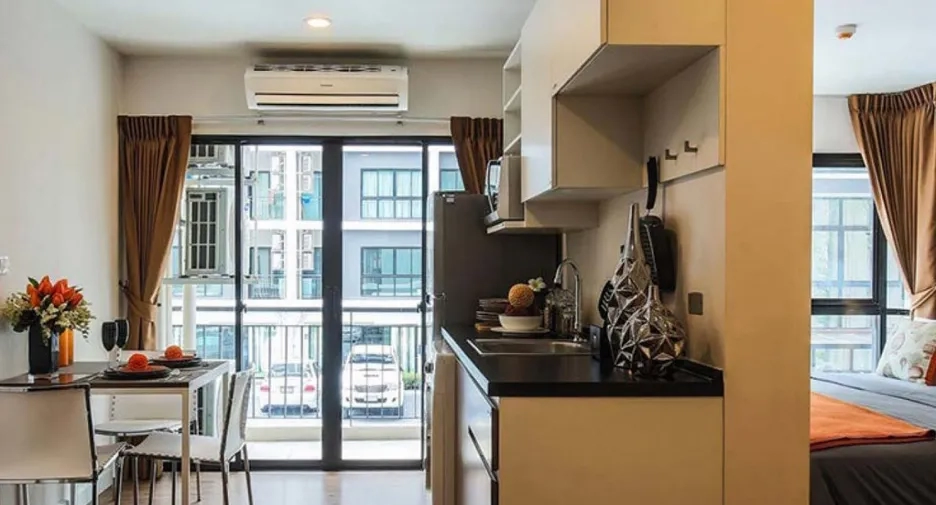
- Studio and 1BR condos in urban fringe areas, often bought off-plan by retail investors hoping to flip or short-let
- Mass-market towers built during 2020–2022 with little differentiation and weak end-user appeal
- Projects without rental management, sold as “investment units” but hard to rent without local support
📉 In Bangkok’s outer zones, developers are offering deep discounts and flexible payment terms just to move leftover stock.
📉 In Manila, smaller units targeting OFW (Overseas Foreign Workers) investor pools are struggling with longer absorption periods. [source]
So….What’s Not Oversupplied:
- Branded residences and lifestyle condos in high-demand neighborhoods
- 2–3BR formats with family appeal and modern layouts
- Villas with pools in resort zones like Phuket, Ubud, Da Nang, especially with rental programs
- Well-managed new builds with flexible ownership structures
In Phuket, for example, many high-quality villa projects are selling out at the foundation stage, driven by foreign lifestyle buyers and crypto-to-property investors. In Vietnam, the market for family-size, mid-rise housing in urban districts remains underserved, not oversupplied.
The Format Mismatch
The real gap isn’t between supply and demand, it’s between what’s being built and what’s being asked for. Oversupply, in most cases, isn’t a total glut. It’s a format mismatch: developers chasing investor trends instead of end-user needs. And that, in some cases, is finally starting to correct.
Who’s Still Buying
If oversupply were absolute, no one would be buying. But they are, and in many cases, they’re buying fast. So who’s absorbing the right kind of product? And why? Breaking down a few buyer types.
Local Upgraders
In markets like Vietnam, Thailand, and the Philippines, the urban middle class is expanding and they’re no longer content with 10-year-old condos or cramped legacy units.
They want better layouts; better ventilation, larger kitchens, a second bedroom, parking and resort style amenities.
And they’re buying with a long-term view, not to flip, but to live or lease for stability.
In Ho Chi Minh City, mid-market new builds with larger unit sizes are consistently selling through phases ahead of schedule, while smaller investor stock lingers. [source]
Foreign Lifestyle Buyers
Remote workers, retirees, and “test movers” are increasingly betting on Southeast Asia, not just for vacation, but for a long-term lifestyle base.
Phuket, Bali, Da Nang, Penang — these are not oversupplied if you’re looking for:
- Pool villas near the beach
- Modern condos with rental programs
- Branded residences with on-site service
And the buyer profile is shifting:
→ Europeans and Australians making long-stay moves
→ Crypto-native expats converting digital wealth into real-world assets
→ Wealthier regional buyers diversifying out of primary cities
Cash Flow Seekers
In a high-interest, post-COVID world, real estate is still perceived as safer than stocks or startup equity for many regional buyers.
Buyers with $200K–$500K are buying yield, especially when projects offer:
- Guaranteed 6–8% returns (yes, with fine print)
- Passive rental management
- FX exposure to the dollar or euro via foreign tenancy
And this group isn’t scared off by “oversupply” headlines, because they’re not buying press releases. They’re buying returns and leave capital appreciation for 10 years down the road.
Why Prices Aren’t Falling
If Southeast Asia really is “oversupplied,” you’d expect to see price corrections across the board. But that’s not what’s happening.
In fact:
- Singapore’s private home prices were up 2.8% in Q1 2025, after falling slightly the previous quarter.
- Phuket’s villa prices are holding or rising in key areas like Bang Tao and Nai Harn, with inventory clearing fast in mid-range brackets.
- Vietnamese developers are even re-raising prices on certain resale units in District 2 and District 7 of Ho Chi Minh City.
So what’s keeping prices sticky, or in some cases, lifting?
Developers Pre-Sell to Protect Floor Pricing
In Thailand and Vietnam, it’s common for developers to pre-sell 60–80% of inventory before topping off, locking in price expectations and limiting panic discounts. By the time construction is complete, most of the units are spoken for. There’s little need to slash, or they leave those extras in the management pool and move on.
Inflation + Construction Costs Are Still Up
Materials, labor, permitting, none of these have gotten cheaper post-COVID. Developers can’t profitably launch at 2019 prices, and many simply pause projects rather than discount heavily.
Fewer launches = tighter supply of “fresh” stock.
Demand Is Selective, Not Gone
As we’ve seen, buyers are still active, they’re just picking the right stock for them.
- Yield-backed villas
- Near beachfront or branded projects
- Low-density formats with smart layouts
That demand props up pricing in key pockets, even as weaker projects lag.
Tourism & Lifestyle Migration Soak Up Supply
Markets like Phuket, Bali, and Da Nang benefit from post-pandemic lifestyle shifts: more long-stays, second-home buyers, and digital nomads renting furnished units.
→ A unit that would have gone to a flipper in 2019
→ Now goes to a yield buyer, lifestyle investor, or part-time resident
That keeps inventory off-market, and prices firmer.
Bottom line: Prices aren’t falling because people are still buying, they’re just buying smarter.
It’s not a crash. It’s a correction of expectations.
Oversupply ≠ Uniform
When people talk about oversupply, they often treat it like it’s one big number, a total glut of condos, an inevitable crash, a bubble waiting to burst.
But that’s not how real estate works. And especially not in Southeast Asia.
Oversupply is never uniform, it’s hyper-local.
Example 1: Bangkok
Yes, Bangkok has thousands of unsold condo units. But where are they?
- Onnut, Bang Na, Ramkhamhaeng, fringe areas with smaller units and speculative demand
- Older projects without BTS access, parking, or modern amenities
Meanwhile, try buying a 3BR condo in Thonglor or a villa near Phrom Phong and see how limited your options really are. Or check the rental price and do the ROI calculations.
Example 2: Metro Manila
Colliers flagged a 29-month backlog. But if you talk to agents in BGC or Rockwell, they’ll tell you resale inventory is tightening, especially for larger units and branded towers with proper amenities and management.
The backlog is concentrated in legacy towers, 1BRs, and towers launched to cater to the OFW investor boom, not end-user families.
Example 3: Phuket & Bali
On paper, there are “too many” new villa projects. In reality, any well-located, managed pool villa under $500K sells out pre-completion. It’s not about how much exists. It’s about how much is worth buying.
Key Insight
We don’t have a volume problem. We have a relevance problem.
Too many developers are still building for yesterday’s buyer, small, flippable, under-managed.
Today’s buyer wants livable, rentable, branded, or managed. Preferably all four. And that’s why some projects stall, while others don’t even hit the market before they’re 70% sold.
Conclusion: Oversupply Isn’t the Problem. Mismatch Is.
There’s no question that inventory is up. You can see it in the quarterly reports, the skyline cranes, the whisper discounts behind the scenes. But that doesn’t mean the market is broken.
Prices aren’t collapsing. Good projects are selling.
And smart capital, from regional families to global nomads is still deploying.
Why?
Because Southeast Asia isn’t oversupplied. It’s misaligned.
Too many projects were built for fast flippers. Now buyers are slower, pickier, more global and they want more than a glossy brochure and a rental promise.
That’s the opportunity.
If you’re building, investing, or advising in this region:
Design for the mismatch. Solve for the shift.
There’s still room to win here. You just need to stop chasing volume and start chasing fit.
Let’s keep the conversation going.
We’re tracking these trends closely at Hawook, and always open to swapping notes with other long-view builders and investors.
— Maya Chen



Join The Discussion