

Foreign buyers often focus on rental yield and price growth when evaluating overseas deals. But currency risk can quietly reshape the final outcome of a property investment. In this guide, we break down how exchange rates affect real estate returns in Thailand, Malaysia, and Indonesia, with simple examples that show how gains can shrink or grow once money is converted back to your home currency. Understanding this hidden factor can help investors make smarter decisions when buying property across Southeast Asia.
Table of Contents
A friend of mine bought a condo in Phuket about six years ago. Nice unit, good location, steady rental demand. On paper it was working well. The property value had gone up and the rental income covered most of the costs.
When he finally sold, the numbers looked different after converting everything back to US dollars.
The condo had gained value in Thai baht. Rental income had been stable. Nothing was wrong with the property and the local market had actually performed fine.
The surprise came from the exchange rate.
By the time the money moved back into USD, the gain had mostly disappeared.
This is where currency risk property investment becomes real. For foreign buyers looking at southeast asia property investment, exchange rates can quietly change the final result.
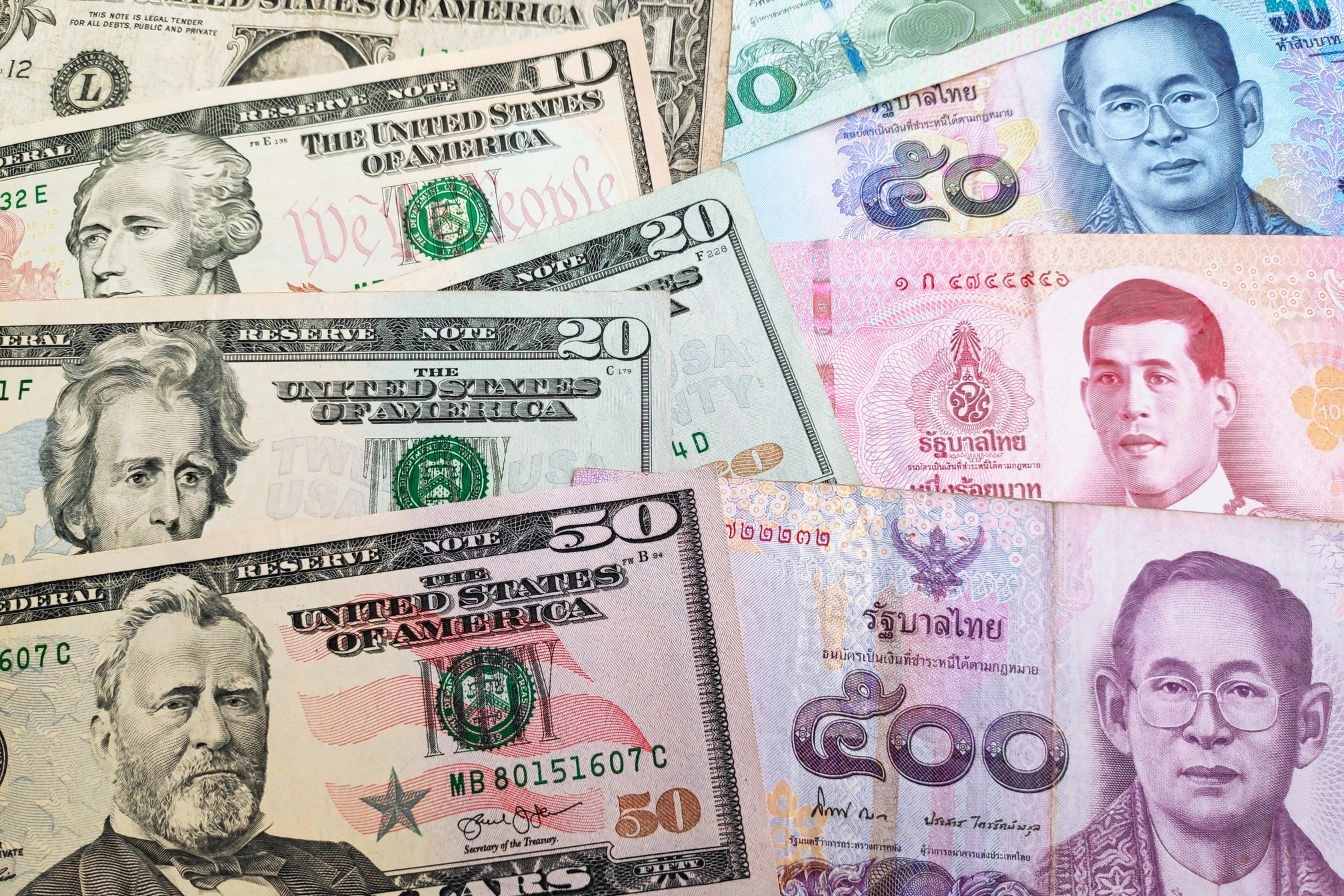
What Is Currency Risk in Property Investment?
Currency risk is one of the most overlooked parts of overseas property investment risk.
It simply means this. Your property is priced in the local currency, but your wealth is measured in your home currency.
If those two currencies move over time, your real return changes.
For example, many foreign buyers calculate Thailand property investment returns based on the local price increase or rental yield. But when the property is eventually sold, the money gets converted back to USD, EUR, GBP, or AUD. That conversion can change the final outcome.
This is where exchange rate risk real estate becomes important.
A property might perform well locally, yet deliver a very different result once currency conversion happens.
Here is a simple example of how a purchase in Thailand might look.
| Item | Value |
| USD investment | $200,000 |
| Exchange rate | 35 THB / USD |
| Local property price | 7,000,000 THB |
At the moment of purchase, everything looks straightforward.
But over time the Thai baht can strengthen or weaken against the dollar. That shift can increase or reduce your final return.
That is the core idea behind currency risk property investment. It is not about the property itself. It is about the currency your investment lives in.
Why Currency Risk Matters in Southeast Asia Property
When people look at southeast asia property investment, most focus on the obvious things. Purchase price, rental demand, tourism growth, and potential appreciation.
Currency rarely makes the list.
But for foreign buyers, it should.
Property in Thailand, Malaysia, or Indonesia is priced in local currency. Your wealth, however, is usually measured in dollars, euros, pounds, or Australian dollars. That gap creates currency risk overseas property investors often overlook.
Exchange rates do not stay fixed. Over five or ten years they can move quite a lot. Emerging market currencies tend to fluctuate more than major currencies, which means the impact on foreign property investment returns can be bigger than expected.
Even if the property performs well locally, the final result depends on the exchange rate when money moves back home.
Currency movement can:
- erase property gains
- amplify property gains
- change rental yield when converted back to your home currency
This is why exchange rate risk real estate deserves the same attention as rental yield or appreciation when investing overseas.
How Exchange Rates Affect Overseas Property Returns
When investors look at overseas real estate, they often focus on rental yield and price growth. Those matter, of course. But exchange rate risk real estate introduces another layer that can quietly change the outcome.
Currency affects your investment at three key moments.
When you buy the property
The first step is converting your capital into local currency.
A foreign investor buying in Thailand, for example, usually transfers USD or another major currency and converts it into Thai baht. The property price is then fixed in THB.
At that point your investment is tied to the local currency. If the baht later weakens or strengthens against your home currency, the value of the investment changes when viewed from back home. This is the starting point of currency risk property investment.
When you collect rental income
Rental income is also paid in local currency.
A Phuket condo might generate rent like this:
| Item | Amount |
| Monthly rent | 35,000 THB |
| Annual rent | 420,000 THB |
| Approx. yield in USD | about $12,000 per year at 35 THB/USD |
If the exchange rate changes, the same rent can be worth more or less when converted to USD.
When you sell the property
The biggest impact often appears at exit.
When the property is sold, the proceeds are converted back into your home currency. If the exchange rate has moved significantly during the holding period, it can increase or reduce your final return.
Worked Example: Thailand Property and Thai Baht Risk
A simple example helps show how currency can change the outcome of a property investment.
Imagine a foreign investor buying a condo in Phuket.
At the time of purchase the numbers look like this.
| Item | Value |
| Investment | $200,000 |
| Exchange rate | 35 THB per USD |
| Property price | 7,000,000 THB |
The investment is now tied to the Thai baht.
Let’s assume the property performs well locally. After five years the condo value increases.
| Item | Value |
| Purchase price | 7,000,000 THB |
| Value after 5 years | 8,400,000 THB |
| Local gain | +20% |
From a Thai market perspective, the investment looks strong. This is how many people calculate Thailand property investment returns.
But the final result depends on the exchange rate at exit.
Scenario A: Thai baht weakens
If the baht weakens during those five years, the conversion back to USD changes the outcome.
| Metric | Result |
| Property sale price | 8,400,000 THB |
| Exchange rate | 42 THB per USD |
| Sale value in USD | $200,000 |
| Local property gain | +20% |
| USD return | 0% |
The property gained value locally, but currency removed the profit.
Scenario B: Thai baht strengthens
If the baht strengthens instead, the result improves.
| Metric | Result |
| Property sale price | 8,400,000 THB |
| Exchange rate | 30 THB per USD |
| Sale value in USD | $280,000 |
| Local property gain | +20% |
| USD return | +40% |
This example shows why currency risk Thailand property investors should be part of the calculation. Currency can quietly reduce or amplify the final return.
Malaysia Property Investment and the Ringgit Factor
Malaysia offers attractive property prices and solid rental demand in cities like Kuala Lumpur and Penang. But when looking at Malaysia property investment returns, foreign investors also need to consider the ringgit.
Over the past decade the Malaysian ringgit has weakened against the US dollar. That movement affects how overseas investors experience their returns once money is converted back home.
A quick look at the exchange rate trend shows the shift.
| Year | MYR per USD |
| 2013 | 3.20 |
| 2018 | 4.05 |
| 2024 | ~4.70 |
Now imagine a simple investment example.
A foreign buyer purchases a condo in Kuala Lumpur.
| Item | Value |
| Purchase price | 800,000 MYR |
| Exchange rate | 3.20 MYR per USD |
| Value in USD | $250,000 |
After five years the local market performs well.
| Item | Value |
| New property value | 960,000 MYR |
| Local gain | +20% |
But the currency has also moved.
| Item | Value |
| Exchange rate | 4.70 MYR per USD |
| Sale value in USD | ~$204,000 |
The property gained value locally, yet the return in USD declined. This is a classic example of currency risk overseas property investors often miss when evaluating international real estate.

Indonesia Property Investment and Rupiah Risk
Indonesia is another market where currency movement plays a big role for foreign investors. Anyone looking at Bali villas or other resort areas should understand Indonesia property investment risk, especially when returns are measured in a foreign currency.
The Indonesian rupiah has historically been more volatile than many major currencies. Over time it has also tended to weaken against the US dollar. That movement can quietly reduce the real return of a property investment when funds are converted back home.
Here is a simple example using a Bali villa purchase.
| Item | Value |
| Purchase price | 3,000,000,000 IDR |
| Exchange rate | 15,000 IDR per USD |
| Value in USD | $200,000 |
After several years the local property market performs well.
| Item | Value |
| New property value | 3,900,000,000 IDR |
| Local gain | +30% |
However the currency also moves during that time.
| Item | Value |
| Exchange rate | 18,500 IDR per USD |
| Final value in USD | about $211,000 |
The villa gained significant value in rupiah, but once converted back to USD the return becomes much smaller. This example highlights Bali property investment currency risk that foreign buyers should factor into their calculations.
Why Southeast Asian Currencies Often Weaken
Foreign buyers looking at southeast asia property investment often focus on property prices and rental demand. Currency trends are less visible, but they matter for long term returns. Understanding a few basic macro factors helps explain why exchange rates in this region can move over time and why exchange rate risk real estate should be part of the investment picture.
Inflation differences
Inflation tends to run higher in developing economies than in the US or Europe. Over long periods this can slowly reduce the value of the local currency compared with major currencies. For property investors, this means the local asset may rise in price while the currency itself loses value.
Capital flows
Currencies are influenced by global investment flows. When international capital enters emerging markets, local currencies often strengthen. When money moves back to safer markets like the US, currencies in Southeast Asia can weaken. These shifts affect the real return foreign investors see.
Tourism dependency
Several countries in the region rely heavily on tourism. Thailand and Indonesia are good examples. When tourism slows during global shocks, local currencies can weaken quickly, which adds another layer of southeast asia property investment risk for foreign buyers.
Quick Checklist: Are You Ignoring Currency Risk?
When reviewing a deal in Southeast Asia, most investors focus on price growth and rental yield. That makes sense, but currency risk property investment can quietly change the final numbers.
A quick self check can help.
Ask yourself these questions:
- Are you calculating returns only in local currency instead of your home currency?
- Are you assuming the exchange rate will stay the same over the holding period?
- Are you converting rental income back to USD, EUR, or GBP in your projections?
- Have you looked at the historical exchange rate for that country?
- Are you factoring currency movement into your expected foreign property investment returns?
- Do you understand how exchange rate risk real estate can affect your exit value?
If a few of these questions make you pause, it may be time to look closer at currency before committing to an overseas property deal.
How Investors Reduce Currency Risk in Overseas Property
Currency movement cannot be controlled, but investors can manage how much it affects their returns. When looking at currency risk property investment, a few simple strategies can make a big difference.
Strategy 1: Buy when the currency is weak
Some investors try to enter a market when the local currency is relatively weak. If the currency later strengthens, it can improve the return when the property is sold. This approach is often discussed in overseas property investment strategy when evaluating emerging markets.
Strategy 2: Hold long term
Currency cycles tend to move over many years. Short term investors may feel the impact more strongly if exchange rates move during their holding period. A longer investment horizon can help smooth out some of the volatility.
Strategy 3: Diversify across countries
Some experienced investors spread their property investments across multiple markets. For example, owning assets in Thailand, Malaysia, and Indonesia can reduce exposure to a single currency.
Strategy 4: Focus on strong rental markets
Reliable rental income can help offset currency changes. In strong tourism or urban markets, consistent rent can improve overall returns even if exchange rates fluctuate.
FAQs About Currency Risk in Overseas Property
Does currency affect rental income?
Yes. Rental income is usually paid in local currency. When that income is converted back to your home currency, exchange rates can change the value. This is one of the ways exchange rate risk real estate affects foreign investors.
Is currency risk higher in emerging markets?
In many cases, yes. Currencies in emerging markets tend to fluctuate more than major currencies like the US dollar or euro. This means currency risk property investment can play a bigger role when investing in Southeast Asia or other developing markets.
Can currency movements increase returns?
They can. If the local currency strengthens during your holding period, the value of the property can increase when converted back to your home currency. In some cases currency movement can improve foreign property investment returns even if the property itself grows slowly.
Should currency risk stop you investing overseas?
Not necessarily. Many investors still find strong opportunities in southeast asia property investment markets. The key is to understand how currency affects returns and include it in your investment calculations from the beginning.
The Reality Most Overseas Property Investors Learn Too Late
Many foreign buyers focus on the obvious numbers when evaluating a property. Purchase price, rental yield, and potential appreciation usually get most of the attention.
Those factors do matter.
But for international investors there is another variable that quietly shapes the final outcome. Currency.
In simple terms, foreign property investment returns are influenced by three things:
- property price growth
- rental income
- currency movement
If the property rises in value and rental income is strong, the investment can look great in local currency. Yet the final result depends on the exchange rate when money is converted back to your home currency.
This is where currency risk property investment becomes real. Ignoring it means you are only looking at part of the picture.
For anyone considering southeast asia property investment, the lesson is straightforward. Evaluate the property carefully, but also understand the currency your investment lives in.




Join The Discussion