

Foreigners can't own land in Thailand, that part everyone knows. What almost nobody knows is that there's a legally grounded exception buried in the Condominium Act, and it's already been tested. This is the real story of horizontal condominiums in Thailand: how the structure works under Section 4, why a 2008 Pattaya project proved it holds up, and why almost no developer builds this way despite it being fully legal. If you're weighing a leasehold, a nominee company, or something with an actual title deed in your own name, read this first.
Table of Contents
You already know the rule. Foreigners don’t own land in Thailand, full stop. So you lease it, or you find a Thai partner willing to sit on 51% of a company, or you just accept that “buying a house” here means buying a very long rental.
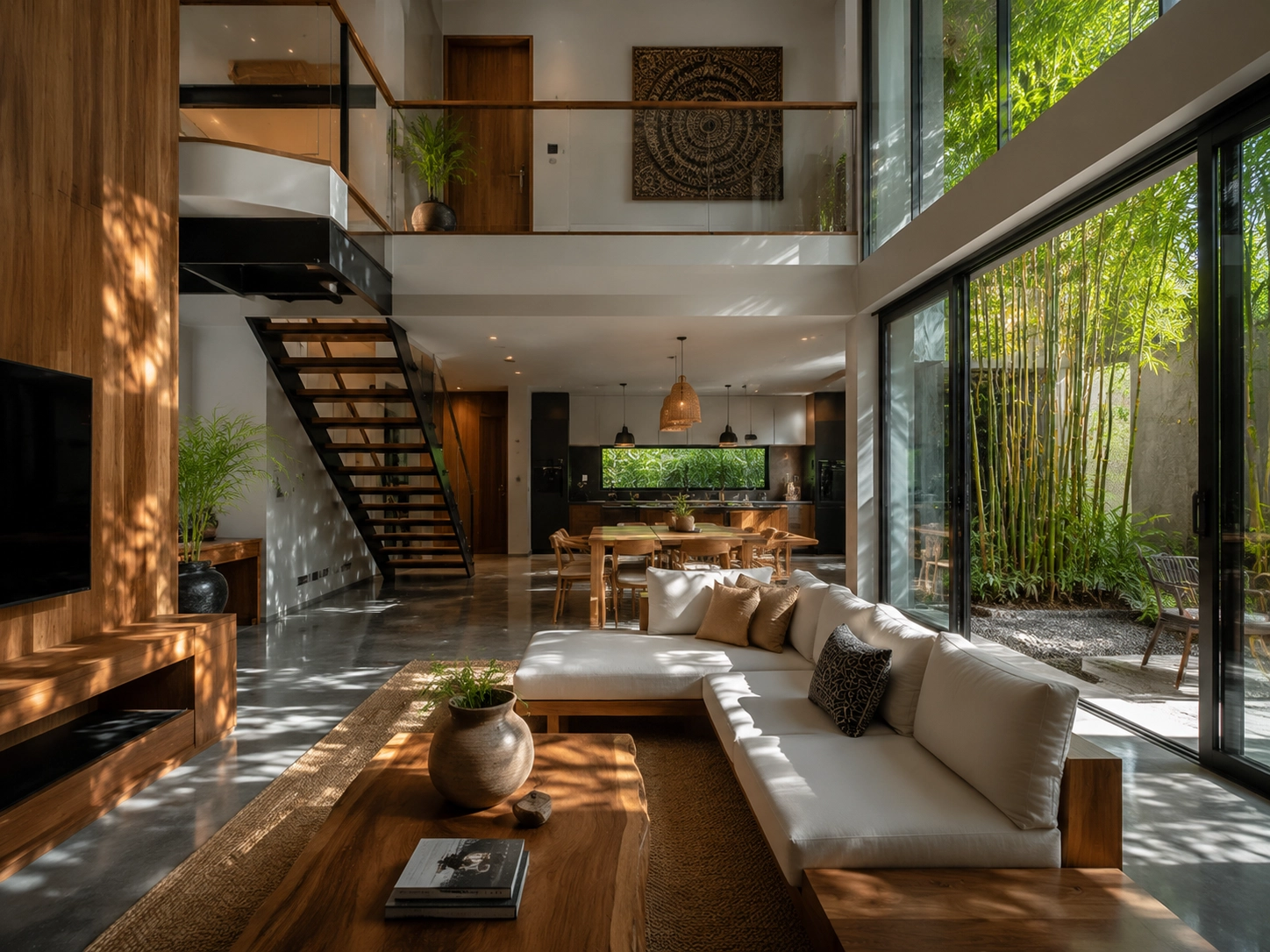
Except there’s a version of house ownership that doesn’t play by that script, and it’s not a gray area. It’s sitting right in the Condominium Act B.E. 2522, the same law that governs high-rise towers on Sukhumvit. Somewhere in the fine print, the definition of a horizontal condominium opens a door that almost nobody walks through: a single-story or low-rise structure, built to look and live like an actual house, registered and titled the same way a beachfront apartment would be.
This isn’t theoretical. A developer in Pattaya already ran this play back in 2008, got it approved, and handed foreign buyers real title deeds for what were, functionally, houses.
So here’s what we’re actually digging into: how this structure works under the law, why it’s held up since 2008, why almost no developer bothers building this way, and what you’d need to know before chasing a unit like this yourself.
Why Foreigners Can’t Just Buy a House in Thailand
You know the baseline. Section 96 of the Land Code Act B.E. 2497 keeps fee simple land title out of foreign hands, individuals and foreign-majority companies alike. That’s not new information, it’s just the wall everyone building a life here eventually runs into.
For decades, the workaround was predictable. Sign a long-term lease and call it close enough to ownership, or set up a company where a Thai partner holds 51% on paper while you keep the keys, the capital, and the control. Nobody loved either option, but they worked, mostly quietly, for a long time.
That quiet part is over. DBD, DSI, and AMLO have spent the past couple of years actually enforcing what was always technically illegal about nominee shareholding, and the numbers behind that crackdown are not small. Which is exactly why a structure that skips the nominee problem entirely is worth understanding properly.
The Old Playbook (and Why It’s Getting Risky)
- The 30-year registered leasehold: renewable on paper, but still a depreciating contractual right, not real ownership
- The Thai majority company: a Thai partner holds 51%, a foreigner holds 49%, and hopes the arrangement never gets examined too closely
- Full-scale DBD, DSI, and AMLO enforcement targeting nominee structures, active and ongoing through 2025 into 2026
- The receipts are already in: over THB 24 billion in seized assets tied to nominee crackdowns
The Condominium Act Loophole, Explained in Plain English
What the Law Actually Says
Here’s where it gets interesting. Section 4 of the Condominium Act B.E. 2522 defines a “condominium” as a building that can be separated into individual units, each held separately. That’s it. Nothing about height. Nothing about stacking units on top of each other. Nothing about a minimum number of units before the whole thing qualifies.
What the law does specify is the structure of ownership itself. Each unit comes with two layers of rights: personal property over the apartment itself, and joint co-ownership over the common property around it. Personal property covers the unit’s own footprint, the interior space, structural divisions, and any land explicitly carved out for that owner’s exclusive use. Common property is everything else, the land under the building, shared access roads, foundations, roofs, outer walls, utility systems, and the office where the Condominium Juristic Person operates.
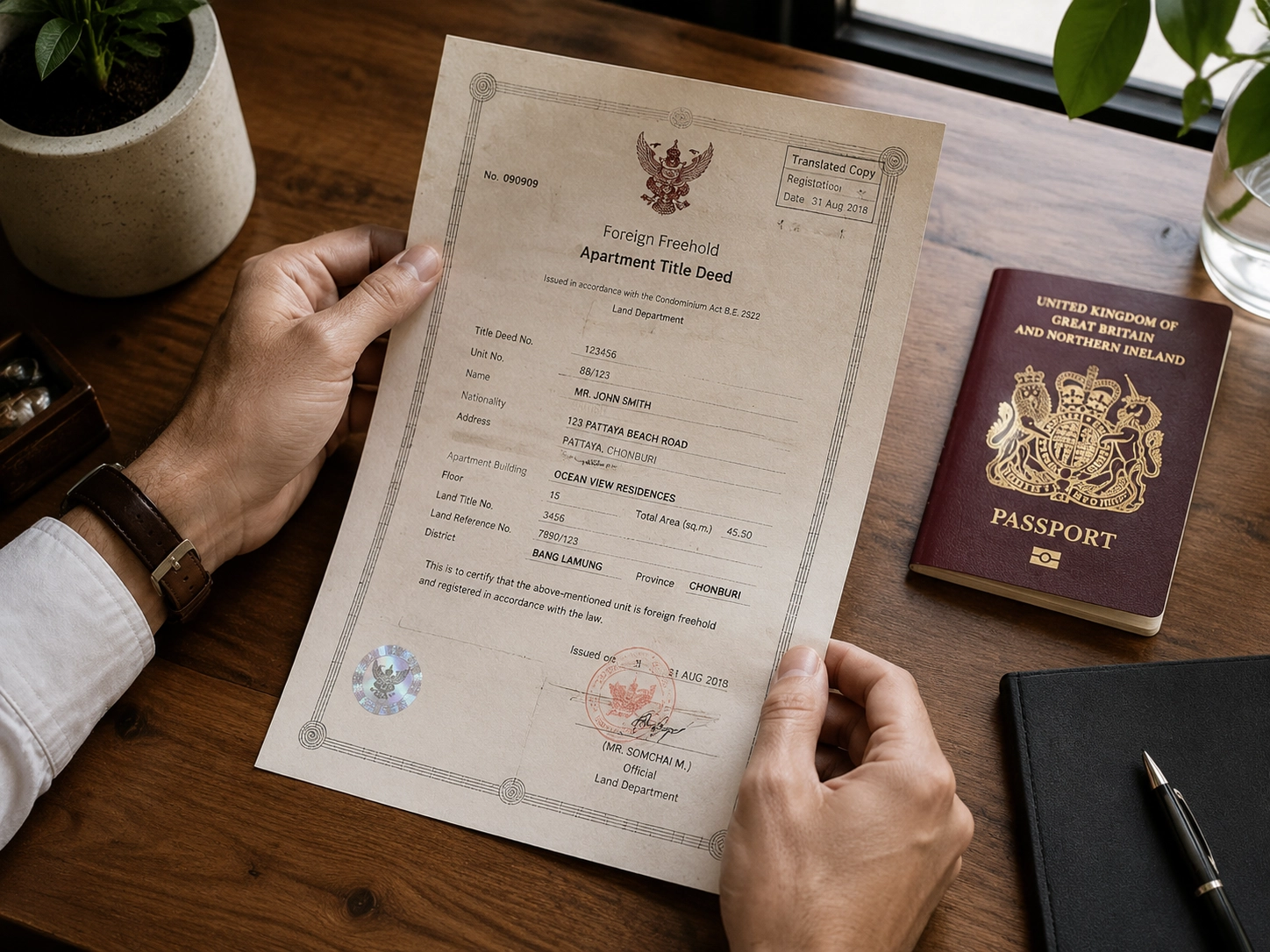
Put those two together and register them at the Land Office, and you get an Apartment Title Deed. It’s a document that certifies fee simple ownership of your unit, plus a fractional, unseverable interest in everything classified as common property. Including the land.
So a House Can Legally Be a Condo?
Read Section 4 without assumptions, and there’s nothing stopping a single-story house, a row of townhouses, or a cluster of linked villas from qualifying as a condominium. Each unit just needs its own personal property, plus a fractional share of common property tied to it.
That’s the whole legal foundation. The actual friction lives elsewhere: local zoning ordinances, the Building Control Act B.E. 2522, and how much discretion an individual Land Office official decides to exercise on a given day. The statute itself doesn’t block this.
And once a horizontal condominium project clears registration, foreign buyers can hold their Apartment Title Deed directly, under Section 19, inside the standard 49% foreign quota. No Thai company. No nominee shareholder. Just a title in your own name.
| Category | Includes | Who controls it |
| Personal Property | The unit itself: interior space, structural divisions, exclusive-use land if designated | Individual owner |
| Common Property | The underlying land, foundations, roofs, outer walls, shared roads, utilities | Condominium Juristic Person (CJP), collectively |
| Apartment Title Deed | Legal document from the Land Department confirming fee simple ownership of the unit plus a fractional interest in common property | Individual owner, registered with the Land Office |
The 2008 Pattaya Case That Proved It Works
Home Boutique, the Project That Started It
This isn’t a hypothetical clause sitting unused in a law book. It got built.
Back in 2008, a German architect named Mario Kleff teamed up with Thai developer Nittaya Wongsin, founder of Wandee Real Estate and director of Wandeegroup Asia, to put up a project in Pattaya called Home Boutique. On paper, in municipal filings, it’s registered as I-Condominium.
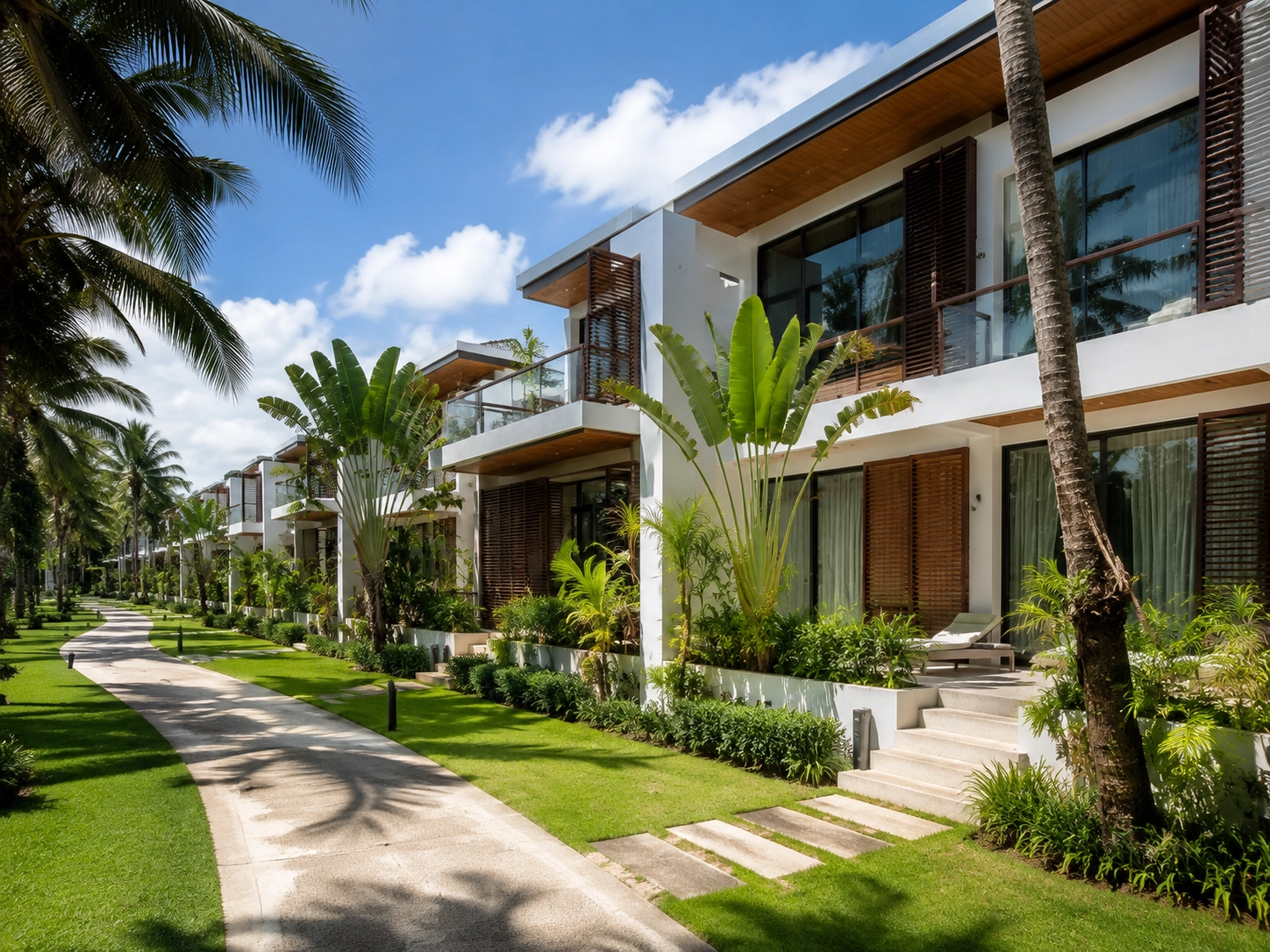
The design is the clever part. Two three-story buildings, but instead of stacking flat apartments floor over floor, each buyer got a vertical slice running through all three levels. Walk through one and it feels like a townhouse, private, multi-level, your own front door. Legally, it’s a condominium unit.
The local Land Office approved it. That approval is the whole point: it means a foreigner walked away with direct freehold title to something built and lived in like a house, and the paperwork holds up.
The Three-Part Legal Engineering Behind It
Three moves made this work, and none of them bend the law, they just use it precisely.
First, Thai law already treats a building as legally separate from the land beneath it. The Land Code blocks foreign land ownership, but the Condominium Act grants a separate, statutory right to own the structure itself outright.
Second, every unit got identical floor area. That’s not an aesthetic choice, it’s what let the developers calculate clean, defensible joint-ownership ratios in the underlying land under Section 14, with no ambiguity for the Land Office to push back on.
Third, foreign buyers titled their units directly, in their own names, under Section 19, sitting inside the standard 49% foreign quota. No Thai company sat between the buyer and the deed. Just a foreigner, a title, and a Land Office stamp.
Why This Loophole Never Went Mainstream
Land Office Discretion Is the Real Bottleneck
So if the law allows it and Home Boutique proved it works, why isn’t every beach town full of freehold villas titled this way? Because passing a legal review and getting a bureaucrat to sign off on your specific project are two very different hurdles.
After Home Boutique registered, the Council of State, the government’s own legal advisory body, actually reviewed whether the Condominium Act applies to horizontal developments. Their answer was clear: nothing in the text prohibits it.
But that confirmation didn’t translate into consistent practice on the ground. Local Land Department officials hold broad discretion over which condominium license applications get approved, and in practice, most horizontal villa filings simply get turned down. A lot of officials look at a low-rise villa conversion and see exactly what it often is: an attempt to route around the Land Code’s restrictions on foreign land ownership, even when the paperwork is clean.
Zoning adds another layer of friction. The Building Control Act and City Planning Act impose setback rules, floor area ratio caps, and open space requirements, and in some coastal zones, up to 75% of the land has to stay unbuilt. That kind of restriction makes a lot of horizontal, land-heavy condo layouts financially pointless before the Land Office even weighs in.
The Math Doesn’t Work for Developers
Even when a project clears both of those hurdles, there’s a straightforward money problem waiting on the other side.
Section 19/2 caps foreign ownership in any condominium project at 49% of total floor area. The other 51% has to go to Thai buyers or Thai entities. In a Bangkok tower or a Central Pattaya high-rise, that’s rarely an issue, developers sell the Thai quota to local buyers and institutional funds without much friction.
Resort villa projects are a different animal. They’re built for foreign buyers chasing space and privacy, and the Thai buyers in those same markets usually want a normal house with full land title, not a condo unit governed by juristic management rules. If a developer can’t move that 51%, their capital just sits there, locked in unsold inventory.
So most developers don’t bother. They subdivide land under the Land Allocation Act B.E. 2543 instead, and sell to foreigners the old way: leaseholds, or historically, nominee companies.
Why Horizontal Condos Stay Rare
- Land Office officials can approve or refuse an application at their own discretion, and most say no
- Local zoning and density rules routinely rule out low-rise, land-heavy layouts before construction even starts
- Selling the mandatory 51% Thai quota is genuinely difficult in a resort market built for foreign buyers
- The result: well under 1% of registered condo units nationwide fall into this category
Horizontal Condo vs. Every Other Ownership Route, Side by Side
At this point you’ve got four real options on the table, not one obvious winner. Each one trades off differently on control, cost, and how nervous it should make you in the current enforcement climate. A horizontal condo unit and a leasehold might both land you in the same villa, but the legal ground underneath you is nothing alike, and neither is the risk you’re signing up for.
Here’s how the four actually compare, side by side, no marketing gloss.
| Structure | Ownership type | Foreign quota limit | Typical cost load | Main risk |
| Horizontal Condominium (freehold) | Fee simple, titled unit + land share | 49% of project floor area | 2% transfer fee, plus SBT or stamp duty | Land Office approval is discretionary and often refused |
| Standard High-Rise Condominium | Fee simple, titled unit | 49% of project floor area | Same as above | Minimal, this is the standard, well-tested route |
| 30-Year Registered Leasehold | Contractual right, not ownership | No cap, since it isn’t ownership | 1% registration fee on total lease value, plus 0.1% stamp duty | Depreciating asset, renewal isn’t guaranteed |
| Thai Nominee Company | Indirect, via Thai-majority shareholding | N/A, structure-dependent | THB 30,000 to 100,000 per year in maintenance | Criminal exposure under active DBD/DSI/AMLO enforcement, asset forfeiture risk |
If the horizontal condo route is the one that caught your eye, it’s worth knowing exactly what it costs to actually title one, beyond just the percentage on paper.
The Money Side: What It Actually Costs to Title a Horizontal Condo Unit
The percentages on a horizontal condo purchase look identical to a standard condo, because legally, they are. But nobody walks into a Land Office knowing what those percentages actually mean in cash, so let’s fix that.
First, the transfer fee. Standard rate is 2.0% of the government’s appraised value, not whatever you actually paid, the Land Department’s own number. There’s a reduced 0.01% rate floating around from stimulus programs for properties under THB 7 million, but that discount is for Thai nationals only. As a foreign buyer, you’re paying the full 2.0%.
Then there’s Specific Business Tax, 3.3%, and it kicks in if the seller has owned the unit less than five years. If they’ve held it longer than that, SBT steps aside and a much lighter 0.5% Stamp Duty applies instead, so ask early which one you’re actually looking at.
Finally, Income Withholding Tax lands on the seller, progressive for individuals, flat 1.0% for corporate sellers, but it’s worth knowing since it shapes negotiation.
Let’s put a number on it: say you’re titling a THB 15,000,000 horizontal condo unit, and SBT applies. That’s THB 300,000 for the transfer fee, plus THB 495,000 for SBT. Call it roughly THB 795,000 in transaction costs before you’ve even moved in.
Getting Your Money In: The Remittance Rules Nobody Warns You About
Here’s the part that trips up more buyers than the legal structure itself. It’s not about the law being unclear, it’s about a wire transfer with the wrong memo line quietly killing your entire title registration.
Under Section 19(5), registering any freehold condo title in a foreigner’s name means satisfying the Bank of Thailand’s currency rules first. That means 100% of your purchase funds have to arrive from an overseas account, in foreign currency, straight into a licensed Thai commercial bank. Not a Thai account you already have sitting around, not cash you brought in and deposited locally. From outside, in foreign currency, every time.
Once that money lands, the receiving bank issues one of two documents. Send USD 50,000 or more in a single transaction, and you get a Foreign Exchange Transaction Form, the FET, which used to go by Thor Tor 3. Send less than that, and you get a Bank Confirmation Letter instead. Either way, the document has to spell out your full passport name and state, explicitly, that the funds are for purchasing a condominium unit in Thailand. Get that wording wrong, or skip it, and the Land Department simply won’t register your title. No exceptions, no workaround.
Remittance Paperwork You Need Before You Even Land
- Send the funds from your own overseas account, never from a Thai bank account
- Make sure the transfer memo states the purpose clearly: purchasing a condominium unit
- Secure an FET Form for any single transfer of USD 50,000 or more
- Secure a Bank Confirmation Letter for anything under that threshold
- Confirm your full passport name matches exactly across every document involved
What Happens If You Inherit One of These Units
This is the part almost nobody thinks about when they’re signing the purchase agreement, and it’s exactly the kind of detail that blindsides a family a decade later.
Qualified Heirs (Section 19/5)
If your heir can independently meet Section 19’s requirements themselves, say, by remitting fresh foreign currency equal to the unit’s appraised value, or by holding Thai permanent residency, and the building’s foreign quota still has room under 49%, the Land Office will register the title straight into their name. Clean handoff, no drama.
Unqualified Heirs (Section 19/7)
But if your heir doesn’t qualify on their own, or the project’s foreign quota is already maxed out, the clock starts ticking the moment they inherit. Section 19/7 gives them 60 days to notify the Land Office in writing, and one calendar year to sell the unit outright.
Miss that year, and it’s out of their hands. The Director-General of the Land Department is authorized to force the unit into public auction, take a 5% administrative fee off the top, and send whatever’s left to the heir. Not a fine, not a warning, an actual forced sale.
If you’re buying one of these units to pass down eventually, this is worth a real conversation with your family now, not a surprise for them later.
Living With It: The Governance Catch of Owning a “House” That’s Legally a Condo
Here’s the strange part nobody mentions at the sales office: even after your name is on the title, your roof isn’t fully yours.
Under Section 15, structural elements, roof, outer walls, foundations, all count as Common Property, the same as they would in a high-rise tower. So if your roof starts leaking or the foundation settles, you can’t just call a contractor and sort it out yourself. Technically, that repair needs sign-off from the CJP Manager and gets funded out of the collective maintenance pool. You own the house. You don’t fully control what happens to it.
Voting works the same way it would in any tower, too, proportional to price or floor area under Sections 14 and 43. Sounds fair enough, until you realize that in a development with mismatched villa sizes, the owner of the biggest unit effectively runs the room. CAM fee hikes, contractor picks, rule changes, all of it can get decided by whoever bought the largest floor plan, whether the rest of the owners agree or not.
And that garden you’re picturing, or the private pool next to your unit? Unless the CJP bylaws specifically carve it out as Personal Property or Exclusive Common Property, it’s shared. Every co-owner technically has access. Privacy here depends entirely on what got written into the bylaws before you bought in, not on what feels obviously yours.
Questions to Ask Before You Buy a Horizontal Condo Unit
- Who’s actually responsible for structural repairs, me or the CJP?
- How exactly are voting rights split among owners here?
- Is my garden, pool, or driveway registered as exclusive-use, or is it shared common property?
- What’s the current CAM fee, and who has the power to raise it?
- How close is the building’s 49% foreign quota to being full?
So, Should You Actually Go This Route?
Here’s my honest take, after all the sections and citations: this is real. Not a gray-area workaround, not something a lawyer whispers about over dinner. It’s grounded in actual statute, it’s been tested since 2008, and it holds up. That matters, especially next to a nominee company that could unravel on you with one enforcement sweep.
But it lives or dies on one thing: whether a Land Office official decides to say yes. That’s the honest catch, and I’m not going to pretend otherwise.
So here’s how I’d split it. If you find a project that already has its condominium license and CJP registration locked down, buy with confidence. That’s a genuinely strong alternative to a leasehold or a nominee arrangement, arguably better than both.
But if your plan is to buy raw land or an existing villa and try to convert it into a horizontal condo yourself, go in with your eyes open. You’re not filling out a formality. You’re picking a fight with a Land Office that has every right to say no.
FAQ
Can a single house be registered as a condominium in Thailand?
Yes, under Section 4 of the Condominium Act, as long as the unit has its own personal property plus a fractional share in common property. It still needs local Land Office approval, which isn’t guaranteed.
Is the horizontal condominium structure legal, or is it a loophole that could get shut down?
It’s grounded in real statutory text, not a gray area. The Council of State has confirmed horizontal condos aren’t expressly banned. The actual risk is Land Office discretion on new applications, not the legality of the structure itself.
How is this different from a Thai nominee company?
A nominee company gives you indirect control through Thai shareholders, and that setup is now under heavy DBD, DSI, and AMLO enforcement. A horizontal condominium gives you direct, titled freehold ownership in your own name, no Thai company involved at all.
What’s the 49% foreign quota, and how does it apply here?
Under Section 19/2, foreign ownership is capped at 49% of total floor area in any registered condominium project, horizontal or vertical. The remaining 51% has to go to Thai buyers or Thai entities.
Can I pass a horizontal condo unit to my children?
Only if they independently qualify under Section 19, through fresh remittance or residency status, and the building’s foreign quota still has room. If not, they get one year to sell it under Section 19/7.
Why don’t more developers build these?
Mostly economics. Selling the mandatory 51% Thai quota is hard in resort markets built for foreign buyers, so developer capital gets stuck in unsold units. Most default back to leaseholds instead.
If you want to keep learning without the noise, we share one clear perspective each week in The Hawook Weekly.
It’s focused on Southeast Asia property, written for people who want to understand how things actually work, not chase headlines.
- Practical property intelligence
- Delivered every Tuesday
- Because knowledge is leverage, and leverage creates wealth
You can subscribe here: https://www.news.hawook.co or check out our app here: https://app.hawook.com



Join The Discussion