
Thinking about investing in a luxury property in Southeast Asia? This guide explores Branded residences vs unbranded condos, breaking down the real differences in pricing, rental income, ownership costs, resale potential, and long-term value. Whether you're considering Phuket, Bali, or Vietnam, you'll learn what you're actually paying for, what risks to watch for, and how to choose the option that best aligns with your investment goals.
Table of Contents
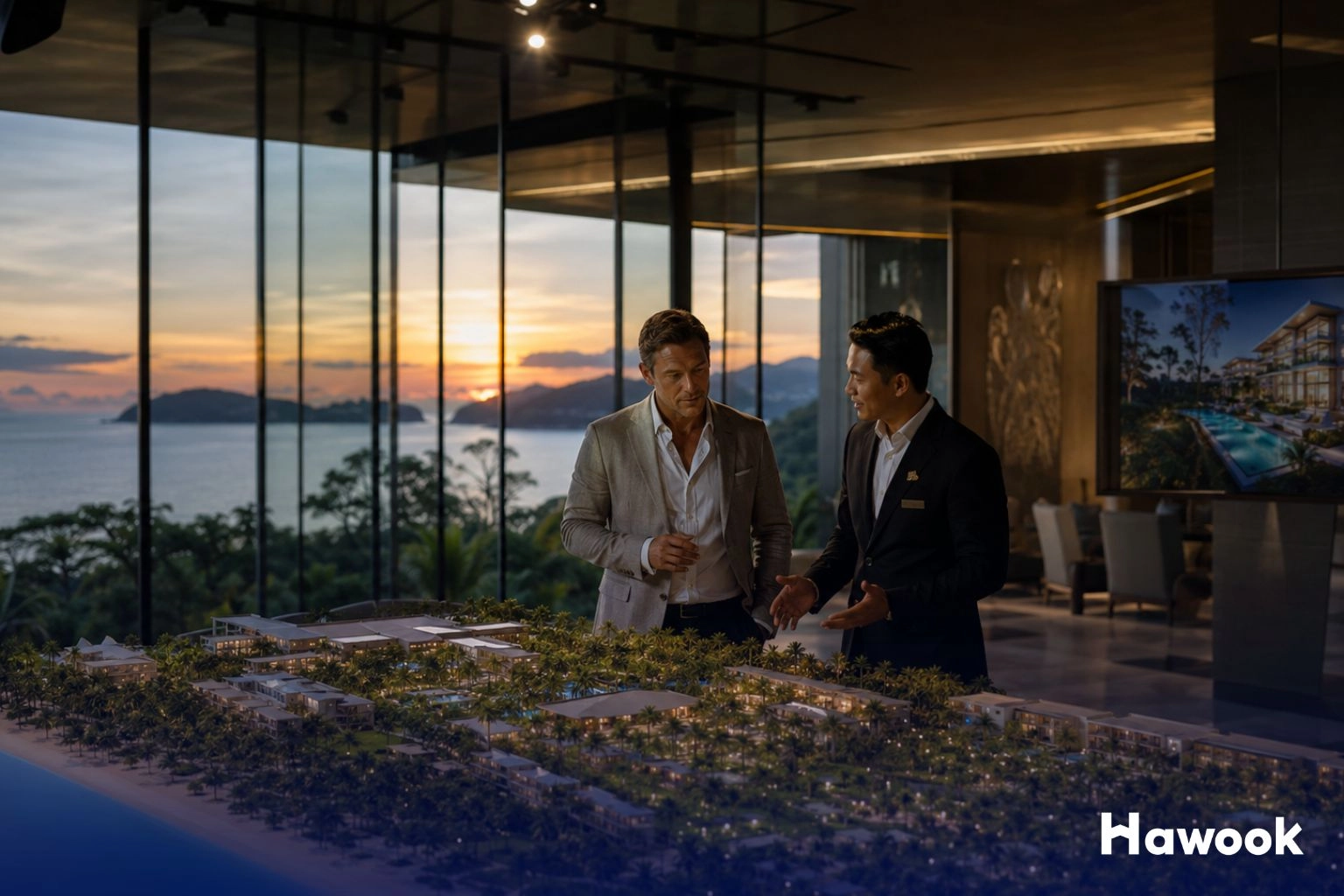
A few months ago, I found myself walking through a luxury sales gallery in Phuket with a friend who was considering his first property investment in Thailand.
The setting was exactly what you’d expect. Floor-to-ceiling windows overlooked the sea. A scale model of the development sat under carefully positioned lighting. The sales team spoke confidently about lifestyle, rental income, and long-term value.
Then came the surprise.
The development offered two remarkably similar options. Both had access to beautiful facilities. Both were in prime locations. Both targeted the same type of international buyer.
Yet one carried the name of a well-known hotel brand and came with a price tag that was nearly 40% higher.
My friend paused, looked back at the brochure, and asked a simple question:
“What exactly am I paying extra for?”
It’s a fair question.
Across Southeast Asia, branded residences have become one of the fastest-growing segments of luxury real estate. From Phuket and Bangkok to Bali and Vietnam, developers are partnering with global hospitality brands to create homes that promise more than just a place to live. Buyers are offered hotel-style services, concierge support, rental management programs, exclusive amenities, and the prestige that comes with a recognised luxury name.
For many investors, that sounds reassuring. A familiar brand can create confidence, especially when buying property overseas. The promise of professional management and stronger rental demand can also make the investment feel less risky.
But when the purchase price climbs 20%, 30%, or even 50% above comparable luxury condos, it’s worth taking a closer look.
Does the brand premium translate into better rental returns?
Can it help preserve value over time?
Or are buyers sometimes paying more for perception than performance?
The answers aren’t always straightforward, and they often depend on factors that don’t appear in glossy marketing brochures. Before comparing costs, returns, and long-term ownership considerations, it helps to understand exactly what a branded residence is and how it differs from a traditional luxury condominium.
What Is a Branded Residence?
A branded residence is a private home connected to a well-known hotel, hospitality, or lifestyle brand.
Think of it as a condominium or villa with a luxury name attached to it, but usually with more than just a logo on the entrance. In many cases, the residence is part of a larger hotel or resort development, or it sits beside one. The hotel brand helps shape the design, service standards, facilities, and sometimes the rental management.
So instead of simply buying a luxury condo in Phuket, you might be buying a residence managed or associated with a name like Four Seasons, Ritz-Carlton, Banyan Tree, or Rosewood.
The idea is simple: buyers get private ownership with hotel-style convenience.
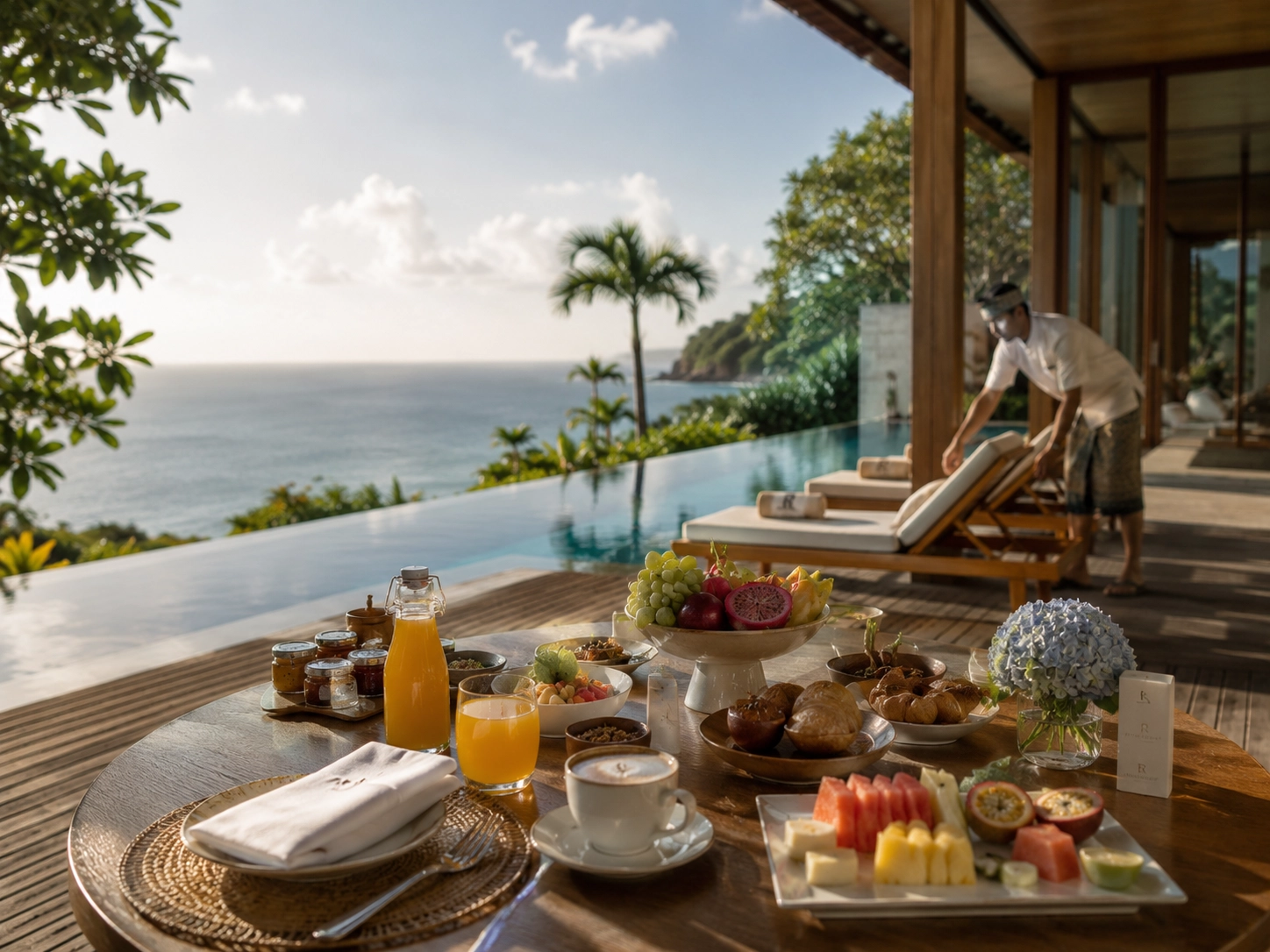
You own the unit, but the experience feels closer to staying in a five-star resort. There may be a concierge who can arrange airport transfers, housekeeping that keeps the home guest-ready, room service from the hotel kitchen, spa access, beach club privileges, and a rental program that lets the operator rent out your property when you’re not using it.
For foreign buyers, this can feel reassuring. Buying property overseas already comes with enough questions. A familiar hospitality brand can make the whole process feel more polished and less mysterious.
Developers like branded residences too. A strong hotel name can help them stand out in a crowded luxury property market. It can also justify higher pricing, attract international buyers, and create a stronger lifestyle story around the project.
Typical benefits of branded residences may include:
- Hotel-style concierge and guest services
- Professional property management
- Housekeeping and maintenance support
- Access to resort facilities
- Rental management programs
- Global brand recognition
- Consistent design and service standards
- A sense of prestige and lifestyle appeal
Of course, not every branded residence works the same way. Some are deeply integrated with a hotel. Others mainly use the brand for positioning and marketing. That difference matters, especially when comparing Branded Residences vs Unbranded Condos from an investment perspective.
What Is an Unbranded Premium Condo?
When people hear the term luxury property, it’s easy to assume there’s a famous hotel name attached to it.
But that’s not always the case.
Some of Southeast Asia’s most desirable homes don’t carry a global hospitality brand at all. They’re simply well-designed, high-end residential developments built in great locations and managed professionally.
These are what we typically call unbranded premium condos.
The word unbranded can sound a little misleading. It doesn’t mean lower quality. It simply means the development isn’t officially partnered with a hotel brand like Four Seasons, Ritz-Carlton, Banyan Tree, or Rosewood.
Instead, the focus is often on the fundamentals that make a property attractive in the first place.
Think beachfront locations, walkable neighbourhoods, quality construction, thoughtful design, and facilities that residents actually use.
A premium unbranded condo may still include:
- Large swimming pools
- Modern fitness centres
- 24-hour security
- Concierge services
- Co-working spaces
- Private parking
- On-site property management
In Phuket, for example, it’s not unusual to find a luxury condominium near Bang Tao or Kamala Beach offering resort-style facilities, professional rental management, and strong rental demand without any hotel branding attached to the project.
An owner can still choose to place the unit into a rental program, hire a property management company, or manage bookings independently. That flexibility is one reason some buyers find unbranded developments appealing.
Another key difference is how these properties are managed. Rather than following standards set by an international hotel operator, decisions are typically handled by the developer, management company, or homeowners’ association. This can create more flexibility in how the property operates over time.
At their core, both branded residences and unbranded luxury condos aim to attract a similar type of buyer: someone looking for comfort, convenience, and long-term value in a desirable location.
The distinction isn’t necessarily about luxury versus non-luxury.
It’s about where the value comes from, who manages the experience, and whether the brand itself plays a meaningful role in the ownership journey.
Branded Residences vs Unbranded Condos: Quick Comparison
At first glance, branded residences and premium unbranded condos can look surprisingly similar.
Both may offer beautiful architecture, resort-style facilities, professional management, and attractive locations near beaches, city centres, or lifestyle hubs. The biggest differences often become clearer once you look beyond the marketing brochures and into the day-to-day ownership experience.
Here’s a high-level comparison.
| Factor | Branded Residence | Premium Unbranded Condo |
| Purchase Price | Typically higher due to brand premium | Generally lower for comparable size and location |
| Management | Often overseen by a hotel operator | Managed by a developer, HOA, or independent company |
| Services | Concierge, housekeeping, hotel-style amenities | Varies by project and management company |
| Rental Flexibility | May require participation in specific rental programs | Often allows greater freedom in rental strategies |
| Maintenance Fees | Usually higher due to hospitality-level operations | Typically lower and more predictable |
| Resale Considerations | Brand recognition may attract buyers, but resale conditions can vary | Value often depends on location, quality, and market demand |
| Investor Appeal | Attractive to buyers seeking convenience and prestige | Attractive to buyers focused on flexibility and cost efficiency |
The key takeaway is that neither option is universally better.
Some buyers value the convenience, service standards, and global recognition that come with a hospitality brand. Others prefer the flexibility, lower ownership costs, and greater control often found in luxury unbranded developments.
Ultimately, the right choice depends less on the logo attached to the building and more on what you’re hoping to achieve as an owner or investor.
Why Are Branded Residences More Expensive?
One of the first things buyers notice when comparing Branded Residences vs Unbranded Condos is the price gap.
In some Southeast Asian markets, a branded residence can cost 20%, 30%, or even 50% more than a comparable luxury condo nearby.
Naturally, that raises an important question: where does all that extra money go?
A useful way to think about it is designer luggage.
Imagine two suitcases sitting side by side at the airport. Both are durable. Both will get your belongings from Phuket to Singapore. But one carries a luxury label that people instantly recognise. Part of the higher price may come from better materials and craftsmanship. Another part comes from the reputation, experience, and perceived value attached to the brand itself.
Branded residences work in a similar way.
Some of the premium may fund higher design standards, upgraded finishes, and enhanced amenities. But a portion also goes toward the costs of partnering with a global hospitality brand.
Where the Brand Premium Typically Goes
| Cost Component | What It Covers |
| Licensing Fees | Payments made to the hotel or lifestyle brand for using its name and reputation |
| Branding Agreements | Long-term partnerships that establish operational and service standards |
| Marketing Costs | International advertising campaigns, sales networks, and brand-led promotions |
| Design Reviews | Ongoing oversight to ensure the project meets brand requirements |
| Operational Systems | Reservation platforms, service procedures, staff training, and management infrastructure |
| Quality Enhancements | Higher-end finishes, furnishings, landscaping, and shared facilities |
Not every dollar of the premium goes into the physical building.
For example, a buyer may pay more because the project has access to a recognised hospitality network, established service standards, and global marketing reach. These are valuable assets, but they’re different from tangible features like larger floor plans or better construction materials.
That’s why two luxury properties with similar locations, views, and amenities can still have noticeably different price tags.
The branded project isn’t necessarily more expensive because it’s dramatically better built. In many cases, buyers are paying for a combination of physical quality, operational infrastructure, and brand recognition.
Whether that premium ultimately delivers enough value is where the conversation becomes far more interesting. And for many investors, the answer often comes down to rental performance and long-term returns.
Do Branded Residences Really Earn More Rental Income?
This is where branded residences can look very appealing at first glance.
Because they are connected to a known hotel or hospitality brand, they often have an easier time attracting guests. A traveller who already trusts Banyan Tree, Four Seasons, Ritz-Carlton, or Rosewood may feel more comfortable booking a branded residence than a private condo they have never heard of.
That trust can translate into higher ADR, or average daily rate. In simple terms, ADR is the average nightly price guests pay. A branded residence in Phuket may be able to charge more per night because guests are not just booking a room. They are booking a recognised service experience.
Branded properties may also benefit from stronger occupancy. Hotel reservation systems, loyalty programs, international marketing, and repeat guests can help keep bookings steadier, especially during high season.
But rental income is not only about what comes in.
It is also about what stays in your pocket.
This is where net yield becomes important. Net yield is the return you receive after expenses are deducted. For property investors, it is usually more useful than looking at gross rental income alone.
A branded residence may earn higher nightly rates, but it can also come with revenue sharing, management fees, operational costs, maintenance charges, and hotel-standard upkeep. These costs can reduce the final amount paid to the owner.
An unbranded premium condo may charge a lower nightly rate, but the owner may have more flexibility in choosing a rental manager, setting prices, controlling expenses, and deciding when to renovate.
Let’s imagine two hypothetical Phuket properties.
One is a branded residence near the beach. It charges higher nightly rates and gets more bookings through the hotel’s global network. The other is an unbranded luxury condo in a strong location, managed by an independent rental company.
| Rental Factor | Branded Residence | Unbranded Premium Condo |
| Average Nightly Rate | Higher due to brand recognition and hotel services | Lower, but still competitive in a strong location |
| Occupancy | Often stronger through hotel booking channels | Depends on location, reviews, pricing, and manager quality |
| Rental Management | Usually handled by the hotel operator | Can be handled by an independent manager or owner |
| Revenue Split | May favour the operator more heavily | Often more flexible or negotiable |
| Operating Costs | Higher due to hotel-level service standards | Usually lower and easier to control |
| Maintenance Expenses | Often higher due to brand requirements | Typically more flexible |
| Net Yield Potential | Can be steady, but costs may compress returns | Can be strong if managed well |
So, do branded residences earn more rental income?
Often, yes, on a gross basis.
But higher rental income does not always mean higher Branded residences ROI. A property can look impressive on a booking report and still produce a modest return once all the deductions are counted.
This is why buyers comparing Branded Residences vs Unbranded Condos should ask for net numbers, not just glossy projections.
The real question is not simply, “Which property earns more?”
It is, “Which property keeps more after the full cost of ownership?”
The Hidden Costs Many Buyers Miss
One of the easiest mistakes first-time property investors make is focusing entirely on the purchase price.
The problem is that ownership doesn’t begin and end with the number on the sales contract.
In fact, some of the most important costs only show up after you’ve collected the keys.
When looking at Branded Residences vs Unbranded Condos, these ongoing expenses can have a surprisingly large impact on your long-term returns.
Let’s break down a few of the most common ones.
CAM Fees (Common Area Maintenance Fees)
Think of CAM fees as the monthly cost of keeping the development running.
These fees typically cover things like:
- Security
- Landscaping
- Pool maintenance
- Cleaning staff
- Building management
- Shared facilities
In a branded residence, CAM fees are often higher because the property is maintaining hotel-level service standards. A lobby staffed around the clock, concierge teams, and resort-style amenities all come with a price tag.
Sinking Funds
A sinking fund is essentially a savings account for the building.
Owners contribute regularly so there’s money available for larger repairs in the future, such as:
- Elevator replacements
- Roof repairs
- Major repainting projects
- Infrastructure upgrades
Most buyers expect maintenance fees. Fewer think about the long-term repair budget behind the scenes.
FF&E Reserves
FF&E stands for Furniture, Fixtures, and Equipment.
In many branded residences, owners contribute to a reserve fund that pays for future replacements.
That could include:
- Sofas
- Beds
- Lighting
- Curtains
- Outdoor furniture
The goal is to keep every unit aligned with the brand’s appearance standards.
Mandatory Furniture Packages
Many branded developments require owners to purchase a specific furniture package during the buying process.
You may not be able to source your own furniture or negotiate alternatives. While this creates consistency across the property, it also adds another upfront expense that buyers sometimes overlook.
Hotel-Standard Refurbishments
This is where things can become expensive.
Luxury hotel brands regularly refresh their properties to maintain a premium image. That means furniture, décor, and common areas may need updating every few years.
Even if your unit still looks perfectly fine, brand standards may require upgrades.
A Real-World Example
Imagine you purchase a branded one-bedroom property in Phuket.
Your rental projections look strong, and the sales presentation highlights attractive occupancy rates.
A year later, you discover:
- Higher-than-expected CAM fees
- Annual FF&E contributions
- Mandatory participation in refurbishment programs
- Additional maintenance assessments approved by management
None of these costs are necessarily unreasonable. But together, they can significantly change the economics of ownership.
Hidden Cost Checklist Before You Sign
Before committing to any property, ask for clarity on:
☐ Monthly CAM fees
☐ Sinking fund contributions
☐ FF&E reserve requirements
☐ Mandatory furniture packages
☐ Future refurbishment obligations
☐ Special assessment rules
☐ Rental management fees
☐ Revenue-sharing arrangements
☐ Historical fee increases
☐ Owner voting rights on major expenses
The best time to discover these costs is before you buy, not after. A beautiful sales gallery can tell you what ownership looks like on day one. The financial details reveal what ownership feels like in year five.

Will the Premium Hold? Understanding Resale Value
One of the strongest arguments for buying a branded residence is the belief that the property’s value will hold up better over time.
The logic seems reasonable.
If buyers are willing to pay a premium for a recognised brand today, shouldn’t future buyers be willing to do the same?
Sometimes that’s true.
But resale value is rarely that straightforward.
Property markets evolve. Buyer preferences shift. New developments enter the market. And what feels exclusive today may face much more competition five or ten years from now.
A useful comparison is the luxury car market.
When a new luxury vehicle launches, it attracts attention. It has the latest technology, the newest design language, and plenty of marketing behind it. But a few years later, an updated version arrives. Then another. The original car may still be excellent, but it is no longer the newest option available.
Branded residences can experience a similar dynamic.
At launch, a branded project often benefits from strong visibility, media attention, and buyer excitement. The association with a global hospitality brand can help justify a higher entry price and attract international buyers.
Over time, however, new branded developments may enter the same market. A project that once felt unique may suddenly find itself competing with newer residences offering updated facilities, fresher designs, or stronger lifestyle positioning.
This is where investors sometimes encounter what’s known as premium compression.
The brand premium doesn’t necessarily disappear, but it may shrink as competing projects enter the market and buyers gain more options.
Resale Considerations at a Glance
| Factor | Branded Residence | Premium Unbranded Condo |
| Launch Visibility | Typically higher due to brand recognition | More dependent on location and developer reputation |
| Initial Buyer Demand | Often strong during sales launches | Can be strong in sought-after locations |
| Brand Premium | May support higher pricing initially | Generally relies on fundamentals rather than branding |
| Competition Over Time | New branded projects may reduce exclusivity | Competes primarily on quality and location |
| Resale Buyer Pool | May attract brand-conscious buyers | May appeal to a broader range of buyers |
| Long-Term Value Drivers | Brand, service quality, location, management | Location, build quality, management, market demand |
Perhaps the most important thing to remember is that resale value is influenced by far more than a logo.
Location still matters.
Build quality still matters.
Management still matters.
And buyer demand still matters.
A strong brand can certainly be an advantage, but it is only one piece of a much larger puzzle. Whether you’re evaluating a branded residence investment or a luxury condo in Phuket, long-term value tends to be shaped by the fundamentals that continue to matter long after the launch banners have come down.
The Risk Many Buyers Never Hear About: De-Flagging
Here’s a term that rarely gets much airtime in a glossy sales presentation: de-flagging.
It sounds technical, but the idea is simple.
De-flagging happens when a hotel brand removes its name from a property. In other words, the “flag” comes down. A residence that was once connected to a recognised hospitality brand may suddenly become an ordinary private development, or it may be rebranded under a different operator.
For buyers comparing Branded Residences vs Unbranded Condos, this matters because the brand is often a major part of the purchase decision.
A branded residence usually depends on an agreement between the developer, the hotel operator, and sometimes the property owners. That agreement sets out how long the brand will be attached to the project, what service standards must be maintained, how management works, and what happens if either side wants to exit.
Most buyers don’t need to become legal experts. But they do need to understand one basic point:
The brand name is usually not guaranteed forever.
A hotel brand might leave a project for several reasons. The building may no longer meet its standards. The owner group may not approve costly refurbishments. The developer and operator may disagree. The brand may also decide that another market or concept fits its strategy better.
Imagine buying a branded residence in Phuket because you trust the hotel name, enjoy the service promise, and expect strong rental demand from loyal guests. Then, years later, the brand exits. The building is still there. The pool is still there. Your unit is still yours.
But the international booking channels, loyalty program, service identity, and familiar name may no longer be part of the package.
That doesn’t automatically mean the property loses all value. A well-located, well-managed building can still perform. But the ownership story changes. Rental demand may need to be rebuilt. Resale buyers may ask tougher questions. Maintenance costs may also become harder to justify if the premium hospitality experience fades.
Before buying a branded residence, ask:
- How long does the branding agreement last?
- Is there a clear renewal process?
- Who has the right to terminate the agreement?
- What happens if the hotel brand leaves?
- Are owners protected if the project is rebranded?
- Can owners vote on major refurbishments?
- Are future upgrade costs clearly explained?
- Does the rental program continue if the brand exits?
De-flagging is not something buyers need to fear automatically. But they should understand it before paying a brand premium.
A logo can add confidence. The contract behind the logo tells you how durable that confidence really is.
How Different Southeast Asian Markets Compare
One of the biggest mistakes property buyers make is assuming that all branded residences operate within the same market conditions.
They don’t.
A branded residence in Phuket faces a very different environment than one in Bali or Vietnam. Tourism patterns, ownership structures, supply levels, and buyer demand all influence how a property performs over time.
That’s why evaluating a branded residences investment isn’t just about the project itself. It’s also about the market surrounding it.
A Quick Market Comparison
| Factor | Phuket | Bali | Vietnam |
| Brand Premiums | Typically moderate to high, especially in beachfront locations | Often high in lifestyle-focused resort areas | Varies widely between urban and resort markets |
| Investor Demand | Strong international buyer interest and established expat community | Popular among lifestyle investors and digital nomads | Growing interest from both local and international buyers |
| Ownership Considerations | Foreign buyers can access condominium freehold structures within legal limits | Many projects rely on leasehold arrangements | Ownership structures vary depending on project and location |
| Tourism Fundamentals | Mature tourism market with year-round appeal | Strong global destination with lifestyle-driven demand | Tourism infrastructure continues to expand rapidly |
| Supply Levels | Established market with a growing pipeline of luxury projects | Fast development in certain areas creating increased competition | Expanding branded residence sector with significant future supply |
Phuket: A Mature Resort Market
Phuket is often the first place people think of when discussing branded residences in Thailand.
The island benefits from established tourism infrastructure, international air connections, and a long history of attracting foreign property buyers. This has helped support demand for both branded residences and luxury condos in Phuket.
At the same time, buyers should pay attention to new supply entering the market, particularly in popular areas like Bang Tao and Kamala.
Bali: Lifestyle-Driven Demand
Bali attracts a different type of buyer.
Many investors are drawn by the island’s lifestyle appeal, creative communities, and strong tourism brand. Demand often comes from digital nomads, entrepreneurs, and second-home buyers rather than traditional real estate investors alone.
Ownership structures deserve extra attention here, as leasehold arrangements are common and can influence long-term investment outcomes.
Vietnam: A Fast-Growing Market
Vietnam is one of Southeast Asia’s most closely watched property markets.
Cities such as Ho Chi Minh City and emerging resort destinations are seeing growing interest from both domestic wealth and international investors. Branded residences are becoming increasingly visible, supported by major infrastructure projects and rising demand for luxury real estate.
For buyers, the opportunity often lies in understanding how future growth, infrastructure delivery, and supply expansion may shape the market over the coming years.
The key takeaway is simple: market conditions matter.
A branded residence that performs well in Phuket may face different opportunities and challenges in Bali or Vietnam. Understanding local demand, ownership rules, tourism fundamentals, and future supply is often just as important as understanding the brand attached to the building.
When Paying the Premium Can Make Sense
After reading about brand premiums, management fees, and resale considerations, it might be tempting to view branded residences purely through the lens of investment returns.
But property decisions aren’t always driven by spreadsheets.
Sometimes buyers are purchasing a lifestyle, a level of convenience, or a sense of confidence that extends beyond rental income.
For certain people, paying a premium for a branded residence can make perfect sense.
Imagine someone who spends only a few months each year in Phuket. They want to arrive, unpack, and immediately enjoy the property without worrying about maintenance issues, housekeeping, guest services, or finding reliable local contractors.
In that situation, the value proposition isn’t necessarily about squeezing out every percentage point of yield. It’s about simplicity.
The same applies to buyers who place a high value on hospitality standards. Some enjoy knowing that a concierge can arrange airport transfers, restaurant reservations, housekeeping, or even property management while they’re abroad.
Others are drawn to the lifestyle side of ownership. Access to beach clubs, wellness facilities, private lounges, and hotel amenities can enhance the overall experience, particularly for second-home owners who plan to use the property regularly.
There’s also the appeal of long-term brand recognition. Well-established hospitality brands have spent decades building trust with travellers and property owners around the world. For some buyers, that familiarity carries genuine value.
Paying the Premium May Make Sense If You Value:
✅ Hotel-style service and convenience
✅ A lock-and-leave ownership experience
✅ Professional property management
✅ Access to luxury resort amenities
✅ Concierge and hospitality services
✅ A globally recognised brand name
✅ Lifestyle benefits beyond investment returns
✅ A second home that feels similar to a luxury hotel experience
Ultimately, the decision comes down to personal priorities.
Some buyers focus primarily on net returns and operating costs. Others place equal weight on convenience, experience, and peace of mind.
Neither approach is right or wrong.
The key is understanding what you’re paying for and making sure the premium aligns with the lifestyle and ownership experience you’re actually looking for.
When an Unbranded Luxury Condo May Be the Better Fit
For some buyers, the appeal of an unbranded luxury condo is not about avoiding hospitality brands.
It’s about having more room to shape the ownership experience.
A buyer focused on property investment Thailand may care less about room service and more about the numbers behind the property. What are the monthly costs? Who manages the rentals? Can the owner choose a different agent later? Are there restrictions on upgrades, furnishing, or pricing?
These questions matter, especially for investors who want flexibility.
An unbranded premium condo may allow owners to work with independent property managers, adjust rental strategies, furnish the unit according to market demand, or choose between short-term and longer-term tenants where local rules allow.
Lower operating costs can also be part of the appeal. Without hotel-standard staffing, brand-approved refurbishment cycles, or mandatory hospitality systems, some unbranded condos may have simpler cost structures.
That doesn’t automatically make them cheaper to own in every case. A poorly managed unbranded building can still become expensive. But when the location, construction quality, and management are strong, the model can offer a practical path for buyers who want more control.
This can be especially relevant in markets like Phuket, where many investors compare branded residences Phuket projects against well-located luxury condos Phuket with independent rental management.
An Unbranded Luxury Condo May Suit Buyers Who Prefer:
✅ More flexibility over rental strategy
✅ Lower or more predictable operating costs
✅ The ability to choose their own property manager
✅ Greater control over furnishing and upgrades
✅ Fewer brand-related restrictions
✅ A focus on net yield rather than hotel-style services
✅ A broader resale buyer pool
✅ Simpler ownership structures
The important point is not that unbranded condos are automatically better.
They simply answer a different set of buyer priorities.
If the goal is convenience, prestige, and hospitality-style living, a branded residence may feel more aligned. If the goal is flexibility, control, and yield optimization, an unbranded luxury condo may deserve a closer look.

Questions Every Buyer Should Ask Before Investing
After speaking with property buyers across Phuket, Bali, and Vietnam, I’ve noticed a pattern.
The biggest mistakes usually don’t happen because people choose the wrong property.
They happen because people fail to ask the right questions before signing.
Whether you’re considering a branded residence investment or a luxury condo, a little due diligence upfront can save a lot of expensive surprises later.
Financial Questions
Before getting excited about projected returns, make sure you understand the real costs.
☐ What are the monthly maintenance and CAM fees?
☐ Are there sinking fund contributions?
☐ Is there an FF&E reserve fund?
☐ What management fees apply to rental income?
☐ Are there mandatory furniture packages?
☐ What is the projected net yield after all expenses?
Why it matters: Gross rental income can look impressive on a sales brochure. Net returns tell the real story.
Legal Questions
Property ownership structures vary significantly across Southeast Asia.
☐ Is the property freehold or leasehold?
☐ What ownership rights do foreign buyers receive?
☐ Are there restrictions on resale?
☐ Does the project include transfer fees or resale commissions?
☐ How long does the branding agreement last?
☐ What happens if the hotel brand leaves?
Why it matters: Legal details often have a bigger impact on long-term value than amenities or finishes.
Operational Questions
A property’s day-to-day management can influence both ownership experience and financial performance.
☐ Who manages the property?
☐ Can owners choose their own rental manager?
☐ Is participation in a rental pool mandatory?
☐ How are maintenance decisions made?
☐ Are future refurbishments required?
☐ How often have fees increased historically?
Why it matters: Operational costs and management quality can shape returns for years after purchase.
Exit Strategy Questions
Most buyers focus on buying. Fewer think about selling.
☐ Who is the likely resale buyer?
☐ How much competing supply is entering the market?
☐ Are there resale restrictions?
☐ Does the project have a track record of resales?
☐ What factors could affect future demand?
☐ Is the property’s appeal based on fundamentals or current market trends?
Why it matters: A clear exit strategy can be just as important as the entry price.
No buyer can eliminate every risk. But asking these questions early helps separate marketing promises from practical realities, which is often where the smartest investment decisions begin.
Final Thoughts
By now, you’ve probably noticed that the conversation around Branded Residences vs Unbranded Condos is more nuanced than many sales presentations make it seem.
The reality is that neither option is inherently better.
A branded residence may offer convenience, hospitality services, global recognition, and a lifestyle experience that appeals to certain buyers. An unbranded luxury condo may offer greater flexibility, lower operating costs, and more control over how the property is managed.
Both can make sense.
Both come with trade-offs.
And both can be successful investments under the right circumstances.
The most important question isn’t whether a property carries a famous hotel name. It’s whether the ownership experience, cost structure, and long-term strategy align with your personal goals.
Are you primarily seeking a second home?
A hands-off ownership experience?
A lifestyle asset?
A yield-focused investment?
A long-term store of value?
Your answer will often tell you more than any marketing brochure ever could.
At the end of the day, real estate is rarely just about the property itself. It’s about the numbers behind it, the risks attached to it, and the role it plays within your broader financial plans.
So before getting swept up by glossy renderings, luxury branding, or ambitious rental projections, take a moment to look deeper.
Read the agreements.
Understand the fees.
Question the assumptions.
And focus on the fundamentals that will still matter long after the launch event is over.
Because the smartest property decisions are usually made not by the buyers who fall in love with the story, but by the ones who understand the details behind it.
FAQ: Branded Residences vs Unbranded Condos
Are branded residences a good investment?
Branded residences can be a good investment when the project has a strong location, respected operator, clear ownership structure, and realistic rental projections. They may appeal to buyers who value hotel-style services, convenience, and brand recognition. However, investors should always review management fees, rental pool terms, maintenance costs, and resale conditions before buying.
Why are branded residences more expensive?
Branded residences are usually more expensive because buyers are paying for more than the physical property. The price may include brand licensing, hotel-style services, design standards, marketing support, and professional management systems. In some cases, the premium supports better amenities and finishes. In others, a large part of the price reflects the value of the brand name itself.
What is de-flagging?
De-flagging happens when a hotel brand removes its name from a property. A residence that was once linked to a recognised brand may become unbranded or change to another operator. This can affect rental demand, resale appeal, service standards, and buyer confidence. Before investing, buyers should check how long the branding agreement lasts and what happens if the brand exits.
Do branded residences have higher rental yields?
Branded residences often achieve higher nightly rates and stronger occupancy because they benefit from international visibility, hotel booking systems, and brand trust. However, higher gross income does not always mean higher net yield. Revenue sharing, management fees, CAM fees, FF&E reserves, and operating costs can reduce the owner’s final return.
Are unbranded luxury condos easier to sell?
Unbranded luxury condos can sometimes appeal to a broader buyer pool because they often have lower entry prices, fewer restrictions, and simpler ownership structures. However, resale success depends on location, building quality, management, market demand, and pricing. A well-managed branded residence can also resell well if the brand remains strong and buyer demand is healthy.
What fees should buyers watch for?
Buyers should review CAM fees, sinking fund contributions, FF&E reserves, rental management fees, furniture package costs, refurbishment obligations, and resale transfer fees. These expenses can significantly affect long-term returns. Always ask for a full fee schedule before signing, not just the headline purchase price or projected rental income.
Are branded residences popular in Phuket?
Yes, branded residences are popular in Phuket, especially in luxury resort areas such as Bang Tao, Kamala, and beachfront lifestyle destinations. The island’s strong tourism market, international buyer base, and established hospitality sector make it attractive for branded residences Phuket projects. Still, buyers should compare each project carefully against nearby luxury condos Phuket options.
What is the difference between a rental pool and independent management?
A rental pool usually means the operator manages multiple units together and distributes income based on agreed terms. Owners may have less control but benefit from centralized management. Independent management gives owners more flexibility to choose a rental agent, set pricing, manage availability, and control costs. Each model has different implications for income, convenience, and control.
Do branded residences always hold their premium?
Not always. A branded residence may hold its premium when the brand is respected, the location is scarce, and the property is well managed. But premiums can shrink if newer branded projects enter the market, fees rise, or the brand agreement becomes uncertain. Long-term value depends on more than the logo attached to the building.
What should buyers compare before choosing?
Buyers should compare purchase price, net yield, maintenance fees, ownership structure, rental restrictions, resale rules, management quality, and long-term market demand. When evaluating Branded Residences vs Unbranded Condos, the goal is not to find a universal winner. The goal is to find the option that fits your lifestyle, risk tolerance, and investment objectives.
If you want to keep learning without the noise, we share one clear perspective each week in The Hawook Weekly.
It’s focused on Southeast Asia property, written for people who want to understand how things actually work, not chase headlines.
- Practical property intelligence
- Delivered every Tuesday
- Because knowledge is leverage, and leverage creates wealth
You can subscribe here:
👉 https://www.news.hawook.co



Join The Discussion