

A closer look at how the Southeast Asia property market is shifting in 2026, and why it no longer moves as one story. This piece breaks down the growing split between different types of assets, buyers, and strategies across Thailand, Vietnam, and Singapore, helping you understand what is actually driving demand and where each segment fits within a modern property investment approach.
Table of Contents
Most investors still start with the same question: is this a good market?
In Southeast Asia, that question is getting less useful by the month.
The Southeast Asia property market in 2026 is not moving as one clean story. It is not one regional upswing, one slowdown, or one neat cycle you can map across every country and city. What we are seeing instead is a split. In some parts of the market, demand still holds up, pricing stays relatively firm, and buyers know exactly why they are there. In others, momentum fades fast, financing matters more, and the old assumptions stop working.
That split shows up differently depending on where you look. In Thailand, the gap is widening between the broad domestic market and premium, foreign-facing product. In Vietnam, the difference is less about luxury and more about who can afford to be patient. In Singapore, the divide is not about stress versus strength, but about what investors actually want from the market: income, stability, or capital growth.
So the better question now is not, “Is Southeast Asia a good property market?”
It is: Which version of the market am I looking at?
That is the shift worth paying attention to. Because once you see it, a lot of the mixed signals across the region start to make a lot more sense. In the next section, let’s break down what is actually happening across the region, and why Southeast Asia real estate trends in 2026 are starting to look less like one market and more like two.
What Is Happening in the Southeast Asia Property Market in 2026?
The Southeast Asia property market in 2026 is not telling one clean story. It is not a regional boom, and it is not a regional downturn either. It is something more uneven than that.
What we are seeing across the region is a split.
Some parts of the market are still attracting steady demand, holding pricing better, and drawing buyers who know exactly what they want. Other parts are slowing down under the weight of tighter credit, weaker affordability, softer local demand, or too much average product chasing too few buyers. That is why broad headlines about Southeast Asia real estate trends can feel confusing right now. Two things can be true at once, because they are happening in different parts of the market.
A simple way to think about it is this: there are now two parallel markets operating side by side.
Two market types showing up across the region
1. The broad, financing-dependent market
- More sensitive to mortgage rates and credit conditions
- Relies more on domestic demand and price-conscious buyers
- Feels pressure faster when affordability weakens
- Often includes more standard, less differentiated product
2. The selective, resilient market
- Less dependent on cheap financing
- More likely to attract cash-heavy, foreign, or higher-conviction buyers
- Holds up better when product quality, location, or legal clarity stand out
- Often driven by clear use cases such as lifestyle demand, long-stay demand, or stable rental income
This does not mean one side is always strong and the other is always weak. It just means they react to different pressures.
That is the real shift shaping property investment in Southeast Asia right now. The old habit was to ask whether a city or country looked attractive. The more useful question in 2026 is narrower: which part of the market is actually moving, and why? Once you look at the region that way, the mixed signals start to feel much easier to read.
| Factor | Broad Market | Selective Market |
| Buyer type | Mostly domestic, price-sensitive | Foreign, cash-heavy, higher-conviction buyers |
| Financing dependence | High reliance on mortgages and leverage | Lower reliance on financing, more equity-driven |
| Pricing power | Limited, often pressured by supply | More stable, supported by asset quality |
| Demand driver | Affordability and volume demand | Lifestyle, income, or long-term positioning |
| Risk profile | Higher sensitivity to market shifts | More insulated, but still asset-dependent |
| Typical investor mindset | Shorter-term, price-focused | Longer-term, focused on capital preservation and yield |
| Sensitivity to interest rates | High, reacts quickly to rate changes | Lower, less exposed to financing cycles |
| Typical asset profile | Standard units, broader supply | Differentiated assets, strong location or concept |

Thailand Property Market 2026: Two Different Realities
If you zoom into the Thailand property market in 2026, the split becomes easier to see.
On one side, there is the broader market that still depends heavily on domestic buyers and mortgage access. This is where affordability, loan approvals, and local demand carry most of the weight. When financing tightens or sentiment softens, activity here tends to slow first.
On the other side, there is a more selective layer of the market that is not driven in the same way. In places like Phuket, and in certain segments of Bangkok, demand is coming from a different mix of buyers. These are often foreign buyers, long-stay residents, or investors looking at lifestyle and income potential rather than just entry price.
You can see it in how projects are being positioned. Developers are not just selling units. They are packaging location, lifestyle, and sometimes even residency logic into the offer. It changes who shows up to buy, and why.
This does not mean one side is working perfectly and the other is not. It just means the demand engines are different. And that difference is what shapes how each part of the market behaves.
To understand that better, it helps to look first at what is happening in the mass market.
The Mass Market Is Slowing Down
In the broader Thailand real estate market, momentum is softer than it was a few years ago. This is the part of the market that relies most on domestic demand and financing, so when conditions tighten, it shows up here first.
Mortgage rates, loan approvals, and household affordability play a bigger role in this segment. When banks become more cautious or buyers find it harder to qualify, transactions slow down. It is not that demand disappears, but it becomes more selective and more price-sensitive.
You can see this most clearly in the lower and mid-market segments. Buyers here are often working within fixed budgets, and small changes in financing can affect whether a deal goes through. If a buyer needs bank approval to move forward, even a slight shift in credit conditions can delay or cancel a purchase. That is very different from a buyer who can proceed without relying heavily on financing.
In some areas, there is also more supply competing for the same group of buyers. When that happens, pricing pressure builds and sales cycles stretch out.
None of this points to a collapse. It is more a shift in pace. The mass market is still active, but it is moving more carefully, and that caution is shaping how Thailand property investment in 2026 looks on the ground.
The Premium and Foreign-Focused Market Is Moving Differently
At the other end of the Thailand property market, the logic starts to shift.
This is where projects are less about price per square meter and more about what the property represents. In places like Phuket, you start to see developers positioning units as part of a broader lifestyle. Not just a place to stay, but a base, a second home, or a way to spend part of the year in the region.
I remember walking through a new launch in Phuket recently and noticing how little time was spent talking about floor plans. Most of the conversation was about how owners would use the space, who their neighbors might be, and what daily life would feel like. It was less about the unit itself and more about the experience around it.
That shift attracts a different type of buyer. Many are not as dependent on financing, and they are not making decisions purely on entry price. Location, build quality, management, and rental yield potential tend to carry more weight.
Foreign buyers also play a bigger role here, especially in areas where long-stay demand is well established. That does not make this segment risk-free. Pricing still matters, and not every project delivers on its promise. But it does mean this part of Thailand property investment in 2026 is moving to a different rhythm than the broader market.
What This Means for Investors
If you step back, the takeaway is not that Thailand property investment in 2026 is better or worse than before. It is that you are no longer buying into one broad market. You are choosing which demand engine your property depends on.
That choice shapes how your investment behaves over time.
In the mass market, your outcome is tied more closely to domestic demand, financing conditions, and pricing pressure. In the more selective segments, the drivers shift toward location quality, lifestyle appeal, and the type of tenant or buyer the property attracts.
A simple way to think about it is to ask yourself a few practical questions before you move forward:
- Who is the real buyer or tenant for this property? Local buyers, foreign buyers, or a mix?
- How dependent is the deal on financing or mortgage approval?
- What makes this property different from others in the same area?
- If you needed to exit, who would realistically buy it next?
- What does rental demand look like in this segment, and who is driving it?
- How exposed is this investment to changes in credit conditions or pricing pressure?
You do not need perfect answers to all of these. But the more clearly you can see which side of the market you are in, the easier it is to understand the risks you are taking.
Thailand’s Split Market in 2026
| Factor | Mass Market | Premium / Foreign-Focused Market |
| Main buyer type | Local, price-sensitive buyers | Foreign buyers, long-stay residents |
| Main demand driver | Domestic demand and affordability | Lifestyle demand and location quality |
| Financing reliance | High reliance on financing | Lower reliance, more equity-driven |
| Sensitivity to rates | High, reacts to mortgage changes | Lower, less tied to rate cycles |
| Sales logic | Volume and competitive pricing | Positioning, concept, and experience |
| Typical risk | Pricing pressure, slower absorption | Execution risk, overpricing in some projects |
| Typical investor appeal | Entry-level access, lower price points | Yield potential, lifestyle use, asset quality |
| Exit dependence | Relies on local resale demand | Depends on niche buyer pool and positioning |
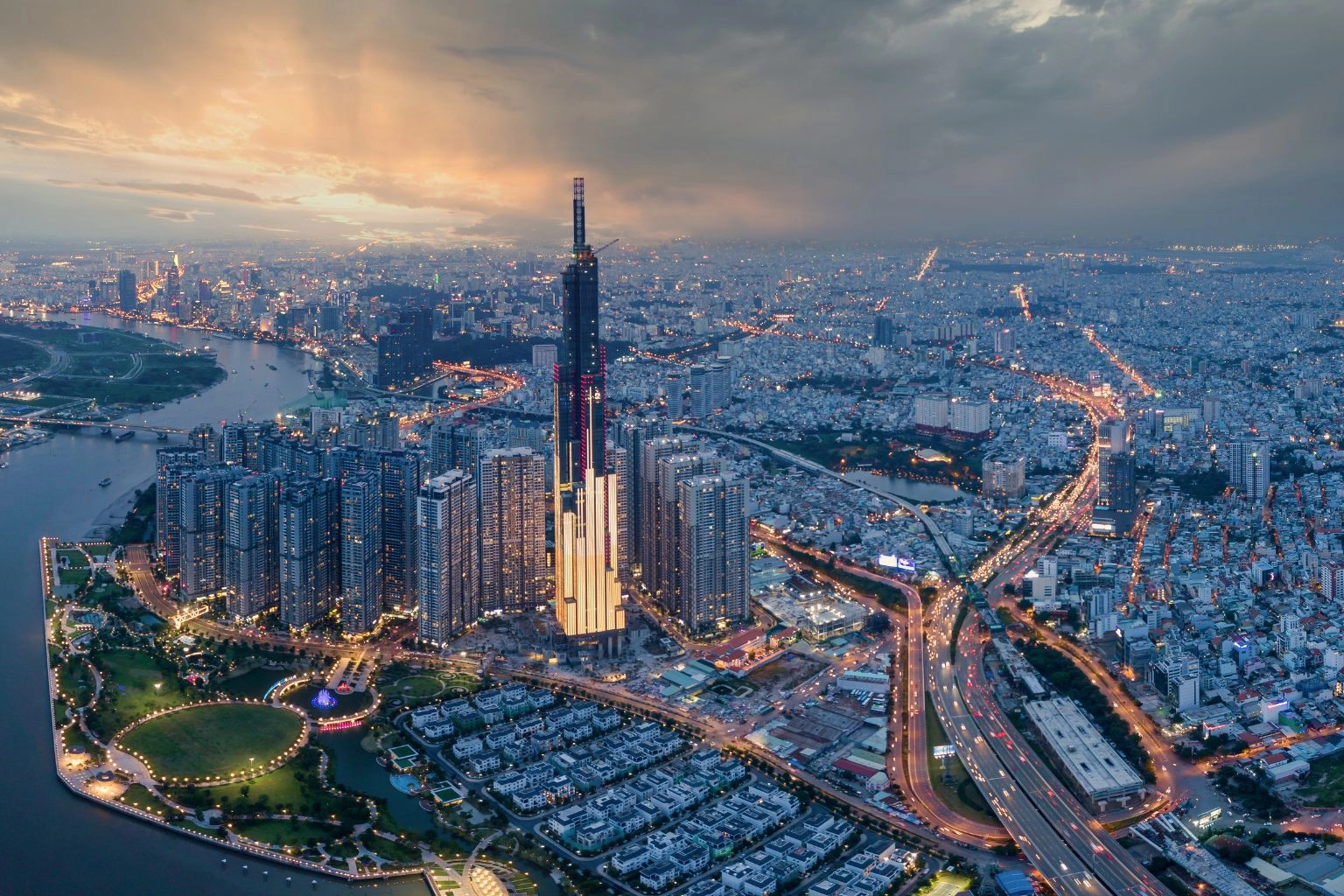
Vietnam Real Estate: From Momentum to Selection
Vietnam still holds a strong place in the Southeast Asia property story. The fundamentals that drew attention over the past decade are still there. Urban growth, manufacturing expansion, and a rising middle class continue to shape the long-term outlook.
What has changed in 2026 is how the market rewards investors.
The earlier phase was driven in part by momentum. Buyers could lean on the broader growth story and expect demand to follow. That approach is becoming less reliable. Today, the Vietnam real estate market is asking for more selectivity.
It shows up in small ways. Buyers are taking longer to decide. Projects are being examined more closely. Legal structure, developer track record, and actual use demand are getting more attention than before.
The split here is not really about price tier. It is about mindset. One side still leans on the story. The other looks closely at the asset itself.
To understand how that shift is playing out, it helps to look at the reset phase the market is moving through.
The Reset Phase
The Vietnam property market is going through a reset, but it is not the kind that shows up as a single headline. It is more gradual than that.
A big part of it comes down to credit. Financing is tighter, and the easy flow of capital that supported speculative demand in earlier cycles is no longer there in the same way. When leverage becomes harder to access, the market naturally slows, especially in segments that depended on quick turnover.
You can see the shift in buyer behavior. There is more hesitation, more time spent checking details, and less appetite for projects that rely purely on future promise. Legal clarity, developer credibility, and actual use demand are getting more attention than before.
A simple way to think about it is this. One buyer is still looking for the next hot area, hoping momentum will carry the price higher. Another buyer is asking whether the asset works on its own, even without that momentum. That second mindset is becoming more common.
The market itself is still active. Projects are still being built, and transactions are still happening. What has changed is the tolerance for uncertainty. The easy narrative is fading, and in its place, a more selective approach is taking shape.
Two Types of Investors Are Emerging
What stands out in Vietnam right now is not just the projects or the pricing. It is the shift in investor behavior.
You can broadly see two approaches taking shape.
On one side are investors who still lean on momentum. They look for areas that feel like the next growth story, often using leverage to amplify returns. This approach worked well in earlier phases when speculative demand was strong and capital was easier to access. Today, it carries more exposure. When conditions tighten, timing becomes harder to manage.
On the other side are investors taking a more selective approach. They are less focused on short-term movement and more on whether the asset holds up on its own. Legal clarity, developer track record, and actual demand start to matter more than headline growth.
A simple way to think about it:
- Momentum-driven approach: shorter time horizon, more reliance on leverage, stronger sensitivity to market cycles
- Selective approach: longer holding period, less dependence on financing, more focus on asset fundamentals
Neither approach disappears completely. But in the current Vietnam real estate market outlook, holding power is becoming more important. The ability to wait, rather than rely on quick resale, is what separates these two mindsets more clearly now.
What This Means in Practice
The shift in the Vietnam real estate market outlook is not just a headline. It changes how you think about a deal before you commit to it.
Instead of asking whether the market will go up, it becomes more useful to ask whether the asset makes sense on its own. That sounds simple, but it filters out a lot of noise.
A few questions can help ground that thinking:
- Does the project have clear legal structure, or are there unresolved details you are relying on later?
- How long can you realistically hold this asset if the market moves slower than expected?
- How dependent is the investment on financing or leverage?
- Who is the real tenant or end user, and is that demand stable?
- If price growth slows, does the property still generate reasonable rental demand or yield?
- Would this asset still feel like a good decision without relying on a quick resale?
None of these questions guarantee an outcome. But they shift the focus toward fundamentals. And in a more selective market, that shift tends to matter more than timing alone.
| Factor | Momentum-Driven Market | Selective Market |
| Investor mindset | Focus on growth stories and quick upside | Focus on fundamentals and long-term hold |
| Time horizon | Short to medium term | Longer-term perspective |
| Financing reliance | Higher use of leverage | Lower reliance on financing |
| What drives demand | Speculative demand and momentum | Real use demand and asset quality |
| Key risk | Timing the market, reliance on price growth | Slower returns if expectations are too aggressive |
| What gets ignored | Legal clarity, execution details | Overpaying for narrative-driven projects |
| What matters most now | Entry timing and trend momentum | Legal clarity, fundamentals, and holding power |

Singapore Property: Yield vs Growth
Singapore sits in a different place within the Southeast Asia property market in 2026.
It is not dealing with the same kind of pressure you see in parts of Thailand, and it is not going through a reset phase like Vietnam. The market here is more stable, more structured, and in many ways, more predictable. But that does not mean it is moving as one story.
What has become clearer is how different investors are using the market.
Earlier cycles were more focused on capital appreciation. Price growth was a big part of the appeal. Today, that growth is still there, but it has slowed and become more measured. At the same time, rental demand and income stability continue to play an important role, especially for buyers who value consistency over upside.
So the split in Singapore is less about stress and more about expectations. Some buyers are still looking for growth. Others are looking for yield, stability, and a more defensive position within their portfolio.
To understand how that shows up in practice, it helps to look first at how price growth is evolving.
Slower Price Growth
If you look at the Singapore property market in 2026, the pace of price growth has become more measured.
It is still moving, but not with the same momentum seen in earlier cycles. That shift matters, especially for buyers who entered the market expecting strong capital appreciation over a short period. In the current environment, that kind of upside is less predictable and often takes longer to play out.
This does not mean the market has lost its appeal. It simply means the role it plays in a portfolio is becoming clearer. Singapore real estate investment has always been tied to stability, transparency, and strong fundamentals. Now, those traits are coming back into focus.
For some investors, this is a reset in expectations. The question becomes less about how quickly prices can rise, and more about how the asset performs over time. That includes rental demand, tenant quality, and how resilient the property is across different market conditions.
So the story here is not about a market slowing down in a negative sense. It is about a market settling into a more defined role, where capital appreciation is still part of the picture, but no longer the only reason people are paying attention.
Stable Rental Demand
While price growth has become more measured, rental demand in Singapore continues to hold up.
This is one of the reasons the market still attracts a certain type of investor. The leasing market is deep, with a steady pool of tenants across different segments. That creates a level of visibility that is harder to find in less mature markets.
For buyers focused on Singapore property yield in 2026, this matters. Income stability and occupancy rates often carry more weight than short-term price movement. The question becomes less about how much the asset might appreciate in a year, and more about how consistently it can perform over time.
You can think of it as a different kind of appeal. Instead of chasing upside, some investors are looking for predictability. Regular rental income, lower vacancy risk, and a clearer tenant profile can make planning easier, especially over a longer holding period.
This does not mean rental yield is always high or guaranteed. It depends on the asset, location, and entry price. But it does show why Singapore real estate investment continues to draw buyers who value stability as part of their overall strategy.
Two Different Buyers
What makes the Singapore real estate investment story interesting right now is not just the data. It is how differently buyers interpret the same market.
Some are still focused on capital appreciation. They are looking at long-term price growth, scarcity of land, and the strength of the overall system. Even if growth is slower in the near term, they see value in holding an asset that sits in a stable and well-regulated market.
Others are looking at it from a different angle. For them, Singapore property yield in 2026 and income stability matter more. They are less concerned with short-term price movement and more focused on consistent rental demand, tenant quality, and how predictable the asset feels over time.
You can think of it as two lenses applied to the same place:
- Growth-focused buyers: looking at long-term capital appreciation and market strength
- Income-focused buyers: looking at rental yield, leasing demand, and stability
Both are valid ways to approach the market. And both can coexist without one replacing the other.
That is what makes Singapore a clearer example of this split. It is not about one part of the market pulling away from another. It is about different expectations shaping how the same market is used.
| Factor | Growth-Focused Buyer | Yield-Focused Buyer |
| Main objective | Long-term capital appreciation | Stable rental yield and income |
| What matters most | Price trajectory, market strength | Rental demand, income stability |
| Sensitivity to slower price growth | Higher, affects return expectations | Lower, less dependent on price movement |
| Tolerance for volatility | Moderate, accepts some fluctuation | Lower, prefers predictable performance |
| Why Singapore still appeals | Strong fundamentals, limited supply, market maturity | Consistent leasing demand, reliable tenant base |
| Likely holding mindset | Long-term hold with focus on value growth | Long-term hold focused on steady income |
What This Split Means Across Southeast Asia
If you step back from each country, a pattern starts to form.
Thailand, Vietnam, and Singapore are all moving in different ways, but they are reacting to a similar shift underneath. The Southeast Asia property market in 2026 is starting to reward different things than it did a few years ago. Broad exposure to a country or city is no longer enough to explain outcomes. What matters more is the type of asset, the type of buyer, and how the deal is structured.
This is why Southeast Asia real estate trends can feel mixed at first glance. It is not that the region is inconsistent. It is that different parts of the market are responding to different pressures.
Across all three markets, the more resilient side of the split tends to share a few traits:
- Stronger buyer profiles, often less dependent on financing
- Clearer demand drivers, whether for living, renting, or long-stay use
- More emphasis on legal clarity and execution
- Better asset differentiation, in terms of location or concept
- Greater ability to hold through slower cycles
At the same time, more financing-dependent segments tend to react faster to changes in credit conditions, pricing pressure, and shifts in sentiment.
This does not mean one side disappears. Both continue to exist. But the gap between them becomes more visible.
For anyone thinking about property investment in Southeast Asia, this changes the starting point. Instead of asking whether a market works, it becomes more useful to ask which part of that market is actually aligned with your strategy.
How to Think About Property Investment in Southeast Asia Now
A lot of investors still start with a broad question. Is this a good market? Is now the right time?
In the Southeast Asia property market in 2026, that question is often too wide to be useful.
What matters more now is how well your strategy fits the specific part of the market you are entering. The same city can offer very different outcomes depending on the type of asset, the demand behind it, and how dependent it is on financing.
So instead of trying to time the market as a whole, it helps to narrow the focus. Think less about where to buy, and more about what you are actually buying into.
A few simple questions can help shift that perspective:
- Who is the real buyer or tenant for this property? Is demand coming from locals, foreign buyers, or a specific niche?
- How dependent is the investment on financing, and what happens if credit stays tight?
- What makes this asset different from others nearby in terms of location, concept, or use case?
- What does the exit depend on? A broad resale market or a more specific buyer profile?
- Is there consistent rental demand, or is the yield story based on optimistic assumptions?
- If price growth slows, does the asset still make sense on its own fundamentals?
These questions do not give perfect answers. But they help bring the focus back to asset quality, financing risk, and real demand. And that is where most of the difference is showing up in Southeast Asia property investment strategy right now.
FAQs About the Southeast Asia Property Market in 2026
At this point, most investors tend to circle back to a few core questions. Not just about where to buy, but how to think about the Southeast Asia property market in 2026 more clearly.
The questions below are the ones that come up most often when looking at property investment in Southeast Asia today. The answers are kept simple and practical, without trying to push one direction over another.
Is Southeast Asia property still a good investment in 2026?
It can be, but it depends more on the details than it used to.
The Southeast Asia property market in 2026 still offers opportunities, especially given long-term growth across the region. But broad optimism is no longer enough to rely on. Outcomes vary more depending on the type of asset, who the end user is, and how the investment is structured.
A property backed by real rental demand, clear positioning, and manageable financing tends to behave very differently from one that depends on quick resale or market momentum.
So the better way to approach property investment in Southeast Asia now is not to ask if the region works, but whether the specific deal you are looking at actually makes sense on its own.
Why are property markets splitting into two?
It comes down to how different parts of the market respond to pressure.
When credit is tighter and buyers are more cautious, not all properties are affected in the same way. Assets that depend heavily on financing, broad demand, or price momentum tend to slow down faster. At the same time, properties with clearer use cases, stronger buyer profiles, and better fundamentals can hold up more steadily.
Things like legal clarity, asset quality, and real demand start to matter more. So instead of one market moving together, you get a split.
That is essentially what real estate market bifurcation means. Different parts of the same market following different paths based on how they are built and who they attract.
Which country is best for property investment in Southeast Asia?
There is no single answer that works for everyone.
The best property markets in Southeast Asia depend on what you are trying to achieve. Thailand, Vietnam, and Singapore each offer different dynamics, and they suit different types of investors.
Thailand can appeal to buyers focused on lifestyle property and rental demand, especially in locations with strong tourism flow. Vietnam may attract those looking at long-term growth, but it often requires more selectivity and patience. Singapore tends to suit investors who prioritize stability, income consistency, and a more structured market.
So instead of asking which country is best, it is usually more useful to ask which market fits your strategy, risk tolerance, and time horizon.
Is Thailand property still attractive in 2026?
It depends on which part of the Thailand property market you are looking at.
In the broader market, some segments are under more pressure. Affordability, financing conditions, and domestic demand are playing a bigger role, which can slow down activity in lower and mid-range properties.
At the same time, more selective segments are behaving differently. In areas with strong location appeal or steady foreign demand, such as parts of Phuket, the drivers shift toward lifestyle use, rental demand, and asset quality.
So Thailand property investment in 2026 is not one story. Some parts are more sensitive to economic conditions, while others follow a different set of factors.
What is happening in Vietnam real estate right now?
The Vietnam real estate market outlook in 2026 is shaped by a reset rather than a downturn.
The market is becoming more selective. In earlier cycles, momentum and growth stories played a bigger role in driving demand. Today, buyers are looking more closely at legal clarity, developer track record, and whether a project makes sense on its own.
Financing is tighter, and that has reduced speculative demand. As a result, transactions can take longer and decisions feel more measured.
This does not mean the market has lost its potential. It means the Vietnam property market reset is shifting attention toward fundamentals, where quality and patience tend to matter more than timing alone.
Is Singapore property still worth buying?
It depends on what you are looking for.
Singapore real estate investment in 2026 tends to appeal more to buyers who value stability, clear regulations, and consistent rental demand. The market is less about fast capital appreciation and more about income reliability and long-term positioning.
For investors focused on Singapore property yield in 2026, steady leasing demand and tenant quality can be part of the appeal. For those chasing quick price growth, expectations may need to be more measured.
So it is less a question of whether it is worth buying, and more about whether the role Singapore plays fits your overall strategy.
Closing Thoughts
If anything, the Southeast Asia property market in 2026 has not become easier to read. The signals are still there, but they are more layered than before.
What has changed is not the opportunity. It is the level of selectivity. Markets that once moved more closely together are now separating based on asset quality, demand profile, and how each investment is structured.
That makes broad assumptions less useful. Saying a country works or does not work does not carry much weight on its own anymore. The differences within each market are starting to matter more than the differences between them.
So the question shifts.
It is no longer about whether Southeast Asia works as a whole. It is about what kind of market you are stepping into, and whether your property investment strategy fits that environment.
That might sound like a small change, but it shapes everything that follows.




Join The Discussion