

Buying property in Thailand doesn’t have to be confusing. This guide breaks down what foreigners can actually buy in 2026, what hasn’t changed, and how to avoid common mistakes, explained simply and without sales talk.
Table of Contents
A friend messaged me last month from Phuket. He’d just seen three condos in one afternoon and somehow walked away with four different answers. One agent said foreigners can’t own anything. Another said condos are fine, but only sometimes. A third casually suggested a Thai company “just in case.” By dinner, he was more confused than when he started.
That’s a pretty common first experience with buying property in Thailand. Not because the rules are chaotic, but because the way they’re explained usually is. Everyone speaks with confidence. Everyone leaves out context. And somehow the simplest parts get buried under half-truths and sales talk.
The reality is quieter than the noise around it. Thailand’s property rules for foreigners have been fairly stable for years. They’re not especially flexible, but they are predictable. Once you understand the basic framework, most of the mystery disappears. The problem is that many people hear bits and pieces from friends, agents, or online forums and try to stitch them together into something that sounds like certainty.
This article is here to slow things down. No loopholes, no scare tactics, no legal gymnastics. Just a clear look at what actually works for foreigners buying property in Thailand in 2026, and what hasn’t really changed at all.
What Hasn’t Changed
Every year or two, headlines pop up about big changes coming to Thailand’s property rules. New incentives. Longer leases. Friendlier laws for foreigners. It sounds exciting, and it’s easy to think you might miss out if you don’t move fast.
But if you zoom out, the core rules haven’t really shifted. Not in 2026, and not for the kinds of buyers most people reading this are likely to be.
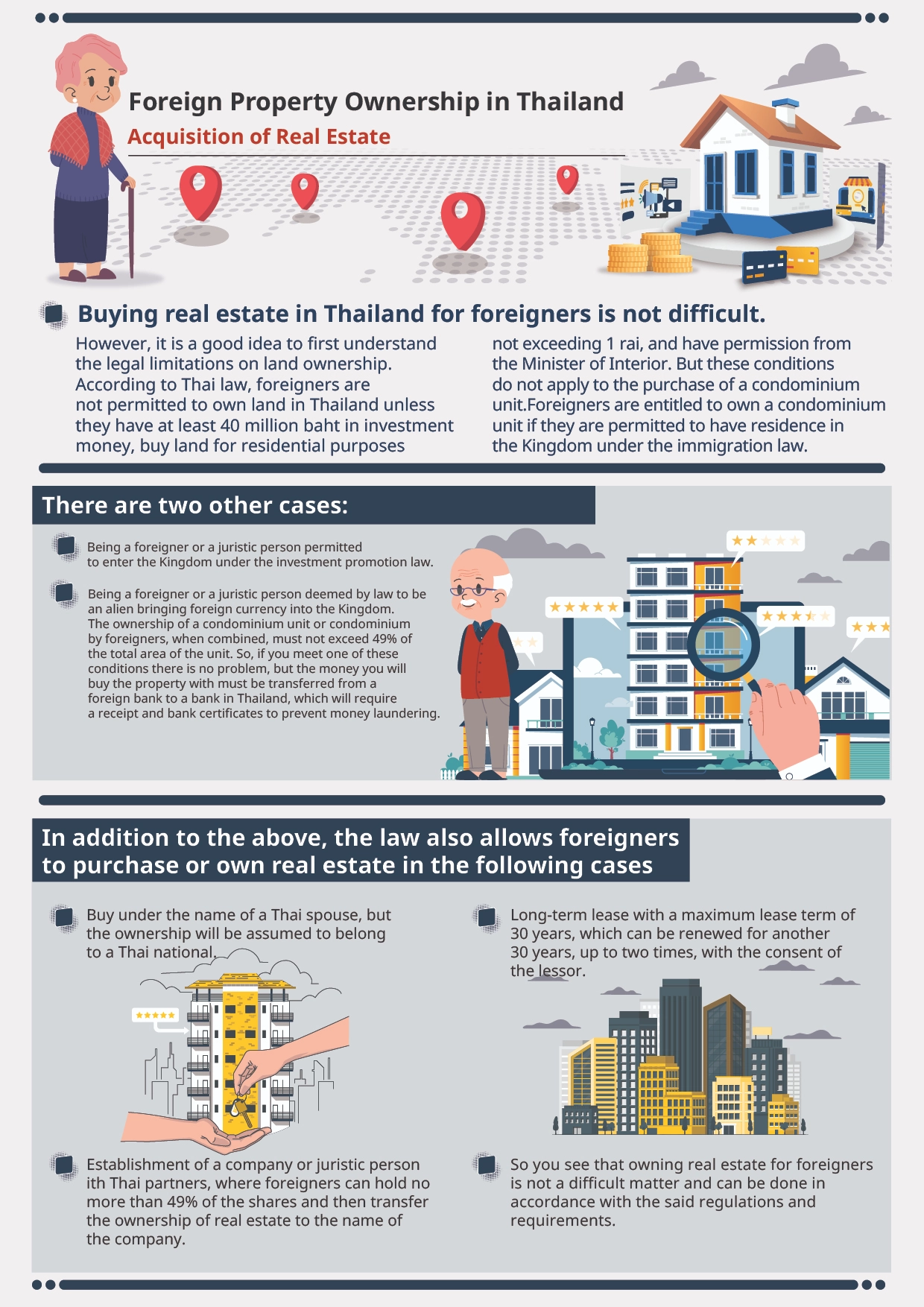
Foreigners still can’t own land outright. That part hasn’t softened. What has stayed consistent is how foreigners are allowed to buy and hold property within clear boundaries. Condos are still the most straightforward option, and foreign freehold ownership is still very much a normal, everyday thing in Thailand. Plenty of buildings in Bangkok, Phuket, and Chiang Mai are filled with foreign owners who bought legally and without drama.
Leasehold hasn’t changed either. A lease can still run up to 30 years. That’s the cap. Anything longer gets trimmed back to that limit, no matter how it’s worded on paper. You’ll still hear about longer terms or future renewals, but those don’t override the basic rule.
And despite the rumors, there hasn’t been a sudden backdoor opening. No quiet loophole slipped through. No blanket permission for foreigners to own land. The system is still structured, still conservative, and still predictable.
Here’s the quick reality check:
- Foreigners still can’t own land outright
- Condo freehold ownership is still legal and common
- Leasehold terms are still capped at 30 years
- No new loopholes suddenly changed the game
That might sound limiting at first, but stability isn’t a bad thing. When the rules stay the same, you can plan around them. The confusion usually comes from expecting Thailand to work differently, not from the rules themselves.
Source : thailand.go.th
Condo Freehold Rules
Condo freehold is usually where the conversation gets calmer. Fewer “maybe” answers. Fewer creative explanations. It’s the option most people circle back to once they’ve heard a few too many conflicting opinions. Not because it’s perfect, but because it’s clear.
When foreigners talk about owning property in Thailand in their own name, this is usually what they mean.
Why Condos Are Still the Default for Foreign Buyers
When people ask where to start with property in Thailand, condos come up again and again. Not because they’re glamorous, but because they’re clear. The rules are well-worn. Banks understand them. Land Offices see these transactions every day.
I’ve seen this play out with friends who moved to Bangkok for work or Phuket for a slower pace. Even the ones who dreamed of a house eventually started with a condo. It gave them a foothold. Something they could actually own in their own name, without creative structures or crossed fingers.
Condos are also easier to resell. Buyers understand what they’re getting, and there’s a steady market of both locals and foreigners. That comfort matters, especially if Thailand is still a “let’s see how this goes” chapter rather than a forever plan.
If you want something simple, familiar, and legally clean, a condo usually ticks those boxes.
The 49% Foreign Quota Rule
Every condo building in Thailand has a limit on how much of it can be owned by foreigners. That limit is 49 percent of the total saleable space in the building. Not the number of units, but the floor area.
Once that foreign portion is full, it’s full. The unit doesn’t become illegal. It just can’t be sold as foreign ownership again unless space opens up elsewhere in the building.
This is why two identical condos in the same project can be sold under different terms. One fits under the foreign quota. The other doesn’t.
Before you get attached to a unit, it’s worth confirming a few basics:
- Is there foreign quota available in this building right now?
- Has the quota already been used up?
- Can this specific unit be registered as foreign-owned?
It’s a simple check, but skipping it causes more headaches than almost anything else.
Money From Overseas (Why the Paper Trail Matters)
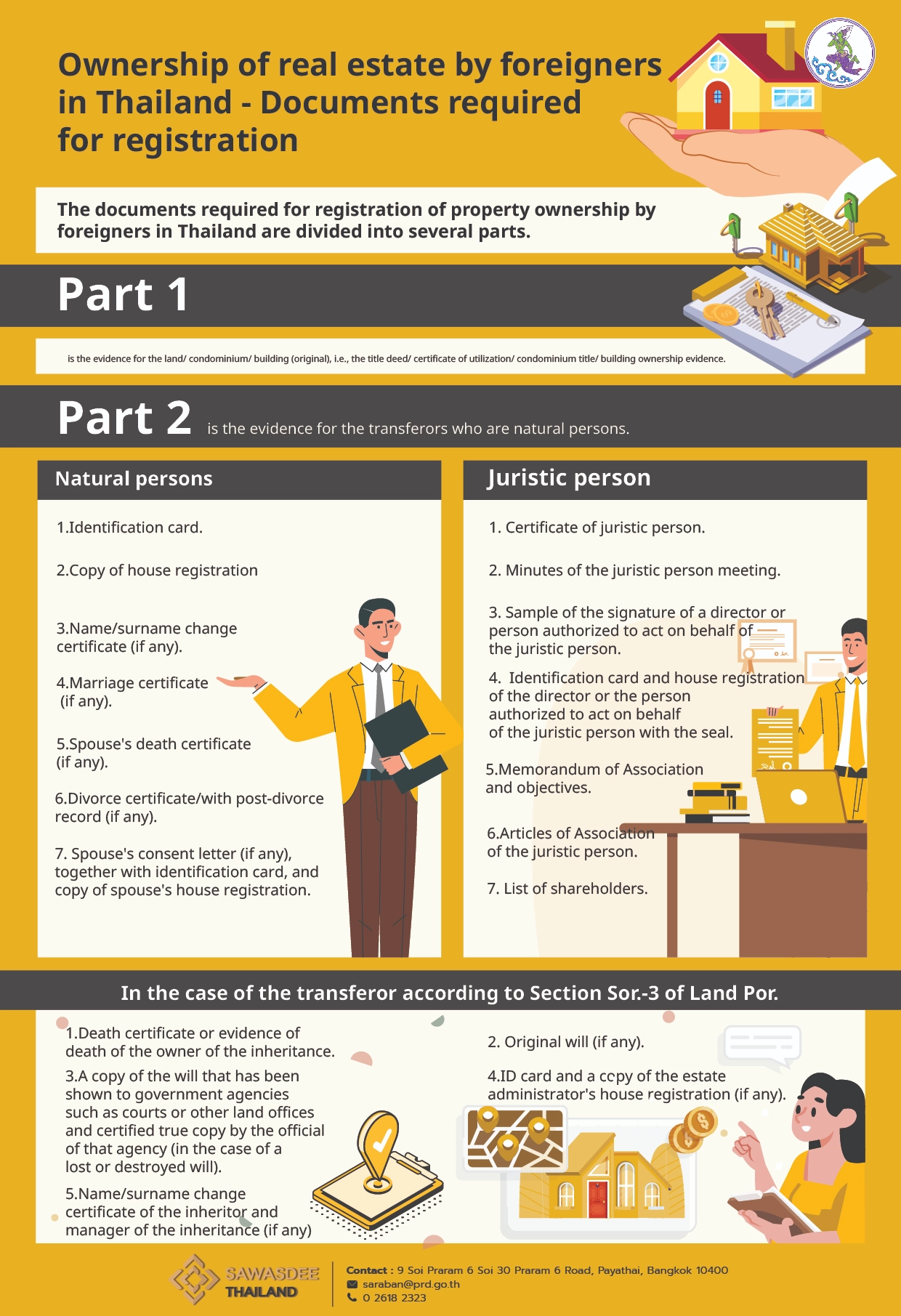
When a foreigner buys a condo in Thailand, the money usually needs to come from outside the country. This isn’t about making things difficult. It’s about creating a clear record of where the funds came from and why they arrived.
Think of it like labeling a box before you put it on a shelf. The bank notes that the money came in from abroad for a property purchase. Later, when the ownership is registered, that paper trail helps everything line up.
The Land Office doesn’t want a stack of documents. They just want confirmation that the funds were transferred properly and for the right reason. Most Thai banks know exactly how to handle this, as long as it’s done cleanly from the start.
If you’re still weighing whether buying even makes sense right now, it’s worth reading more about renting versus buying in Thailand first. Understanding both sides makes the next steps feel a lot less intimidating.
Leasehold Explained
If condos are the clean, familiar option, leasehold is the one that needs a bit more unpacking. It’s not a trick, and it’s not automatically a bad idea. It’s just a different way of holding property, with clear limits that matter if you’re planning to stay in Thailand for a while.
At its core, leasehold means you don’t own the land. You’re paying for the right to use it for a fixed period of time. How that plays out in real life depends on how well you understand the details.
What Leasehold Actually Means in Thailand
In Thailand, a lease on property can run for up to 30 years. That’s the maximum term. You’ll see longer contracts offered sometimes, but legally they’re brought back down to that 30-year limit.
For a lease to really count, it needs to be registered with the Land Office. If it’s not registered, it’s treated more like a private agreement between two people. That makes it much weaker if anything changes later.
This is where some confusion comes in. Writing a longer lease into a contract doesn’t override the law. The law still wins. Think of it like a speed limit. You can write any number you want on a piece of paper, but the road still has a cap.
None of this makes leasehold useless. It just means the structure has boundaries you need to respect.
The Truth About “30+30+30”
You’ll often hear leasehold described as “30 plus 30 plus 30.” It sounds neat and comforting, like a quiet workaround everyone agreed on. In practice, it’s more fragile than that.
The first 30 years can be solid if the lease is registered properly. The next 30 years usually depend on a renewal clause. That clause is a promise to talk again in the future, not a guaranteed extension you can enforce today.
A simple way to think about it is renting with a friendly landlord. You might agree over coffee that you’ll renew when the time comes. That’s great. But it’s not the same as already holding the keys for the next 60 years.
This isn’t a reason to panic. It’s just a reason to understand what’s guaranteed and what isn’t.
When Leasehold Makes Sense
Leasehold can work well for the right kind of buyer. It often suits people who plan to live in Thailand long-term, care more about lifestyle than resale value, and are comfortable with a fixed time horizon.
This shows up a lot with houses in places like Phuket or Samui. Buyers want space, privacy, and a home that feels personal. Leasehold becomes the trade-off that makes that possible.
Before committing, it’s worth slowing down and checking a few basics:
- Is the lease registered at the Land Office?
- Who owns the land, and for how long?
- What happens if the land changes hands?
- Are renewal terms clearly written and realistic?
Leasehold isn’t about squeezing around the rules. It’s about deciding whether the structure fits how you actually plan to live in Thailand.
Condo vs Leasehold (Quick Reality Check)
When people ask whether condo freehold or leasehold is “better,” the honest answer is that it depends on what you want out of the property. This isn’t a right-versus-wrong choice. It’s more like choosing between renting a city apartment or moving into a countryside house. Both can be good. They just suit different lives.
A quick side-by-side helps make the differences clearer.
| Feature | Condo Freehold | Leasehold Property |
| Ownership | You own the unit | You lease the right to use |
| Land ownership | No | No |
| Time limit | Permanent | Up to 30 years |
| Resale | Generally easier | More limited |
| Common buyers | First-time buyers, investors | Lifestyle buyers |
| Legal complexity | Lower | Higher |
What matters most is how you plan to use the property. If you want something simple, flexible, and easy to explain to the next buyer, condo freehold usually fits. If you care more about space, privacy, or a specific location, leasehold can still work well. The key is choosing the structure that matches your life, not the one that sounds best on paper.
Land Ownership Myths
If there’s one topic that creates the most confusion, it’s land. Stories get passed around at dinners and on forums, usually starting with “I heard that…” By the time they reach you, they’ve picked up a few extra assumptions along the way.
The truth sits somewhere between “foreigners can’t touch anything” and “there’s an easy workaround.” Understanding that middle ground makes a big difference.
“Foreigners Can’t Own Anything in Thailand” (Not True)
This is one of the most common misconceptions, and it usually comes from mixing up land ownership with property ownership in general.
Yes, foreigners can’t own land outright. That part is clear. But that doesn’t mean foreigners are locked out of property altogether. Condos can be owned in a foreigner’s name. Buildings can sometimes be owned separately from the land they sit on. Certain rights can also be registered and protected.
When people say “you can’t own anything,” they’re usually oversimplifying a much more specific rule. Thailand isn’t saying no to foreign buyers across the board. It’s just very clear about where the boundaries are.
Once you separate land from buildings and ownership from usage rights, the picture becomes a lot less intimidating.
“Just Use a Thai Company” (Why This Is Risky)
At some point, almost every foreign buyer hears this suggestion. It’s often framed as a standard local solution, said casually, as if everyone does it and no one worries.
The issue isn’t that companies are illegal. It’s how they’re sometimes used. Setting up a company with Thai shareholders who are only there on paper, just to hold land for a foreigner, creates long-term risk. Authorities have been paying more attention to these structures, and that scrutiny doesn’t usually show up on day one. It shows up years later, when selling, renewing, or transferring.
Living with that uncertainty can be stressful. Even if nothing goes wrong, the question is always there in the background.
This isn’t about panic or scare stories. It’s about understanding that some setups look fine at first but become heavy to carry over time. For most lifestyle buyers, the peace of mind just isn’t worth the gamble.
Common Legal Structures
Once you strip away the myths and marketing language, there are only a handful of legal structures foreigners actually use in Thailand. They’re not secret. They’re not new. They’re just different ways of working within a system that’s been in place for a long time.
Understanding these options helps you choose something that fits your life, rather than trying to force a setup that looks good on paper but feels uncomfortable in practice.
Condo Freehold
This is the cleanest and most familiar structure for foreign buyers. You own the condo unit in your own name, and the ownership is registered clearly. There’s no time limit, no renewal conversation, and no extra layers to explain later.
That simplicity is why condo freehold shows up so often. It’s easy to understand, easy to manage, and easy to pass on or sell when plans change.
Leasehold + House Ownership
This structure is common in places where people want space and privacy. The land is leased, usually for up to 30 years, while the house itself can be owned separately.
You’ll see this a lot in resort areas like Phuket or Samui, where detached houses and villas are more common than high-rise condos. Buyers get the home they want, while accepting that the land comes with a time limit.
It’s a practical compromise, as long as the lease is clear and properly registered.
Usufruct, Superficies, and Other Registered Rights
These sound more complicated than they really are. In simple terms, they’re registered rights that sit on top of land ownership. They don’t give you the land, but they give you legally recognized control over how you use it.
Think of them like reserving a seat rather than owning the whole theater. Your name is on the booking, and that matters if anything changes.
These rights don’t bypass the rules. They work within them. When used properly, they can add a layer of security and clarity, especially for long-term living arrangements.
FAQ
Can Foreigners Own Villas in Thailand?
The short answer is no, not the land underneath them. But this is where wording matters.
In many cases, when someone says they “own a villa” in Thailand, they’re really talking about owning the building while leasing the land it sits on. The house can feel like yours in every practical sense. You live there, maintain it, renovate it. The land itself, though, remains owned by a Thai individual or entity.
This is common in places like Phuket. A friend might say they own a villa by the beach, and they’re not trying to be misleading. They’re just using everyday language, not legal language. Understanding that difference upfront helps avoid confusion later.
What About 99-Year Leases?
You’ll hear about 99-year leases often, especially in sales conversations. They’re usually presented as a done deal or something that’s “basically approved.”
As of 2026, longer lease terms have been discussed and proposed, but they’re not something buyers should rely on as a guaranteed right. In practice, the standard structure still revolves around 30-year leases, with any extensions treated as future agreements rather than something enforceable today.
For anyone planning now, the safest approach is to make decisions based on the rules that are already in place. If longer leases become fully available later, that’s a bonus. It just shouldn’t be the foundation of a buying decision.
So What’s the Smart Move in 2026?
The smart move in 2026 isn’t about finding the cleverest structure. It’s about matching the property to how you actually plan to live in Thailand.
If you value simplicity, condo freehold usually makes the most sense. It’s easy to understand, easy to manage, and easy to exit if your plans change. This is why many first-time buyers start here, especially in cities like Bangkok. If you’re still weighing that step, it helps to compare renting vs buying in Thailand before committing.
If lifestyle is the priority, leasehold can work. Space, privacy, and location matter more than resale math for some people. This shows up often in resort areas where houses feel more like home than units in a tower. Just be honest with yourself about time horizons and how long you really want to stay.
If flexibility is what you’re after, renting longer or buying later is also a valid choice. Many people spend their first year or two learning which neighborhoods they like, how visas fit into their plans, and what daily life really feels like. Guides on the best areas to live in Thailand or long-term visas can help shape that picture.
There’s no single correct answer. The best decision is the one that still feels comfortable when the excitement wears off.
Source : thailand.go.th
Final Thoughts
Thailand’s property rules tend to sound more complicated than they are. Most of the confusion comes from mixed messages, not from the system itself. Once you slow things down and look at how ownership actually works, the picture gets a lot clearer.
There’s no need to hunt for shortcuts or clever workarounds. The rules have been around for a long time, and they don’t change overnight. When you understand the limits, it’s easier to make choices that feel solid instead of stressful.
Buying property here isn’t about beating the system. It’s about working with it in a way that fits your life. Do that, and the process becomes far less intimidating, and a lot more manageable.
Interested in more insights about Phuket’s property market and the latest trends? Stay updated with our newsletter, where we share all the real estate news and opportunities you need to know—sign up for our newsletter to get the latest insights delivered straight to your inbox.
Questions about your ideal investment? Fill out our quick form and we’ll connect you with local experts who actually live in these markets! 💡

Join The Discussion