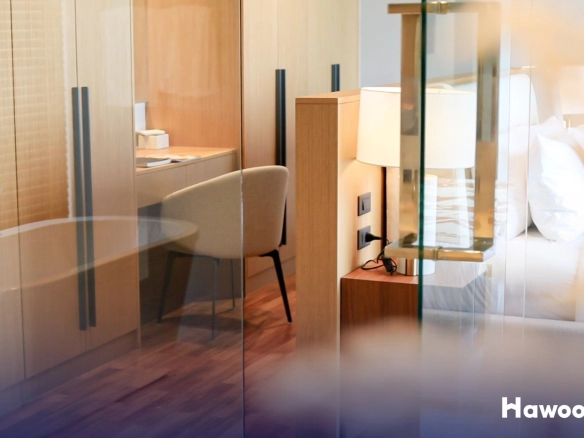
by
by 
When searching for a new condo in Thailand, it’s easy to be dazzled by glossy renders and showroom furniture setups. However, the true insight into what you’re buying lies in the condo plan. This plan reveals the real story behind the property—detailing room sizes, space flow, natural light, and potential issues you might regret later.
Whether your goal is to live in the condo, rent it out, or invest early, understanding the condo plan is an essential skill. Not all plans are created equal, especially in Thailand, where developers, regions, and price points each bring unique quirks. This guide will help you navigate these differences by covering:
- The distinctions between master plans, floor plans, and unit layouts
- How to effectively read a Thai condo plan, including common pitfalls
- The most common condo layouts and which lifestyles they suit
- What defines small vs large units in Thailand
- Tips for choosing the best floor and unit orientation
- A final checklist to review before signing any agreements
Whether you’re comparing projects in Bangkok, Phuket, or Pattaya, this knowledge will empower you to ask the right questions and select a unit you won’t regret.
Master Plan vs Floor Plan vs Unit Plan
When buying a condo off-the-plan in Thailand, you’ll often receive multiple types of layouts—sometimes as printouts, PDFs, or even screenshots from a sales agent’s tablet. Understanding the differences between these plans is key to seeing the bigger picture and avoiding surprises.
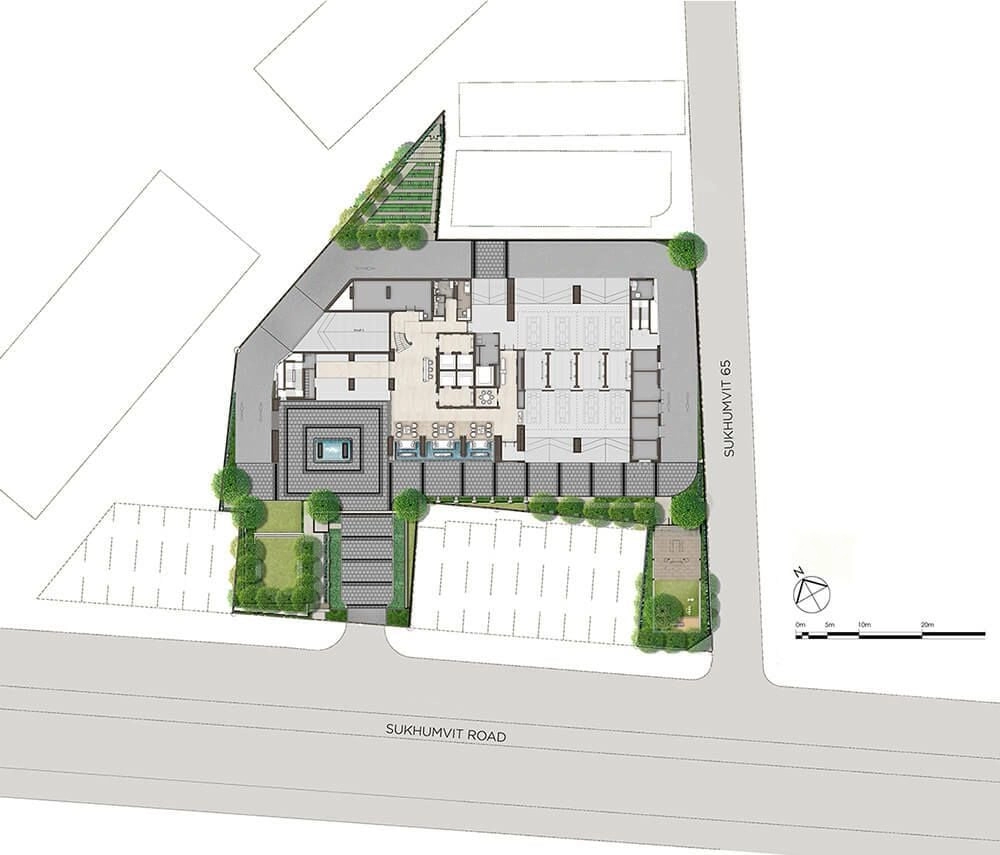
🏗️ Master Plan: The Big Picture
The master plan provides an overview of the entire development. It shows the arrangement of buildings, roads, swimming pools, parking lots, gyms, gardens, security gates, and more. This plan helps you understand the broader context of your condo.
Use the master plan to check:
- The distance of your building from roads, pools, or other amenities
- Whether your block is positioned near a wall, at the back, or facing open space
- The path of the sun for natural light and heat considerations
- Access points, traffic flow, and pedestrian walkability
Developers sometimes place utility zones, garbage areas, or dead spaces strategically, so always zoom in closely to spot these less desirable features.
🧱 Floor Plan: The Building’s Layout
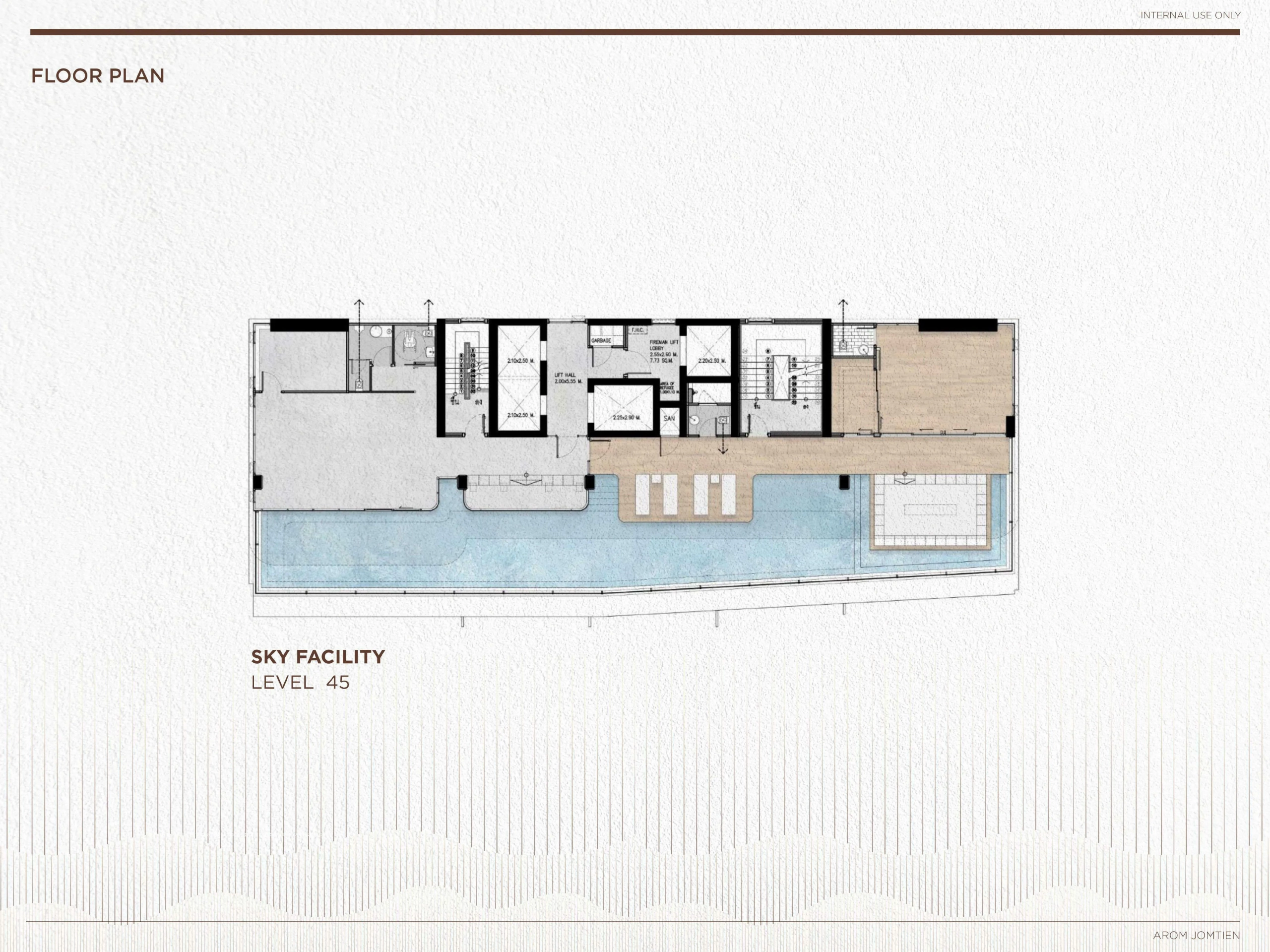
The floor plan zooms in to show all the units on a single level of the building. This plan is crucial for understanding your immediate neighbors and the overall layout of your floor.
Use the floor plan to evaluate:
- How many neighbors share your corridor
- Your unit’s proximity to elevators or stairwells
- Whether the floor layout is symmetrical or irregular
- If your unit is a corner, mid-row, or end unit
This insight helps you identify good floor positioning, such as increased privacy and reduced noise, and avoid problematic spots like next to garbage chutes or noisy elevators.
📐 Unit Plan (แปลนห้อง): The One That Matters Most
The unit plan is the detailed layout of your actual condo unit. It shows room divisions, windows, door swings, appliances, balconies, and precise measurements.
Unit plans often display different configurations such as 1-2 ห้องนอน (bedrooms), highlighting the spatial division and design of each ห้อง (room) to help buyers understand the available layouts.
Use the unit plan to assess:
- Room sizes and proportions—does the bedroom barely fit a bed?
- The number and placement of windows for natural light
- Kitchen style—open or closed layout
- Bathroom access—ensuite only or shared?
- Whether the furniture shown is realistic or scaled down to exaggerate space
Thai and foreign expectations can differ here. Some Thai condo layouts prioritize compactness over comfort, and furniture is often not included despite being shown. Always request a furniture overlay plan and verify that dimensions match the finished build.
How to Read a Unit Plan Like a Pro
A well-drawn condo unit plan should help you visualize living in the space, but many are designed to impress rather than inform. Furniture may be scaled down, walls look thinner, and layouts might not work practically.
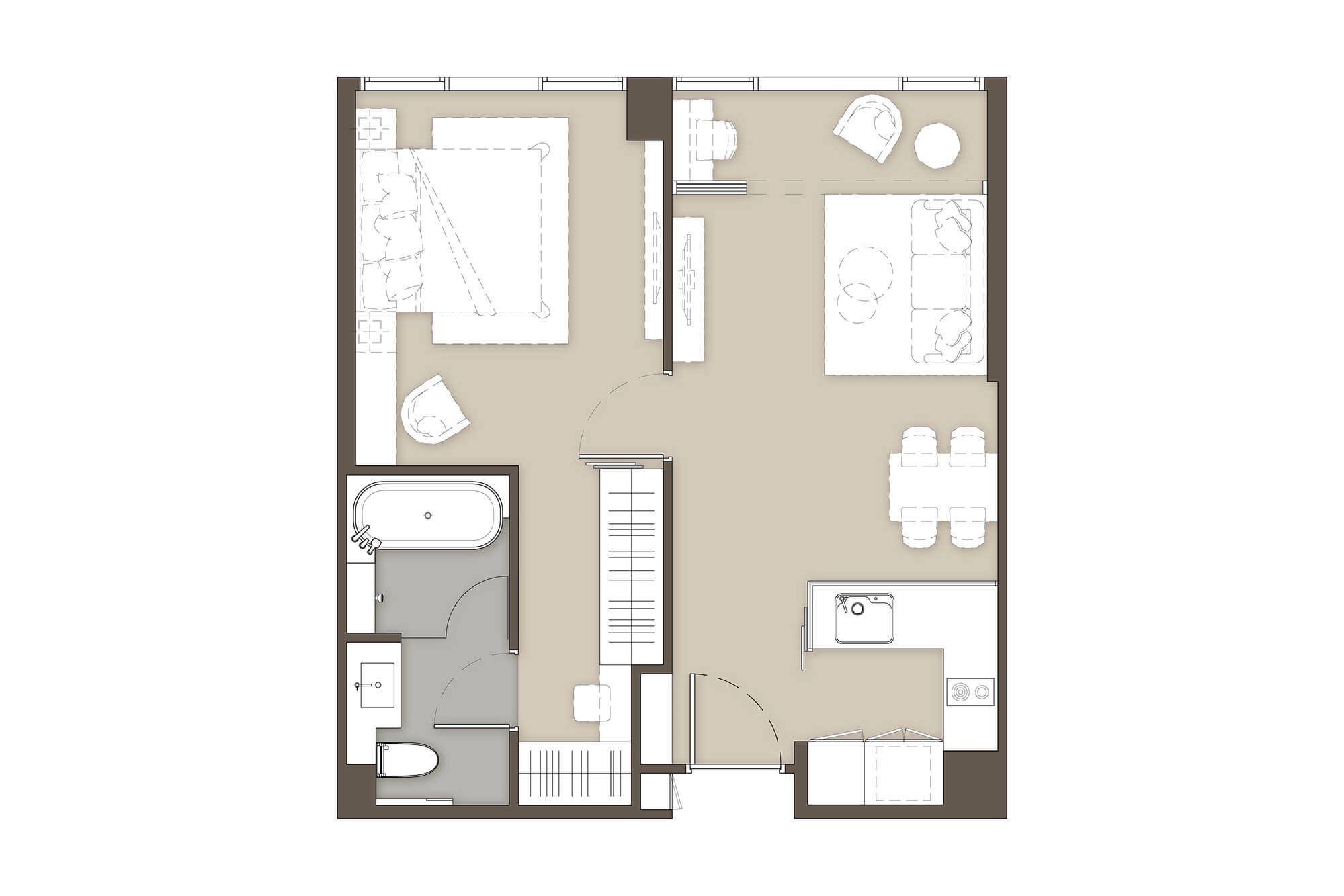
Here’s how to read a unit plan like a savvy buyer:
📏 Start with Dimensions — Not Just Square Metres
While total area in square metres is often highlighted, what truly matters is how that space is used.
- A 35 sqm 1-bedroom with a long hallway wastes more space than a well-designed 30 sqm unit
- Balconies may be included in total area—check how much usable indoor space you really get
- Furniture drawings help but don’t assume they come with the unit unless explicitly stated
Always ask for dimensions of each ห้อง (room), not just the overall size, if these aren’t shown.
🌞 Check Window Placement and Natural Light
Natural light can make or break your living experience.
- Look for bedrooms and living rooms with their own windows, not just borrowed light from balconies
- Avoid layouts where bathrooms and kitchens are deep inside with no ventilation
- Be cautious of “internal” bedrooms that meet window requirements but feel boxed in
🛋️ Flow Matters More Than Flash
A unit might look fancy on paper but feel awkward in practice.
- Long hallways waste space
- Entry doors opening directly into kitchens are not ideal
- Bedrooms that require walking through living rooms reduce privacy
- Bathrooms that only open from bedrooms can be inconvenient for guests or tenants
Flow affects daily living more than aesthetics.
🔁 Sliding Doors, Swings & Walls: The Fine Print
Pay attention to:
- Door swing directions—does the door block wardrobes or pathways?
- Wall thickness—sometimes drawings are deceptive here
- Built-in furniture—is it included or just staging?
- Washer/dryer space—is it actually big enough?
If buying off the plan, request the furniture overlay plan and ask for photos comparing show units to real handovers in past projects.
The Most Common Condo Layout Types in Thailand
Not all condo plans suit every lifestyle. Here’s a breakdown of common layouts and who they best serve:
🛏️ Studio Units
- Size Range: Approximately 24–30 sqm
- Best for: Short stays, solo digital nomads, entry-level investors
Studios feature an open-plan layout with no separation between the bed and living area. Kitchens are compact, often electric with no stove hood. While efficient for renting, studios can be too tight for long-term living. Watch for limited storage and poor ventilation in bathrooms or kitchens.
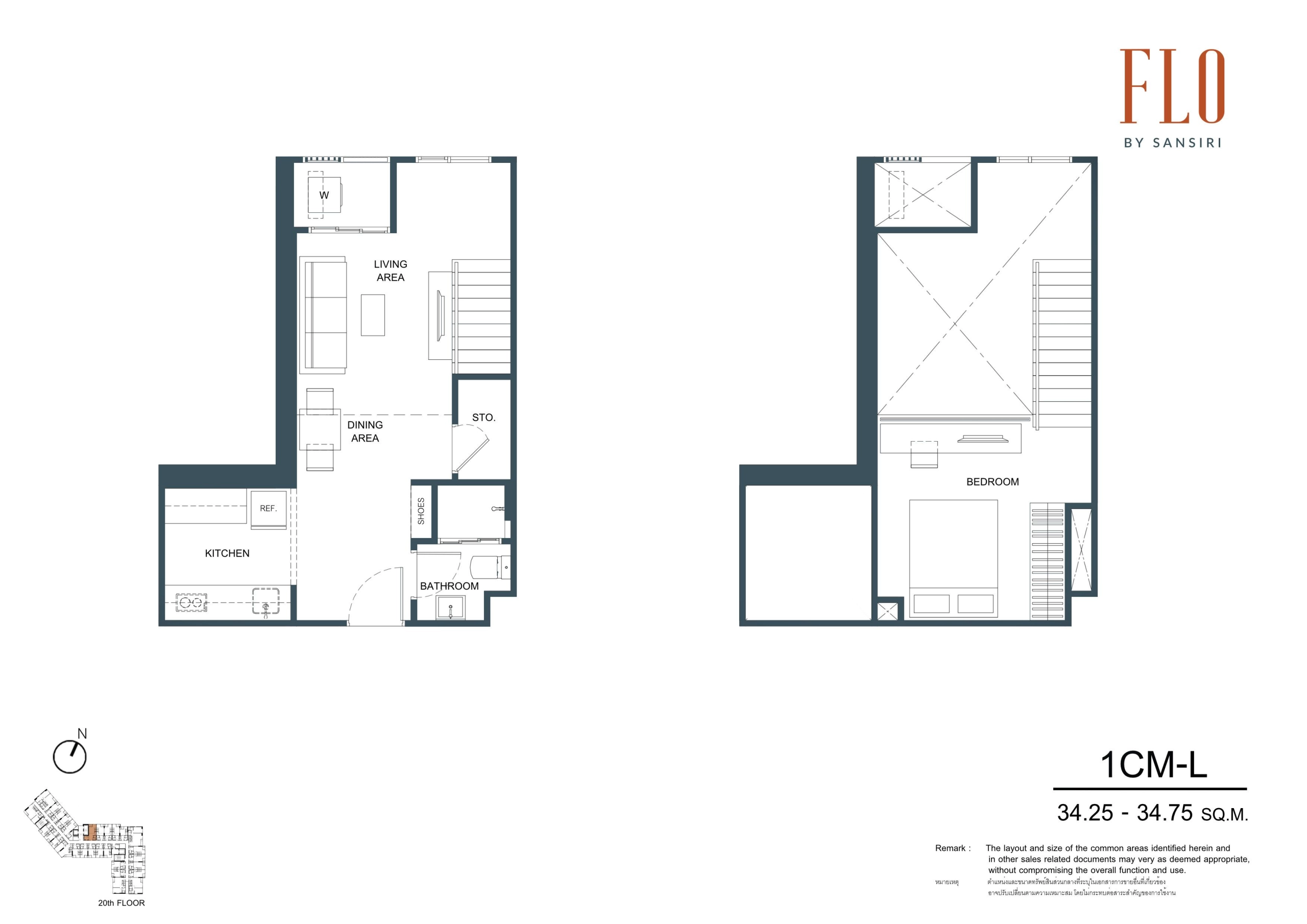
🛋️ 1-Bedroom Units
- Size Range: Approximately 30–40 sqm
- Best for: Singles, couples, digital nomads with a base
These units separate the bedroom from the living space, offering a more spacious feel if well designed. Some include sliding doors to save space. Be cautious of long hallways that reduce usable living areas.
🛏️🛏️ 2-Bedroom Units
- Size Range: Approximately 50–70 sqm
- Best for: Small families, remote workers, co-living arrangements
Usually, these have two bathrooms (one ensuite, one shared). Shared walls can reduce privacy if poorly planned. They have good rental potential for dual occupancy or Airbnb, if legally permitted. Watch for secondary bedrooms that are too small for a proper bed.
🔑 Dual-Key / Lock-Off Units
- Size Range: Approximately 50–70+ sqm
- Best for: Investors, co-owners, multi-generational families
These units have separate entrances for each “side” but share a main foyer. They offer rental flexibility but may feel disjointed or inefficient if poorly designed.
📐 Corner Units
- Size Range: Varies, usually larger
- Best for: Buyers seeking privacy, natural light, and better views
Corner units often have more windows and better cross-ventilation, commanding premium prices, especially on higher floors. Watch out for unusual angles or wasted space due to irregular shapes.
What’s a “Small” or “Large” Unit in Thailand?
Square metre numbers can be misleading without context. What looks big on a brochure might feel cramped, or vice versa. Understanding typical Thai condo sizes helps you judge whether a unit is tight, average, or spacious.
📊 Average Size Ranges by Unit Type
Unit Type | Small | Average | Large |
|---|---|---|---|
Studio | <26 sqm | 27–30 sqm | 31+ sqm |
1-Bedroom | <32 sqm | 34–38 sqm | 40+ sqm |
2-Bedroom | <50 sqm | 55–65 sqm | 70+ sqm |
Dual-Key | <55 sqm | 60–70 sqm | 75+ sqm |
3-Bedroom+ | <85 sqm | 90–120 sqm | 130+ sqm |
🏗️ What’s Included in That Size?
Most developers list the total saleable area, which often includes balconies, wall thickness, and air conditioning ledges. The interior usable area is smaller once built-ins and furniture are considered. Always confirm if the furniture layout is based on real measurements or just for marketing.
🧭 Orientation & Efficiency Matter Too
A well-designed 35 sqm unit can feel larger than a poorly planned 40 sqm one. Layout efficiency is key:
- Long hallways waste space
- Square-shaped living rooms feel larger than narrow rectangles
- High ceilings (common in some villas or low-rise condos) add openness
Which Floor or Floor Plan to Choose?
The floor level affects your view, noise levels, privacy, rental appeal, and sometimes resale value. Here’s what to consider:
🪟 View & Light
Higher floors generally offer better views—be it sea, lake, mountain, or city skyline—and command a premium. Low floors may face walls, neighboring buildings, or car parks. Check the master plan for possible view obstructions like future towers or electric lines.
🔊 Noise & Privacy
Pool-facing units create a holiday vibe but can be noisy due to children, music, or pumps. Units facing busy roads, such as those near Rawai, Chalong, or Sukhumvit, may experience traffic noise. End-of-corridor or corner units typically provide more privacy and less foot traffic.
📈 Resale & Thai Buyer Preferences
Thai buyers often prefer higher floors for exclusivity, cleanliness, and fewer bugs. Lucky floor numbers (like 8 or 9) can influence resale, while some developers avoid unlucky numbers (4, 13).
🛗 Convenience & Elevators
In low-rise buildings (under 8 floors), lower floors offer quick access. In taller buildings, elevator wait times can be a factor, especially during rush hours. Units near elevators provide convenience but may suffer from hallway noise.
☀️ Orientation & Heat
South-facing units in Thailand typically receive less direct heat, while west-facing windows get strong afternoon sun, heating the unit quickly. For high floors with large windows, check for overhangs, tinting, or shading to reduce heat.
🔹 Final Checklist Before You Commit
Before being swept away by stunning renderings or persuasive sales pitches, pause and review this checklist. It ensures you’re buying a condo plan that works for your lifestyle and investment goals.
✅ Layout & Flow
- Does the unit feel spacious, or are there long hallways and awkward cuts?
- Do key rooms like the living area and bedrooms receive natural light?
- Are bathrooms positioned well for guests or tenants?
✅ Plan Accuracy
- Is the furniture layout realistic?
- Are measurements clear and consistent with showroom models?
- Have you seen actual photos from previous handovers by the developer?
✅ Developer Transparency
- Were you provided with a full unit plan, floor plan, and master plan?
- Can the developer show your exact unit location on the project map?
- Are optional upgrades or furniture packages clearly listed and priced?
✅ Orientation & Positioning
- What direction does the unit face? Consider light, heat, and privacy.
- Is the unit near elevators, garbage areas, or stairwells?
- What lies across from your unit—open space or another window?
✅ Exit Strategy (For Investors)
- Will this layout appeal to long-term renters, short-term guests, or resale buyers?
- How does it compare in size and layout to nearby resale units?
A well-thought-out condo plan can make the difference between a home that feels spacious and comfortable or one you regret for years. Take your time, request detailed plans, and don’t hesitate to walk away if something doesn’t feel right.
If you’re comparing multiple projects and want expert help analyzing condo plans, feel free to reach out. We’re happy to guide you through the details others might overlook.
When buying property off-the-plan in Thailand, remember: a good condo plan isn’t just about square metres—it’s about how the space flows, how liveable it feels, and whether it suits your needs now and in the future. From room (ห้อง) proportions and furniture placement to floor level and orientation, these details add up to real-life comfort or frustration.
Take your time. Ask questions. Compare plans. And don’t hesitate to say no if something doesn’t feel quite right.
📩 Contact us at hawook.com/contact
📝 Sign up for our newsletter for upcoming layout reviews and project launches
Looking for the latest real estate opportunities? Explore our pre-sale projects in Phuket.