

Understanding how a leasehold works in Thailand is crucial for anyone investing in property or earning rental income. This guide breaks down when a leasehold qualifies as a tax write-off or deduction, depending on whether you own it personally or through a company. Learn how amortization applies to long-term leases, what expenses are deductible, and how to structure your property ownership for maximum tax efficiency under Thai law.
Table of Contents
If you’ve spent time looking into property investment in Thailand, you’ve probably come across leasehold structures — especially in resort markets like Phuket, Samui, and Pattaya. And somewhere along the way, you might’ve read that a leasehold can be a tax write-off.
It’s a nice thought — but not always true.
Let’s break down when it actually counts as a deductible expense, and when it doesn’t.
The Confusion
People often assume that a leasehold, because it’s paid annually or upfront, should be treated like a mortgage — something you can deduct for tax purposes.
But Thailand’s tax system doesn’t work that way.
There’s no personal deduction for lease payments on your residence, and no “interest deduction” equivalent like in some Western systems.
That means:
- If you live in your leasehold yourself — it’s not deductible.
- If you rent it out — you can deduct some costs, depending on how you declare income.
- If you hold it through a company — then yes, it can be amortized and written off gradually.

If You Live in It: No Write-Off
For individuals living in their own leasehold, there’s no tax relief.
Thailand’s personal income tax (PIT) system doesn’t recognize private housing costs as deductible. You can claim certain personal allowances (for dependents, insurance, donations, etc.), but housing rent or lease premiums are not included.
There’s one small exception: employed individuals renting (not buying or leasing long-term) may claim up to ฿100,000 per year of rental deduction — but that’s for standard residential tenancy agreements, not long-term registered leases used for property ownership substitutes.
So if you’ve signed a 30-year lease on a villa or condo, even if you live there full-time, you can’t deduct it personally.
If You Rent It Out: Limited Write-Offs
Things change if you’re earning rental income.
Thai tax law classifies rental income under Section 40(5) of the Revenue Code.
When you file tax on that income, you have two options:
Option A — Standard Deduction (Simple)
You can claim a flat 30% deduction off your gross rental income for a building or condo.
This covers all typical costs — maintenance, fees, lease rent, etc.
Most small landlords use this because it’s clean and requires no receipts.
Option B — Actual Expenses (Documented)
You can instead claim your real expenses, if you keep proof.
This can include:
- Annual ground rent or lease payments
- Land & Building Tax (if you pay it instead of the owner)
- Property management, cleaning, utilities
- Insurance, repairs, agent commissions
If your lease payments are substantial, this route can sometimes save more, but you’ll need solid documentation and an accountant comfortable with itemized reporting.
If You Use a Company: Yes, You Can Amortize It
For corporate structures — including Thai companies used for property holding — leasehold rights are treated as intangible assets.
That means the cost of acquiring the lease (including registration fee and stamp duty) can be amortized over the lease term for corporate income tax (CIT) purposes.
Example:
- Lease premium paid upfront: ฿6 million
- Lease term: 30 years
- Annual amortization: ฿200,000 per year
This amount is deductible from the company’s taxable income each year.
Additionally:
- Lease registration fee (1%) and stamp duty (0.1%) are capitalized into the lease cost.
- Land & Building Tax, if borne by the company, is also deductible annually.
- Other property-related operating costs (management, repairs, marketing) can be expensed in the same year.
So, for companies, a leasehold is indeed a legitimate tax write-off — just not in one go.
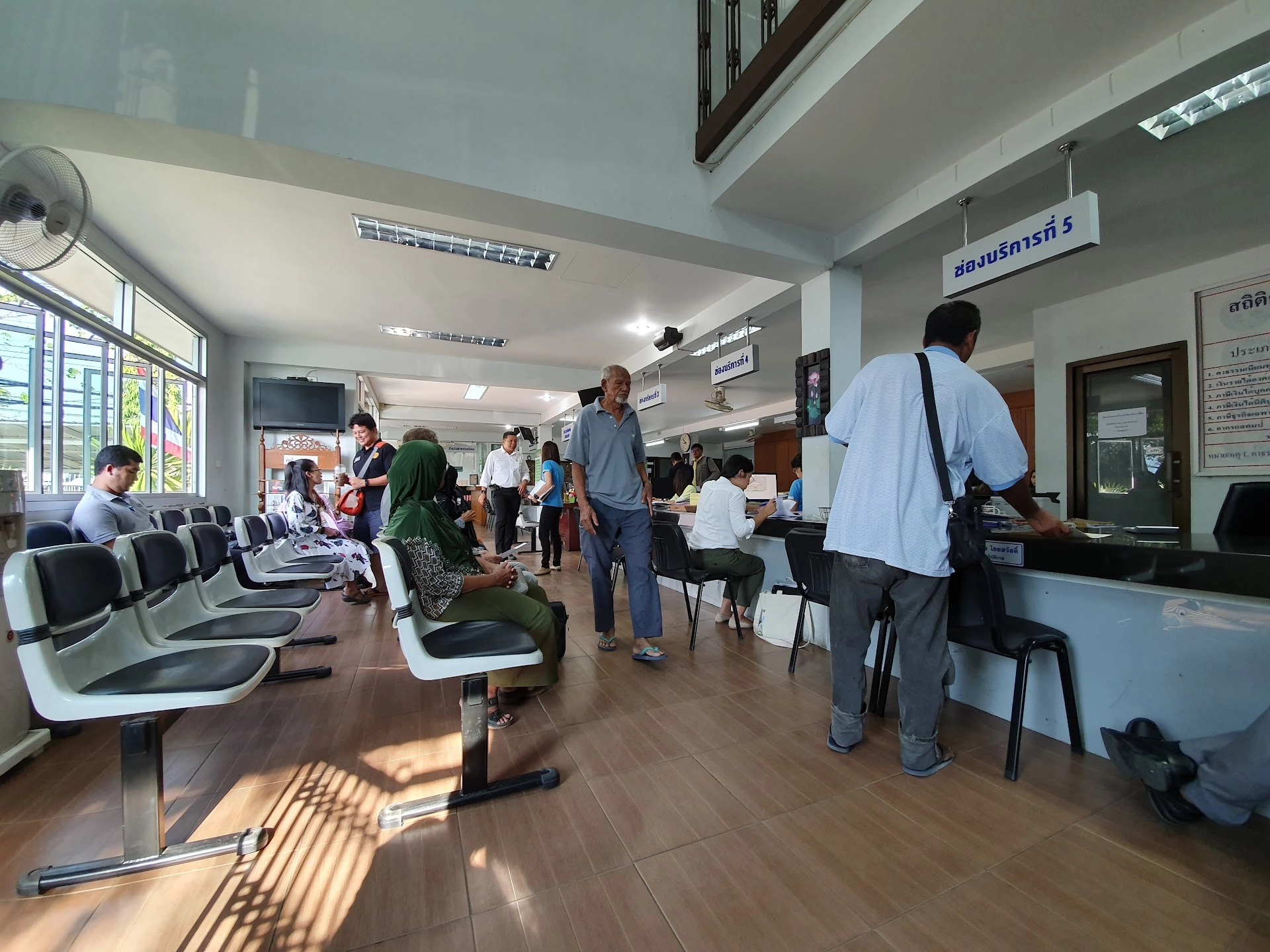
Know Your 1.1% (Government Fees)
Every registered lease incurs:
- 1% registration fee, and
- 0.1% stamp duty,
calculated on the total lease value.
When you buy a leasehold, these are paid upfront at the Land Office (often split between lessor and lessee).
While individuals can’t deduct them, companies capitalize these costs as part of the lease and write them off over time.
Edge Cases & Gotchas
A few wrinkles worth knowing:
- Lease assignment: If you sell your leasehold rights, you’ll pay the 1.1% fees again on the remaining value and term — and any gain you make is subject to income tax (not automatically collected at transfer).
- VAT / WHT: If your lessor is a company, the lease payments may be subject to VAT (7%) or withholding tax (5%), depending on contract structure.
- Land & Building Tax: Some leases shift this to the lessee. If you’re the one paying it, it can be deducted only under “actual expenses” or via your company accounts.
Worked Example: Individual Landlord
Scenario:
You lease a 1-bedroom condo in Phuket for 30 years and rent it out year-round through Airbnb.
You’re deciding whether to manage it yourself or hire a professional management company that takes 25% of gross income.
| Item | Self-Managed | Professionally Managed (25%) |
| Gross rental income | ฿1,500,000 | ฿1,500,000 |
| Ground rent / lease payment | ฿300,000 | ฿300,000 |
| Property management fee | — | ฿375,000 |
| Land & Building Tax | ฿40,000 | ฿40,000 |
| Other costs (insurance, cleaning, small repairs) | ฿30,000 | ฿30,000 |
| Total actual expenses | ฿370,000 | ฿745,000 |
Option A – Standard Deduction (30%)
Flat 30% deduction for both cases =
30% × ฿1,500,000 = ฿450,000
| Scenario | Taxable Income |
| Self-Managed | ฿1,050,000 |
| Professionally Managed | ฿1,050,000 |
Option B – Actual Expenses
| Scenario | Calculation | Taxable Income |
| Self-Managed | ฿1,500,000 – ฿370,000 | ฿1,130,000 |
| Professionally Managed | ฿1,500,000 – ฿745,000 | ฿755,000 |
Result
- If you manage it yourself, your real costs (about 25% of income) are lower than the 30% flat deduction — so the standard deduction works better.
- If you use a professional manager, total expenses jump to ~50% of income, and the actual-expense method becomes more tax-efficient.
Takeaway
- For small, self-managed rentals: stick with the 30% flat rule — it’s simple and usually higher than your real costs.
- For full-service or heavily managed properties: document and deduct actual expenses — you’ll likely save more in tax each year.

Worked Example: Company-Owned Leasehold
Scenario:
You set up a Thai company to hold a leasehold villa in Phuket, which is operated as a long-term rental or serviced property.
The company signs a 30-year registered lease and pays all related fees upfront.
| Item | Amount (THB) | Notes |
| Lease premium (upfront payment) | ฿9,000,000 | 30-year registered lease |
| Lease registration fee (1%) | ฿90,000 | Based on total lease value |
| Stamp duty (0.1%) | ฿9,000 | Based on total lease value |
| Annual rental income | ฿1,800,000 | After service fees and VAT |
| Land & Building Tax (annual) | ฿60,000 | Paid by company under contract |
| Operating & maintenance costs | ฿300,000 | Staff, cleaning, repairs, insurance |
Step 1 – Capitalize and Amortize the Lease
For tax purposes, the lease premium + fees = ฿9,099,000 total cost.
The company can amortize this over 30 years:
฿9,099,000 ÷ 30 = ฿303,300 per year deductible expense.
Step 2 – Annual Deductible Expenses
| Category | Amount (THB) | Deductible? |
| Amortization of lease right | ฿303,300 | ✅ Yes |
| Land & Building Tax | ฿60,000 | ✅ Yes |
| Operating & maintenance | ฿300,000 | ✅ Yes |
| Total annual deductions | ฿663,300 |
Step 3 – Calculate Taxable Profit
| Item | Amount (THB) |
| Annual rental income | ฿1,800,000 |
| Less: total deductions | ฿663,300 |
| Taxable profit | ฿1,136,700 |
Corporate income tax in Thailand is 20%, so:
Tax payable ≈ ฿227,340 per year
Without amortization, the company would’ve been taxed on the full ฿1.44M profit (paying roughly ฿288,000).
That’s a savings of around ฿60,000 per year, purely from the lease amortization write-off.
Result
For companies, a leasehold isn’t just a right to occupy — it’s a depreciable asset.
The upfront cost can be written off evenly over the term, alongside property taxes and normal operating expenses.
This makes leasehold ownership through a company far more tax-efficient and predictable than for individuals — especially on high-value or income-generating properties.
Takeaway
| Ownership Type | Can Deduct Lease Cost? | Method |
| Individual (personal use) | ❌ No | Treated as personal expense |
| Individual (rental) | ⚙️ Partially | Flat 30% or itemized actual costs |
| Thai company | ✅ Yes | Amortized over lease term |
Bottom Line
| Situation | Can You Write It Off? | Notes |
| Personal leasehold home | ❌ No | Treated as private spending |
| Individual landlord | ⚙️ Partially | 30% flat or documented actual costs |
| Thai company | ✅ Yes | Amortize lease + deduct taxes and fees |
Key Takeaways
- A leasehold isn’t a personal tax shelter in Thailand.
- For rental investors, you can deduct either a flat 30% or actual documented costs.
- For corporate buyers, lease rights can be fully amortized — a true write-off over time.
- Always clarify who pays Land & Building Tax and how fees are shared.
- Documentation matters: receipts, contracts, and proof of payment are essential if you go the “actual” route.

When Leasehold Write-Offs Make Sense
Leasehold in Thailand can look like a gray area — part real estate, part legal contract, part accounting entry.
But once you separate personal use from business use, the tax picture becomes clear:
- Living in your own leasehold? No write-off — it’s personal spending.
- Renting it out yourself? The flat 30% deduction usually wins, unless your real costs (lease rent, tax, upkeep) exceed that.
- Working with a property manager? Actual expenses often surpass 30%, so itemizing can save tax — if you keep records.
- Holding through a Thai company? You get the full advantage: amortize the lease, deduct related taxes, and treat it like any other business asset.
In short:
The more structured and commercial your leasehold setup, the more tax-efficient it becomes.
The more personal it is, the less benefit you’ll see.
Still, every lease and ownership structure is unique — terms vary, and so do Revenue Department interpretations.
⚠️ Important Note
This article is for general information only.
We’re not lawyers, accountants, or licensed tax advisers.
Before relying on any deduction or structuring your purchase, consult a qualified Thai tax professional or legal advisor familiar with property and leasehold law.




Join The Discussion