
 by
by 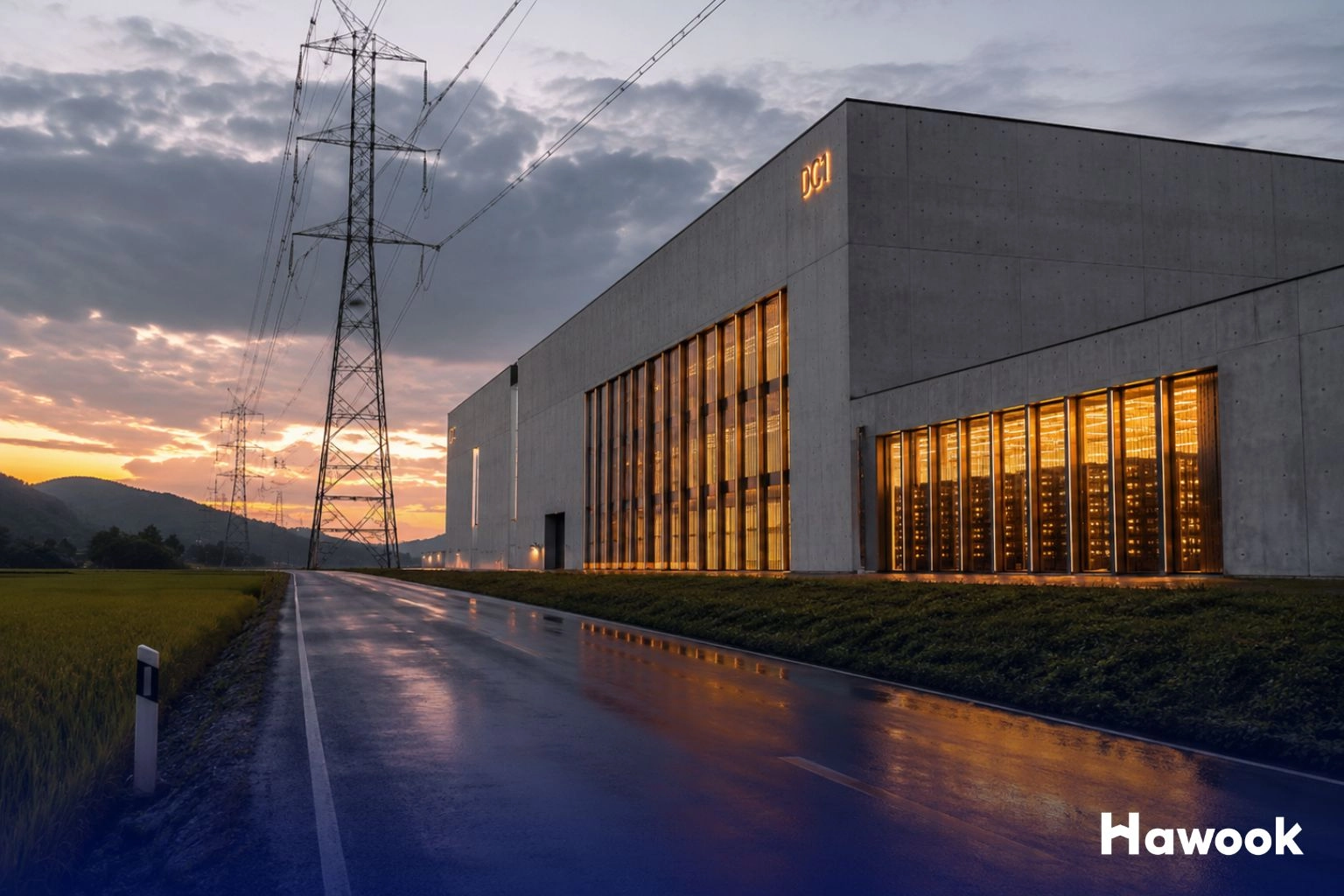
The Thailand data center property boom could quietly reshape the country’s next real estate hotspots. As billions flow into AI infrastructure, logistics, and industrial corridors, investors are starting to look beyond traditional condo markets and toward the infrastructure driving Thailand’s next growth cycle.
Table of Contents
A few years ago, most Thailand property conversations sounded almost identical.
Beach villas in Phuket.
Luxury condos in Bangkok.
Short-term rental yields.
Retirement buyers chasing sunshine and lower living costs.
That story still exists, of course.
But something else is starting to happen underneath it.
Quietly.
Thailand recently approved a massive THB 958 billion investment wave tied to digital infrastructure, cloud services, and AI expansion. One of the biggest names attached to it was TikTok, through a major Thailand data center investment push.
At first glance, this sounds like pure tech news.
Servers. Cloud systems. Corporate infrastructure.
Not exactly the kind of thing most people connect to Thailand property investment.
But property markets usually change long before the lifestyle blogs and condo billboards catch up.
And infrastructure tends to move first.
That’s the interesting part here.
Because when governments start prioritising AI infrastructure Thailand projects, the effects rarely stay inside the tech sector. Data centers need land. They need stable power. They need logistics access. They need industrial ecosystems that can support long-term expansion.
That creates pressure in places most casual investors are not paying attention to yet.
Industrial corridors. Utility-rich zones. Secondary areas connected to transport routes.
The funny thing about property cycles is that they often begin in very unglamorous ways.
Not with rooftop bars or flashy launches.
Usually with roads. Electricity. Warehouses. Infrastructure approvals.
Then the cafes and luxury condos arrive later.
Thailand’s latest investment push may end up being less about technology itself and more about how AI infrastructure reshapes the physical map around it.
And if that happens, some of Thailand’s next property hotspots may look very different from the last cycle.
What Actually Happened?
Earlier this month, Thailand approved one of its biggest investment waves in recent years.
The country’s Board of Investment, usually called the BOI, approved projects worth roughly THB 958 billion. A huge chunk of that came from a TikTok-backed expansion tied to digital infrastructure and data centers.
That sounds massive because it is.
But most people outside the tech world probably read headlines like this and think:
“Okay… but what does that actually mean?”
Fair question.
A data center is basically the physical backbone of the internet. These facilities store and process huge amounts of digital information. Cloud platforms, AI systems, apps, streaming services, online payments, social media platforms, all of it needs somewhere to live physically.
And those places are not small.
Modern data centers need:
- enormous amounts of electricity
- stable internet infrastructure
- cooling systems
- logistics access
- secure industrial land
- long-term infrastructure planning
Which is why Thailand data center investment is becoming a much bigger story than it first appears.
Here’s a simple breakdown of what was approved:
| Investment Area | Details |
| Total approved investment | THB 958 billion |
| Major player | TikTok-backed infrastructure expansion |
| Main focus | Data centers, cloud systems, AI infrastructure |
| Government goal | Position Thailand as a regional digital hub |
| Property impact | Industrial land, logistics, utilities, worker housing |
The bigger picture here is that countries across Asia are competing to become part of the AI infrastructure Asia race.
Not because it sounds trendy.
Because digital infrastructure has become economic infrastructure.
A decade ago, governments competed for factories.
Now they compete for cloud infrastructure, semiconductor supply chains, AI systems, and data storage capacity.
Thailand wants a bigger seat at that table.
And honestly, it makes sense geographically.
Thailand already has:
- strong manufacturing ecosystems
- industrial corridors
- logistics access
- international business presence
- relatively competitive operating costs
So from the government’s perspective, attracting cloud and AI infrastructure is partly about future-proofing the economy.
But this is where it gets interesting for property investors.
Data centers do not just appear in random places.
They usually cluster around areas with:
- stable power access
- utility depth
- transport infrastructure
- industrial ecosystems
- available land
That naturally creates pressure around surrounding areas too.
Industrial infrastructure expands. Roads improve. Logistics activity increases. Supporting businesses move nearby.
Sometimes residential demand follows later.
This is why a lot of experienced investors pay attention to infrastructure approvals long before they pay attention to condo launches.
Because infrastructure quietly changes the map first.
The public usually notices much later.
One thing worth understanding is that governments are not chasing data centers only for prestige.
There are practical reasons behind it.
Why governments want data centers
- Long-term foreign investment
- Higher-skilled jobs
- More global companies entering the market
- Expansion of local digital economies
- Infrastructure upgrades
- Increased demand for utilities and logistics
- Stronger positioning in regional tech supply chains
Thailand is clearly trying to position itself as a long-term digital and AI hub instead of relying only on tourism and traditional manufacturing.
Whether that strategy fully succeeds is another conversation.
But from a Thailand industrial property perspective, the direction is becoming harder to ignore.
Because once serious infrastructure money starts flowing into specific corridors, surrounding property markets often start changing too.
Not instantly.
But gradually.
And usually before the wider market fully notices what is happening.
Why Data Centers Matter for Property Investors
Most people imagine property hotspots forming around obvious things.
Beach clubs. Luxury malls. New condo launches. Tourism booms.
But some of the biggest property shifts actually begin with infrastructure.
Quiet infrastructure.
The kind most people ignore because it looks boring at first.
A new power upgrade.
A logistics expansion.
An industrial estate getting bigger.
A major utility project nobody talks about on Instagram.
Then five years later, everyone suddenly calls the area “up-and-coming.”
That pattern shows up again and again across Southeast Asia property investment cycles.
And data centers fit directly into that story.
Because once serious digital infrastructure enters an area, the ripple effects rarely stay inside one building.
Think about what a modern data center actually needs to operate properly.
Not trendy lifestyle stuff.
Real infrastructure.
Stable electricity. Massive electricity, actually. Reliable roads. Fiber connectivity. Water systems. Logistics access. Security. Long-term land availability.
That immediately changes how certain areas become valuable.
A random plot of Thailand industrial land might look unremarkable today. Maybe it is sitting near warehouses or factories with very little public attention.
But if that same area has:
- strong utility access
- stable power infrastructure
- transport connectivity
- room for industrial expansion
…it suddenly becomes much more strategically important.
And once large companies start committing billions into surrounding infrastructure, other businesses usually follow.
That is where the domino effect begins.
A logistics company moves nearby.
Then suppliers arrive.
Then contractors.
Then workers.
Then supporting businesses.
Then eventually developers start paying attention too.
Not always luxury developers first, by the way.
Sometimes the earliest signs are much smaller.
Rental demand increases quietly. Small commercial spaces become more active. Landowners stop selling cheaply. Warehouses multiply. Roads improve.
The atmosphere changes before the skyline does.
You can already see versions of this pattern in different parts of Asia.
A decade ago, many industrial corridors around Southeast Asia looked secondary or forgettable. Today some of those same areas are major investment zones because infrastructure created gravity around them.
That is probably the best way to think about infrastructure investment Thailand stories like this.
Infrastructure creates gravity.
Capital naturally pulls toward places where systems already work.
Companies do not want uncertainty if they are investing billions into operations. They want reliable power, logistics efficiency, internet stability, and government support.
Once those ingredients exist in one location, clusters start forming.
And clusters matter enormously in property.
Factories cluster together.
Tech businesses cluster together.
Logistics ecosystems cluster together.
Then property demand starts clustering around them too.
This is also why investors watching logistics property Thailand trends are paying closer attention to industrial infrastructure now instead of focusing only on traditional residential cycles.
Because the economic map is changing slightly.
Thailand’s growth story is slowly expanding beyond tourism and hospitality into digital infrastructure, logistics, manufacturing support, and regional cloud systems.
That does not mean every industrial zone automatically becomes the next boomtown.
Far from it.
But it does mean certain areas may start benefiting from stronger long-term infrastructure relevance.
And property markets tend to reward relevance over time.
One interesting thing about infrastructure-driven growth is how quietly it usually begins.
Imagine driving through an industrial corridor outside Bangkok today.
Maybe there are warehouses, truck depots, scattered factories, and undeveloped land. Nothing visually exciting.
Then a major digital infrastructure project arrives nearby.
The first changes barely feel noticeable.
Construction activity increases.
Utility companies start upgrading systems.
Road access improves.
More trucks start moving through the area.
A few years later, businesses that support those operations begin setting up nearby too.
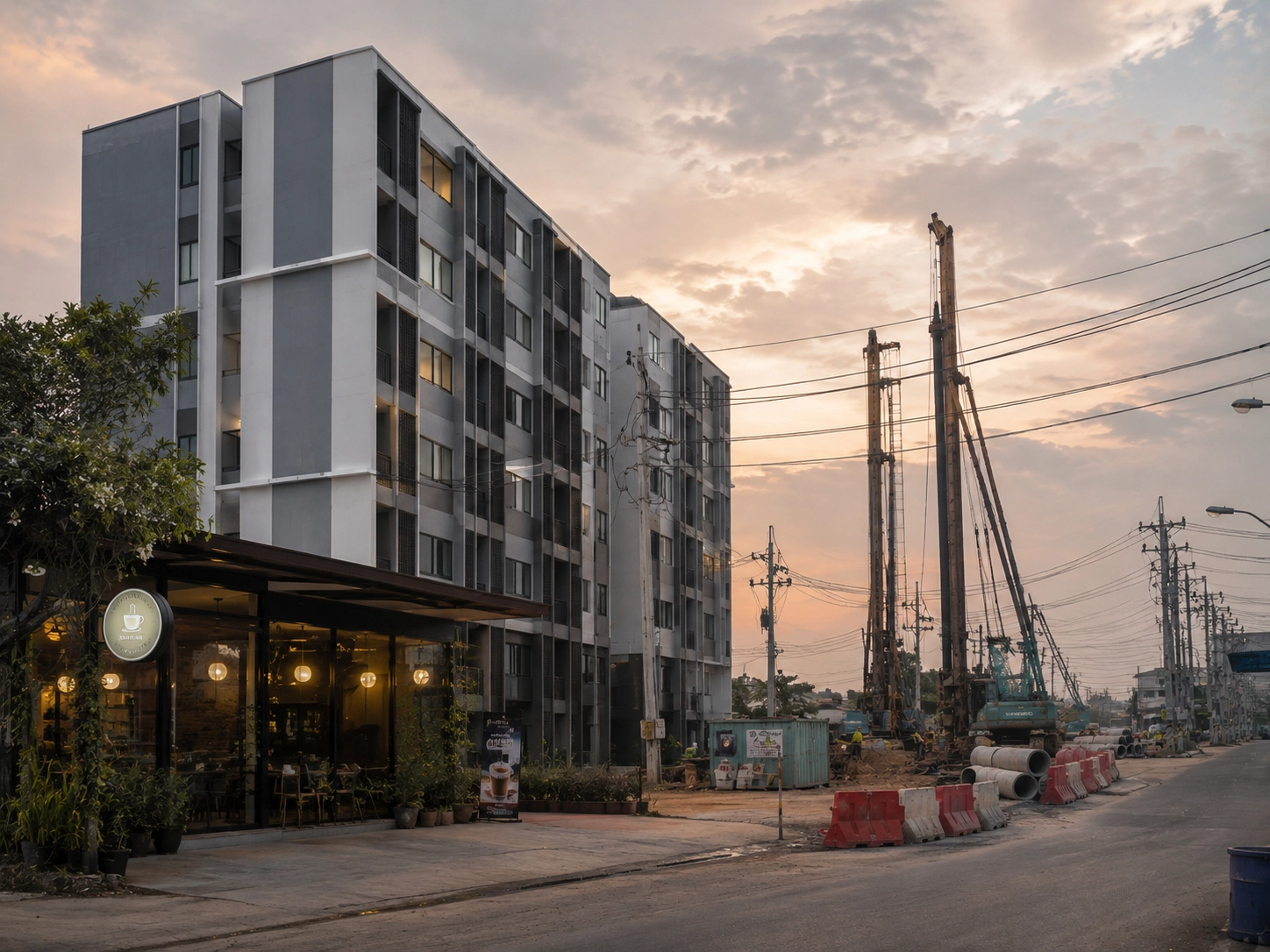
Then workers need housing.
Then restaurants appear.
Then serviced apartments.
Then retail follows.
Eventually someone writes an article calling it “Thailand’s next growth corridor.”
But by then, the underlying shift has already been happening for years.
That is why experienced property investors often spend more time watching infrastructure than headlines.
The headlines usually arrive late.
The physical changes happen first.
Another important point here is that data centers tend to be sticky investments.
Unlike some businesses that move quickly, major infrastructure projects usually commit to locations for long periods because relocating them is expensive and complicated.
That long-term commitment matters for surrounding property ecosystems.
It creates stability.
And stability tends to attract additional investment.
Of course, none of this guarantees instant gains or explosive price growth. Property markets are never that simple.
But if you zoom out, it becomes easier to understand why Thailand data center investment stories matter beyond the tech sector itself.
They are really signals about where governments, infrastructure spending, and long-term economic activity may start concentrating next.
And in property, concentration matters.
Because once enough infrastructure, capital, and business activity gather in one corridor, the surrounding land rarely stays overlooked forever.
Which Areas in Thailand Could Benefit the Most?
When people think about Thailand property hotspots, the conversation usually goes straight to Bangkok, Phuket, or maybe Chiang Mai.
But infrastructure-driven growth often follows a completely different map.
The areas attracting the most serious industrial and digital investment are usually not the places dominating lifestyle content on social media. They are the places with logistics access, power capacity, transport links, and room to expand.
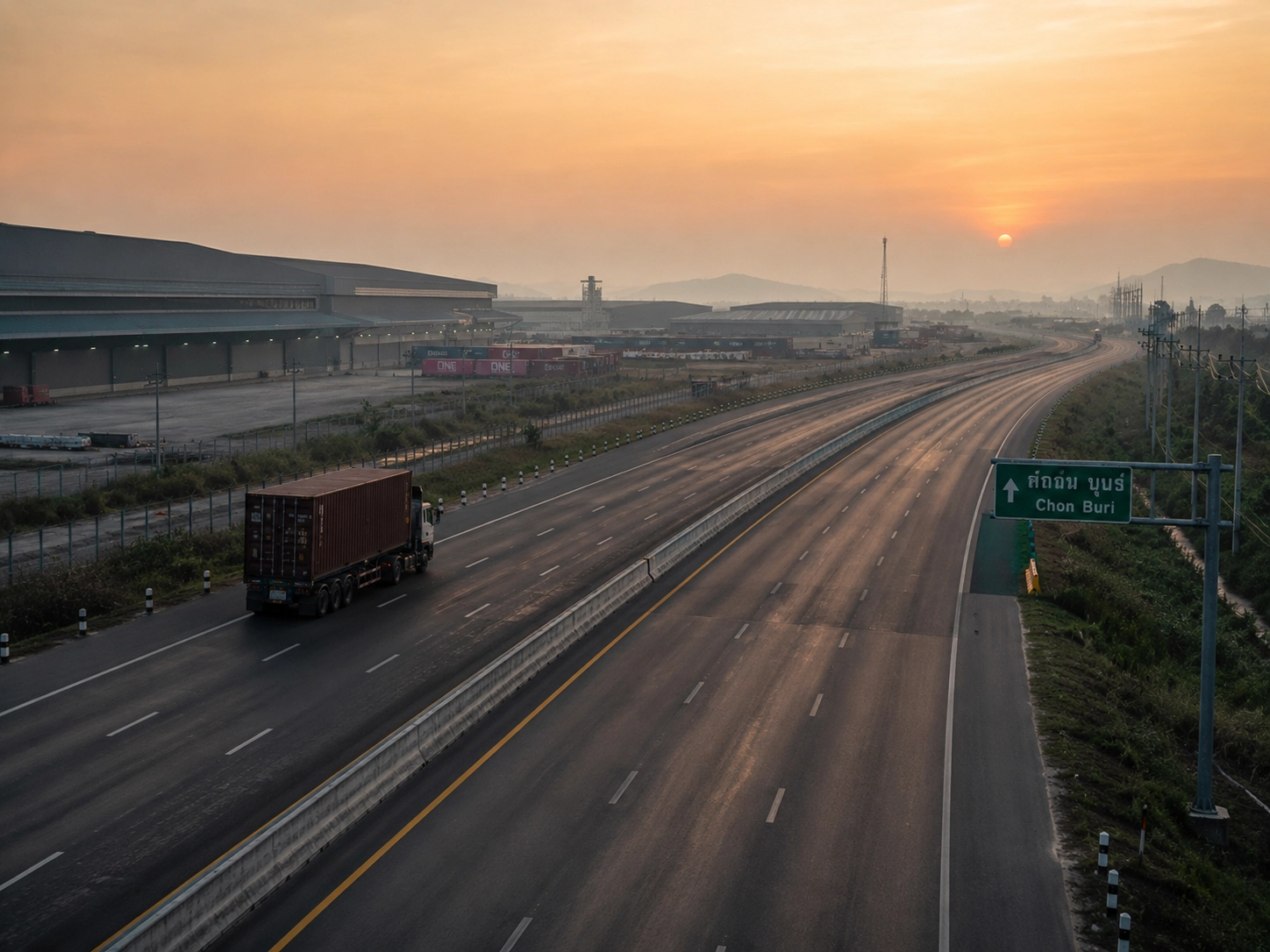
That is why the Eastern Economic Corridor keeps showing up in major investment conversations.
Again and again.
If you have followed Thailand infrastructure investment over the past few years, you have probably noticed how often the EEC appears underneath large manufacturing, logistics, and industrial announcements.
There is a reason for that.
The Eastern Economic Corridor already has many of the ingredients large-scale infrastructure projects need:
- deep sea port access
- industrial ecosystems
- manufacturing networks
- highway connectivity
- airports
- established utility infrastructure
- proximity to Bangkok
For companies investing billions into long-term operations, that matters more than lifestyle branding.
And for property investors, it is often a clue about where economic gravity may strengthen next.
Why Chonburi Keeps Appearing in Growth Conversations
Chonburi has quietly become one of the most strategically important provinces in Thailand’s industrial ecosystem.
A lot of foreign investors still associate it mainly with Pattaya tourism. But the province has been evolving into something much broader than that.
Industrial estates Thailand developers have expanded heavily in this region because it already connects manufacturing, logistics, shipping, and infrastructure in one corridor.
That makes it naturally attractive for:
- data infrastructure
- logistics companies
- warehousing
- manufacturing support industries
- regional distribution operations
And importantly, Chonburi already has existing infrastructure depth.
That sounds boring on paper, but it matters enormously.
Building around existing systems is usually cheaper and faster than starting from zero.
This is why utility-rich industrial zones tend to attract repeated investment cycles.
Once a region develops reliable infrastructure, it becomes easier for future projects to cluster nearby.
Rayong Is Another Area Worth Watching
Rayong tends to receive less international attention than Bangkok or Phuket, but it plays a major role inside Thailand’s industrial economy.
A lot of heavy industry and manufacturing activity already sits there. That existing base creates an advantage because infrastructure projects rarely want isolated locations.
They prefer ecosystems.
That is especially true for AI infrastructure Asia projects where stability matters more than glamour.
A province like Rayong already has:
- industrial land availability
- energy infrastructure
- logistics connectivity
- access to ports
- established industrial operators
That combination creates conditions where additional infrastructure investment Thailand projects can expand more efficiently.
Again, this does not automatically mean residential property prices suddenly explode.
But it does increase the long-term economic importance of these corridors.
And economic importance usually affects property demand eventually.
Bangkok’s Logistics Corridors Could Become More Important Too
Bangkok itself probably remains central to the story, just in a slightly different way.
The city’s outer logistics corridors may benefit more directly than central luxury districts from some of these infrastructure shifts.
That is because major infrastructure projects depend on movement.
Goods move. Equipment moves. Workers move. Services move.
And once logistics activity increases, surrounding areas often start evolving with it.
You already see parts of this dynamic around major highways and industrial access routes surrounding Bangkok.
Warehousing expands first.
Then transport businesses.
Then commercial activity.
Then residential demand slowly follows nearby.
One thing many investors underestimate is how much road infrastructure influences property patterns over time.
People tend to focus only on buildings.
But roads quietly shape where business activity concentrates.
Why Industrial Corridors Matter More Than People Realise
Industrial corridors rarely become exciting overnight.
That is partly why they create interesting opportunities.
Most people only notice an area after:
- cafes appear
- condos launch
- prices rise
- influencers discover it
- developers start marketing aggressively
But infrastructure-driven areas usually change earlier than that.
At first, the signals are subtle.
A new logistics facility.
Power upgrades.
Industrial estate expansion.
New foreign investment approvals.
Road construction.
Utility work.
Not glamorous.
But very important.
The reason Thailand logistics hubs matter so much right now is because infrastructure investment creates long-term positioning advantages.
And countries across Southeast Asia are competing heavily for those advantages.
Thailand wants to become more deeply connected to regional manufacturing, cloud infrastructure, AI systems, and logistics networks.
That naturally pushes investment toward corridors capable of supporting those systems physically.
Infrastructure Signals Investors Should Watch
Most property investors focus heavily on launch prices, rental yields, or tourism numbers.
Those matter, of course.
But infrastructure investors often watch different signals earlier.
Things like:
- power grid upgrades
- industrial estate expansion
- logistics facility growth
- transport corridor spending
- foreign direct investment announcements
- utility projects
- warehouse demand
- government infrastructure incentives
Those indicators tend to reveal where long-term activity may concentrate before mainstream attention fully arrives.
A Simple Checklist for Spotting Early-Stage Growth Areas
Here are a few things worth watching if you are trying to identify emerging Thailand property hotspots tied to infrastructure growth:
- Is the area receiving major infrastructure spending?
- Are industrial operators expanding nearby?
- Is power capacity improving?
- Are roads and logistics routes improving?
- Are foreign companies investing long term?
- Is the area connected to ports, airports, or industrial corridors?
- Are land prices still relatively early compared to surrounding zones?
None of these guarantee success individually.
But when several start appearing together, the area usually becomes more economically important over time.
And that tends to influence property markets eventually.
If you want to understand this shift better, it is also worth looking at how infrastructure historically shaped previous Thailand growth corridors.
A lot of today’s established areas were once viewed as secondary locations before transport, utilities, and industrial activity changed their trajectory completely.
That process tends to repeat more often than people realise.
Could This Create New Residential Demand Too?
One thing that often gets overlooked in infrastructure stories is what happens after the industrial activity arrives.
People follow infrastructure.
And eventually, housing demand follows people.
Not immediately.
But gradually enough that entire neighbourhoods can change over time without most outsiders noticing until much later.
That is why some investors are starting to pay closer attention to the residential spillover effects tied to Thailand’s growing digital and industrial infrastructure push.
Because data centers themselves do not create housing demand directly in the same way a tourism boom might.
But the ecosystem around them often does.
Think about the types of people large infrastructure projects bring into an area over time:
- engineers
- contractors
- logistics staff
- construction teams
- maintenance workers
- supply chain operators
- regional managers
- expat tech workers
Not all of them are buying luxury condos in central Bangkok.
A lot of the demand tends to appear in more practical segments first.
Rental apartments.
Serviced apartments Thailand developers operate near industrial corridors.
Townhouses.
Mid-range condos.
Mixed-use developments close to logistics routes.
The interesting thing about infrastructure-driven growth is that residential demand usually arrives quietly.
At first, it looks small.
A few more rental inquiries.
Higher occupancy in nearby serviced apartments.
Developers suddenly becoming interested in land that nobody talked about three years earlier.
Then gradually, supporting businesses begin appearing too.
Coffee shops.
Convenience stores.
Gyms.
Small retail strips.
Local commercial spaces.
That is usually when an area starts feeling different on the ground.
Not because one giant project magically transformed everything overnight, but because economic activity slowly created daily-life demand around it.
This pattern has already happened in different forms across Southeast Asia.
You can see versions of it in industrial corridors outside Ho Chi Minh City, parts of Johor linked to Singapore logistics flows, and areas surrounding manufacturing zones in Indonesia.
The sequence tends to repeat:
- infrastructure first
- business activity second
- housing demand third
- lifestyle development later
And by the time lifestyle branding arrives, early positioning has often already happened.
Thailand rental demand could eventually follow a similar pattern in certain infrastructure-linked areas if digital investment continues expanding.
Especially around logistics corridors and industrial ecosystems connected to larger infrastructure projects.
One important thing to understand is that worker migration does not always look dramatic.
It is usually gradual.
A company expands operations.
More contractors arrive.
Then suppliers need nearby staff.
Then service businesses open.
Then additional housing becomes necessary.
The property market starts adjusting quietly around those changes.
That is why infrastructure often moves before residential prices.
Infrastructure changes economic usefulness first.
Property prices tend to react later.
Most people naturally focus on visible demand. New condo launches. Trendy neighbourhoods. Busy malls.
But underneath those things, there is usually a slower infrastructure layer shaping why demand is concentrating there in the first place.
Bangkok itself is a good example of this over time.
A lot of today’s established business and residential districts became valuable partly because transport links, infrastructure, and commercial activity expanded outward gradually.
The same thing happens around industrial ecosystems too, just in a less glamorous way initially.
And honestly, some of the early residential demand tied to infrastructure growth is usually not luxury-focused at all.
It is practical.
People need places to live near where they work.
That creates opportunities in:
- long-term rentals
- affordable housing
- mixed-use developments
- mid-market condos
- serviced apartments
- worker housing Thailand projects
This is one reason some investors are watching Bangkok property trends slightly differently now.
Instead of focusing only on traditional condo speculation cycles, they are paying more attention to infrastructure-linked demand patterns.
Especially in outer corridors connected to logistics and industrial growth.
That does not mean every industrial zone suddenly becomes a residential boom area.
Far from it.
Some areas remain purely industrial for long periods.
Others grow unevenly.
And sometimes infrastructure projects fail to create the wider economic momentum investors expect.
But historically, when infrastructure spending, business activity, and worker migration begin overlapping consistently, surrounding residential demand usually follows in some form.
Even if the process takes years instead of months.
The broader point is that property markets are often more connected to economic ecosystems than people realise.
And right now, Thailand’s infrastructure ecosystem appears to be evolving.
Which means the residential side of the story may eventually evolve alongside it too.
Not through hype.
Just through the very ordinary reality of people moving closer to where opportunity starts concentrating.
Two Different Property Stories Are Happening at the Same Time
One reason Thailand’s property market feels confusing right now is because different sectors are moving in completely different directions.
And honestly, that is probably the most important thing investors need to understand in 2026.
There is no single Thailand property story anymore.
A few years ago, people often talked about the market like everything moved together. If tourism recovered, property recovered. If condos slowed, the whole sector slowed.
But the market is becoming more fragmented now.
While Thailand infrastructure investment is accelerating through industrial projects, logistics expansion, and digital infrastructure, parts of the traditional Thailand condo market are still slowing down.
Those two things can happen simultaneously.
And they are.
Recent reports suggest condo launches in Thailand could fall to their lowest levels in around 20 years. Developers are becoming more cautious, loan rejection rates remain high, and many buyers are still dealing with tighter lending conditions.
That has created a very different environment from the aggressive launch cycle Thailand saw years ago.
Especially in parts of Bangkok.
The Bangkok condo slowdown is not necessarily a collapse story. It feels more like a market recalibrating after years of heavy supply and changing buyer behaviour.
Developers are being more selective.
Banks are being more careful.
Buyers are taking longer to commit.
And some investors who previously focused heavily on speculative condo flipping are finding the environment much less forgiving now.
At the same time though, industrial and infrastructure activity is expanding in parallel.
That is the interesting contrast.
While some residential developers are slowing launches, infrastructure money continues flowing into:
- industrial estates
- logistics facilities
- utilities
- transport corridors
- digital infrastructure
- manufacturing ecosystems
So depending on which part of Thailand real estate trends 2026 you are looking at, the market can appear either cautious or highly active.
Both views are technically correct.
Here is a simple way to think about the split happening right now:
| Slowing Segments | Expanding Segments |
| Urban condo launches | Industrial infrastructure |
| Speculative condo buying | Logistics and warehousing |
| High leverage retail investing | Institutional capital |
| Tourist-heavy demand cycles | Long-term infrastructure projects |
| Short-term flipping activity | Utility and transport expansion |
| Easy financing environment | Strategic industrial investment |
That table simplifies things a bit, of course.
Real markets are always messier than neat categories.
But the broader shift is real.
Thailand property is becoming more sector-specific.
And that matters because investors who still view the market as one giant unified cycle may miss where actual momentum is moving.
One thing worth remembering is that infrastructure investment usually operates on longer timelines than residential speculation.
A condo market can cool fairly quickly if lending tightens or buyer sentiment weakens.
Infrastructure projects usually move slower, but they also tend to be planned years ahead.
That creates very different market behaviour.
For example, a developer launching luxury condos may worry heavily about immediate buyer demand, financing conditions, and short-term absorption rates.
A major infrastructure operator planning logistics or data infrastructure is often thinking much further ahead.
Ten years ahead sometimes.
That longer-term horizon changes how capital flows into the market.
And it changes what types of land become strategically valuable.
Another reason this split matters is because Thailand’s economic priorities are evolving too.
The country still depends heavily on tourism, hospitality, and residential real estate activity.
But there is clearly a push toward strengthening:
- manufacturing ecosystems
- logistics networks
- digital infrastructure
- regional supply chain positioning
- industrial investment
That does not replace the traditional property market.
It simply adds another layer to it.
And over time, those layers can move independently.
You can already see smaller signs of this divergence happening.
Some central condo segments remain highly competitive with softer demand and slower absorption.
Meanwhile certain industrial corridors continue attracting investment tied to logistics, utilities, warehousing, and infrastructure support.
Different sectors.
Different capital.
Different timelines.
This is also why broad statements like “Thailand property is booming” or “Thailand property is crashing” usually miss the reality completely.
The market is too diverse now for simple narratives.
A luxury condo in central Bangkok, a logistics facility near Chonburi, and industrial land inside the Eastern Economic Corridor are all responding to different economic forces.
And increasingly, investors need to analyse them separately.
That is probably one of the biggest shifts happening quietly underneath the surface right now.
Thailand property is no longer moving as one synchronized market.
It is becoming a collection of smaller markets reacting to very different drivers.
Tourism. Infrastructure. Manufacturing. AI expansion. Logistics. Domestic lending conditions.
All of them pushing and pulling different parts of the property sector in different ways at the same time.
Which honestly makes the market more complicated.
But also more interesting.
What Smart Investors Usually Watch Before Everyone Else
One of the strange things about property markets is that the biggest shifts rarely look exciting in the beginning.
Actually, they often look kind of boring.
A road expansion project.
A new substation.
Utility upgrades.
Industrial land accumulation near transport corridors.
Government permits nobody outside the industry pays attention to.
Then a few years later, land prices move sharply and everyone suddenly acts like the opportunity appeared overnight.
But usually the clues were sitting there much earlier.
Just quietly.
That pattern repeats constantly across Thailand property investment cycles.
And honestly, a lot of the early signals have very little to do with flashy condo launches or social media hype.
Infrastructure tends to move first.
The public notices later.
You can sometimes feel this change before you can even fully explain it.
An area that used to feel disconnected suddenly gets better road access. Logistics traffic increases. Industrial activity becomes more organised. Warehouses appear faster. Utility work starts happening regularly.
Nothing dramatic.
But the rhythm of the place changes.
That shift matters because infrastructure-led growth usually creates long-term economic usefulness.
And property markets tend to follow usefulness eventually.
One thing experienced investors often watch closely is infrastructure permits.
Not because permits are exciting on their own, but because they reveal intent.
Governments and large companies rarely spend heavily on utilities, logistics upgrades, or industrial infrastructure randomly.
Those investments usually signal where future economic activity is expected to concentrate.
For example:
- new highway links
- freight expansion
- utility upgrades
- industrial estate approvals
- port development
- logistics hub expansion
All of these quietly shape future property demand patterns.
Roads especially matter more than people realise.
A new transport connection can completely change how valuable an area becomes over time because it changes movement.
People move easier. Goods move faster. Businesses operate more efficiently.
That naturally attracts more activity nearby.
The same thing happens with utility expansion.
Stable electricity capacity sounds incredibly unsexy compared to beachfront condos or luxury developments.
But large-scale infrastructure projects depend on it completely.
And once serious utility infrastructure exists in one corridor, it becomes easier for future investment to cluster there too.
That clustering effect is important.
Because property value often follows concentration.
Concentration of business activity.
Concentration of logistics.
Concentration of infrastructure.
Concentration of jobs.
A lot of emerging property hotspots Thailand investors talk about today were not discovered through glamorous marketing campaigns originally.
They became important because infrastructure slowly increased their economic relevance first.
Then attention arrived later.
You can already see hints of this happening around parts of Thailand industrial property corridors connected to logistics and manufacturing ecosystems.
Not every corridor will become a major hotspot, obviously.
But some areas are gradually becoming more strategically valuable because they sit close to transport links, industrial infrastructure, or utility-heavy development zones.
Another thing worth paying attention to is government incentives.
Especially in sectors tied to logistics, industrial development, cloud infrastructure, or manufacturing.
Governments usually reveal their long-term priorities through incentives long before the wider public notices the shift.
If a country keeps supporting certain corridors, industries, or infrastructure sectors repeatedly, it usually means they are trying to build long-term economic ecosystems around them.
Thailand’s recent focus on digital infrastructure and industrial investment fits into that pattern.
One detail many people underestimate is industrial land accumulation.
Large operators often secure land years before surrounding areas fully develop.
That does not mean prices immediately surge afterward.
Sometimes nothing visibly changes for quite a while.
But land positioning itself can be an early signal that companies expect future strategic value in that corridor.
And honestly, some of the strongest infrastructure signals barely look like property stories at all in the beginning.
A utility expansion announcement.
A freight corridor project.
A new logistics hub.
An industrial permit approval.
Most people scroll past those headlines immediately.
Then five years later, everyone wonders why property demand increased around the same zones.
The reality is that roads, substations, utilities, and logistics infrastructure often shape property markets long before lifestyle branding catches up.
That does not mean investors should blindly chase every infrastructure story.
Plenty of projects underperform.
Some areas never develop the way people expect.
But historically, infrastructure tends to leave footprints before property cycles fully emerge.
And investors who pay attention to those quieter signals usually understand changing markets earlier than people focused only on headlines and launch events.
Risks Investors Should Still Keep in Mind
Infrastructure stories can be exciting because they make people feel like they are seeing the future early.
And sometimes they genuinely are.
But it is also important not to romanticise every major investment announcement as an automatic property boom.
Real markets are rarely that clean.
Some infrastructure projects transform surrounding areas over time.
Others move slower than expected, stall halfway through, or create far less spillover demand than investors originally imagined.
That is why a balanced view matters, especially when looking at Thailand real estate investment tied to industrial and digital infrastructure themes.
One of the biggest Thailand property risks is assuming infrastructure alone guarantees residential growth.
It does not.
A data center can increase the strategic importance of an industrial corridor without suddenly turning nearby areas into high-demand residential hotspots.
The relationship between infrastructure and property exists, but it is not always immediate or linear.
Timing matters too.
Infrastructure projects often operate on very long timelines. Announcements happen years before surrounding areas fully change.
That gap can create unrealistic expectations if investors assume prices will react instantly.
Another important factor is oversupply risk.
Thailand has already experienced periods where enthusiasm around future growth led to aggressive development too early.
Especially in certain condo markets.
If too many developers rush into an emerging corridor before genuine long-term demand develops, supply can easily outpace absorption.
That creates weaker rental demand, slower price growth, and extended vacancy periods.
Speculation can also distort markets quickly.
Once a new “future hotspot” narrative starts circulating online, land prices sometimes rise far ahead of actual infrastructure progress.
That creates a strange situation where investors begin paying future prices for areas still lacking practical infrastructure support today.
And infrastructure investment risk itself is real.
Not every approved project moves smoothly from announcement to full execution.
Delays happen for many reasons:
- permitting issues
- political changes
- financing challenges
- construction delays
- utility constraints
- changing economic conditions
Energy capacity is another issue worth paying attention to.
Modern digital infrastructure requires enormous amounts of reliable electricity. If utility expansion cannot keep pace with infrastructure growth, some projects may face operational bottlenecks later.
That is especially relevant in sectors tied to AI infrastructure and large-scale data operations.
Zoning restrictions matter too.
Certain areas may look attractive geographically but still face development limitations tied to land use regulations, environmental concerns, or industrial planning controls.
And of course, political and regulatory shifts always influence long-term infrastructure planning in one way or another.
That does not make Thailand unusually risky. Every country deals with changing policy environments over time.
But it does mean investors should avoid treating infrastructure stories like guaranteed straight lines upward.
Markets simply do not work that way.
One thing experienced investors usually do well is separating narrative from execution.
The narrative is the exciting part:
“AI infrastructure is coming.”
“Industrial corridors are growing.”
“New hotspots are emerging.”
Execution is the harder part.
Is the infrastructure actually being built properly?
Are businesses committing long term?
Are logistics systems improving in reality?
Is local economic activity genuinely expanding?
Those questions matter far more than headlines alone.
A Practical Checklist Before Investing in Emerging Areas
Before entering infrastructure-linked markets, it is worth asking:
- Is the infrastructure project fully funded?
- Is construction already happening?
- Are utility systems expanding too?
- Is the area attracting multiple industries or only one project?
- Are transport links improving in practice?
- Is residential demand growing organically?
- Are land prices already heavily inflated?
- Does the area have long-term economic usefulness beyond hype?
- Are zoning rules supportive of future development?
- Is there actual rental demand nearby?
A lot of successful long-term investing comes down to patience and realism.
Not every emerging corridor becomes a major growth zone.
But at the same time, ignoring infrastructure entirely can also mean missing how property markets evolve underneath the surface.
The key is probably somewhere in the middle.
Optimistic enough to recognise change early.
Sceptical enough to separate real momentum from speculative noise.
Final Thoughts
Property markets usually look obvious in hindsight.
People look back at major growth areas and talk as if the opportunity was always clear. But when those shifts actually begin, they often feel quiet and slightly disconnected.
A new road project.
Utility expansion.
Industrial land being accumulated slowly.
More logistics activity moving through certain corridors.
Foreign companies setting up operations years before the wider market pays attention.
Then eventually the surrounding ecosystem starts changing too.
Workers move closer to opportunity. Businesses cluster together. Residential demand follows gradually. Infrastructure stops looking temporary and starts becoming part of the economic landscape.
That is partly why Thailand’s recent digital infrastructure push feels important beyond the technology story itself.
The real story may not be the data centers alone.
It may be the physical footprint forming around them over time.
Roads influence movement. Utilities influence where industries can grow. Logistics networks shape where businesses operate efficiently. Industrial ecosystems create concentration. And once concentration builds, property markets often start reacting around it.
Usually slowly at first.
One thing worth remembering is that the next generation of Thailand property hotspots may not emerge from the same forces that shaped the last cycle.
Tourism will still matter. Lifestyle demand will still matter. Bangkok and Phuket are not disappearing from the map anytime soon.
But infrastructure, AI growth, logistics expansion, and industrial positioning are becoming larger parts of the conversation now too.
And those forces tend to reshape markets differently.
Not always dramatically.
Sometimes just gradually enough that people only recognise the shift years later, after the roads are built, the utilities are stable, the workers have arrived, and the surrounding neighbourhood no longer feels quite the same as it did before.
By that point, the map has already changed.
Frequently Asked Questions
Why are data centers important for property markets?
Data centers affect much more than just the tech industry. They create demand for industrial land, utilities, logistics infrastructure, and nearby worker housing. Large Thailand data center investment projects also attract supporting businesses, contractors, and long-term infrastructure spending. Over time, that can influence surrounding property markets, especially in industrial and logistics corridors.
Which parts of Thailand could benefit most?
Areas connected to the Eastern Economic Corridor are attracting the most attention right now. Provinces like Chonburi and Rayong already have strong industrial ecosystems, transport links, and utility infrastructure. Certain Bangkok logistics corridors may benefit too, especially areas tied to warehousing, industrial estates Thailand projects, and transport expansion.
Will this affect Bangkok property prices?
Possibly, but not evenly across the city. The impact may be stronger in outer logistics and industrial corridors rather than central luxury condo areas. Bangkok property trends are becoming more fragmented, with infrastructure-linked areas responding differently from traditional residential investment zones.
Is Thailand becoming a tech hub?
Thailand is clearly trying to strengthen its role in AI infrastructure Asia, cloud services, logistics, and digital investment. Government incentives and infrastructure spending show a long-term push toward becoming a larger regional technology and industrial hub, not just a tourism-driven economy.
Does this mean condos will boom again?
Not necessarily. The Thailand condo market is still dealing with slower demand, tighter lending, and cautious buyers in some segments. Infrastructure growth and condo cycles do not always move together. Some industrial and logistics areas may strengthen even while parts of the residential market remain softer.


Join The Discussion