

Property prices in Southeast Asia can feel unpredictable, but they usually move for a reason. This guide breaks down the five key forces shaping property prices in Southeast Asia, from construction costs and capital flows to infrastructure, policy, and buyer demand, so you can understand what’s really driving the market.
Table of Contents
Property prices in Southeast Asia can feel a bit all over the place.
Bangkok slows down, Manila picks up. Jakarta stays flat while Singapore holds firm. Same region, different stories. It’s easy to assume it’s just cycles doing their thing.
But if you look a little closer, it’s not that random.
Most of the movement comes down to a handful of forces quietly pushing things around. Some affect how much it costs to build. Others change who can buy, or where people actually want to live.
Once you start noticing these patterns, the market feels less unpredictable.
You don’t need to track everything. You just need to know which force is moving.
And once you see that, the rest usually starts to make sense.
The 5 forces that actually move property prices in Southeast Asia
If you watch the region long enough, you start to notice the same patterns repeating.
Prices don’t move because of one-off events. They move because a few underlying forces keep showing up, just in different combinations each time.
Once you see those forces, the market feels a lot easier to read.
There are five that come up again and again.
Construction costs shape what it even costs to build. When that number moves, everything else adjusts around it.
Institutional capital sits a bit higher up. It doesn’t affect every buyer directly, but it quietly sets the pricing benchmark for land and prime assets.
Infrastructure changes how people move through a city. A new line, a new road, a shorter commute. Suddenly one area feels closer than it used to.
Government policy decides who can actually enter the market. Taxes, loan rules, foreign ownership. These don’t change demand itself, but they change who gets to act on it.
And then there’s demand segmentation. Not all buyers are the same, and they don’t move together. Local buyers, foreign buyers, investors. Each group shows up in different parts of the market.
If you want a quick way to think about it:
- What does it cost to build right now
- Who is setting the benchmark prices
- What just became easier to access
- Who is allowed to buy
- And who is actually buying
That’s the framework.
We’ll unpack each of these next.

Construction costs set the floor (and quietly control supply)
Developers don’t stop building because they feel cautious.
They stop when the numbers stop making sense.
If the cost to build a unit is higher than what buyers are willing to pay, projects get delayed, scaled down, or quietly shelved. That’s usually the first signal, long before prices move.
A lot of those costs come from things most buyers never see.
Energy prices affect cement, steel, and glass. Materials still move unevenly across the region. Labor is getting tighter in some cities. And logistics, especially across island markets like Indonesia or the Philippines, adds another layer.
Put all of that together, and the cost of building doesn’t stay still for long.
But here’s the part that’s easy to miss.
When costs go up, developers don’t immediately raise prices. They often just build less.
Fewer launches. Slower timelines. Smaller pipelines.
That’s why prices can stay firm even when demand feels soft. There’s simply less new supply coming in.
You can see this play out differently across Southeast Asia.
In Singapore, high labor costs and tight regulations make building expensive to begin with. That naturally limits how much new supply can come online, which tends to support prices.
In Vietnam, construction is still moving quickly, but rising material and labor costs are starting to show up in new launch pricing, especially in major cities.
In the Philippines, costs are still creeping up, particularly for materials in Metro Manila. It’s not dramatic, but it’s enough to keep developers cautious about oversupplying the market.
Indonesia feels more uneven. Costs vary a lot by location because of geography and logistics. What works in Jakarta doesn’t always work in secondary cities.
A simple way to look at it:
| Country | Main Cost Pressure | What It Means for Prices |
| Singapore | Labor, regulation | Supply stays tight, prices steady |
| Vietnam | Materials, labor | New launches priced higher |
| Philippines | Material costs, logistics | Slower supply growth |
| Indonesia | Logistics, regional gaps | Uneven pricing across cities |
The key thing to remember is this.
Construction costs don’t decide where prices go next. They decide how low prices can go.
They set the floor.
Everything else moves on top of that.
Institutional capital moves the benchmark, not the mass market
Most people buying property are individuals.
But the prices everyone refers to often come from somewhere else.
They come from institutions.
Large funds, REITs, sovereign wealth investors. They don’t buy the same units as everyday buyers, but they set the tone for how assets are valued, especially at the top end of the market.
When this kind of capital flows into a city, it usually starts with land and income-producing assets.
Developers look at what institutions are willing to pay for a site. That becomes the new reference point. From there, pricing expectations shift, even for projects that haven’t been built yet.
There’s also the effect on yields.
When more capital competes for the same assets, returns get compressed. Lower yields mean higher valuations. That ripple can move through the rest of the market, but it takes time.
Liquidity plays a role too.
In markets with strong institutional presence, it’s easier to buy and sell large assets. That makes pricing feel more stable, even when underlying demand hasn’t changed much.
But this doesn’t affect everything equally.
Institutional capital tends to focus on prime assets. Office towers, logistics parks, large-scale developments. The kind of assets that can absorb large amounts of capital.
Mass-market housing is different. It still depends more on local buyers, wages, and credit conditions.
Across Southeast Asia, you can see where this capital is going.
More of it is moving into logistics and industrial real estate, partly driven by supply chain shifts. Data centers are another area drawing attention, especially in Malaysia and Indonesia where land and energy costs are more manageable.
Office assets are starting to come back into focus as well, but more selectively.
A simple way to look at it:
| Asset Type | Capital Flow Trend | Impact on Pricing |
| Logistics | Strong inflow | Land values rising in key corridors |
| Data centers | Rapid growth | New demand for specific sites |
| Office | Selective return | Stabilizing prime valuations |
| Residential | Limited direct | Indirect effect through land pricing |
The key thing is this.
Institutional capital doesn’t lift the whole market at once.
It moves the benchmarks first.
Everything else either follows or doesn’t, depending on whether local demand can keep up.
Infrastructure reshapes the map (but doesn’t always raise prices)
Infrastructure changes how distance feels.
Not the actual distance, but the time it takes to move through a city. And in property markets, time matters more than maps.
A place that used to feel far suddenly feels close. That shift alone can change how much people are willing to pay.
This is where the idea of a proximity premium comes in.
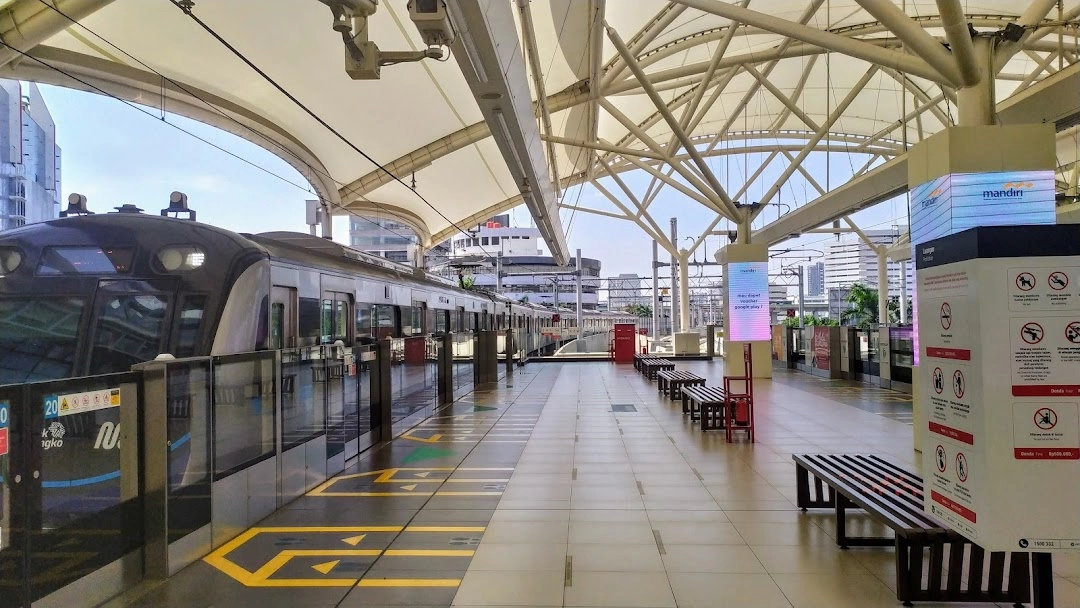
Homes near MRT stations or transit hubs tend to attract more demand. Shorter commutes, easier access to work, better connectivity. It all adds up.
In Kuala Lumpur, you can see this quite clearly. Properties within walking distance of MRT stations started to pick up a noticeable premium, especially after the line became operational.
In Manila, the pattern looks slightly different. Instead of clear price jumps, you see demand clustering. Offices and residential projects near transit nodes fill up faster. Occupancy improves first, and prices follow more slowly.
But it doesn’t always work the same way.
Jakarta is a good example. The MRT improved connectivity, but in some areas, rents didn’t really move. In fact, certain office locations saw weaker performance. Why? Because supply was already high. Better access couldn’t offset too much available space.
That’s the part that often gets overlooked.
Infrastructure doesn’t automatically increase prices. It only does that when demand is there and supply isn’t too loose.
A simple comparison helps:
| City | Project | What Happened to Prices |
| Kuala Lumpur | MRT lines | Clear premium near stations |
| Manila | Transit hubs, subway | Strong demand near connectivity |
| Jakarta | MRT | Limited or mixed impact |
| Ho Chi Minh City | Metro Line 1 | Gradual uplift, still developing |
So the pattern is there, but it’s not guaranteed.
Infrastructure reshapes the map. It changes where people want to be.
But whether prices actually move depends on what else is happening around it.
Government policy decides who can actually buy
Two cities can look similar on paper.
Similar income levels, similar growth, similar infrastructure plans. But prices move differently. Often, the difference comes down to policy.
Policy doesn’t change how much people want property. It changes who can actually step in and buy.
Start with foreign ownership rules.
In Singapore, foreign buyers face a high additional tax. That alone limits how much overseas demand can enter the mainstream residential market. The interest is still there, but access is restricted.
Thailand takes a different approach. Foreigners can own a portion of condominium units, and more recently, loan rules were relaxed. At one point, buyers could finance up to the full value of certain properties. That makes it easier for demand to show up, especially in slower markets.
In the Philippines, the structure is more contained. Foreign buyers can own condos, but only up to a set percentage within each project. Land remains off-limits. So foreign demand exists, but it stays concentrated in specific segments.
Then there’s financing.
Loan-to-value limits quietly shape how much people can actually spend. Tighter rules mean higher down payments. Looser rules mean more buying power. It’s not always visible, but it changes how fast inventory moves.
Taxes and transaction costs add another layer.
Higher entry costs tend to cool activity. Lower fees can help clear supply more quickly, especially in softer markets.
A simple comparison looks like this:
| Market | Key Policy Lever | Effect on Prices |
| Singapore | High foreign buyer tax | Limits external demand, steadier pricing |
| Thailand | Relaxed LTV rules | Boosts purchasing power, supports absorption |
| Philippines | Foreign ownership cap | Concentrates demand in condos |
What stands out is how targeted these tools are.
Policy rarely creates demand on its own. It decides who gets to act on it, and how easily they can.
And that’s often enough to change how a market moves.
Local vs foreign buyers (and why they move different markets)
Not all buyers are in the same market.
They might be looking at property in the same city, but they’re playing by very different rules.
Some are buying their first home. Others are investing. Some are local, some are coming from overseas. And they don’t move together.
Local buyers tend to drive volume.
They make up most of the transactions, especially in the affordable and mid-market segments. Their decisions are tied to income, job stability, and access to credit. When mortgage conditions tighten, this part of the market slows down quickly.
Foreign buyers show up differently.
They’re usually more visible in condominiums, especially in city centers or tourist areas. You don’t see them everywhere, but when they do enter, they tend to focus on specific projects or price tiers.
That’s why a small group can still influence pricing in certain pockets.
It also explains why markets often feel split.
The luxury segment can stay active, even when the broader market feels quiet. Higher-end buyers are less sensitive to interest rates or lending rules. Meanwhile, the affordable segment might be moving more slowly because financing becomes harder.
This is what people mean when they talk about a “K-shaped” market.
Different segments moving in different directions at the same time.
A simple way to look at it:
| Segment | Main Buyer Type | What Drives Them |
| Affordable | Local first-time buyers | Credit access, income |
| Mid-market | Local + investors | Financing, rental outlook |
| Luxury | Foreign + high-net-worth | Policy, global capital |
The key thing to keep in mind is this.
Prices aren’t set by the average buyer. They’re set by whoever is actually transacting at the margin.
And that changes depending on the segment you’re looking at.
How these 5 forces interact (and where people get it wrong)
No single force explains the whole market.
That’s usually where people get stuck. They focus on one thing like interest rates, foreign demand, or new infrastructure and expect it to explain everything.
It rarely does.
Different forces matter more in different parts of the market.
In mass housing, local buyers and construction costs tend to lead. In prime areas, capital and policy often take over. In growing districts, infrastructure can shift attention quickly, but only if supply doesn’t flood in at the same time.
So instead of trying to track everything, it helps to simplify the way you read a market.
A few questions usually get you most of the way there:
- Who is the marginal buyer right now
- Is supply tight or easy to add
- Is capital flowing into the market or pulling back
- Are policies making it easier or harder to buy
- Has anything changed in how people access this location
You don’t need perfect data for all of these.
Even rough answers can give you a clearer sense of what’s actually moving prices.
Once you start looking at markets this way, patterns show up faster.
Not because things become predictable, but because they become easier to interpret.
How the 5 forces play out in real Southeast Asian cities
It helps to see how these forces show up in real places.
Not in theory, but in how cities actually behave.
Take Bangkok.
Here, policy and foreign demand tend to stand out. Condo markets often reflect shifts in foreign buyer activity and financing rules. When access is easier, certain segments move quickly. When it tightens, activity slows just as fast.
Manila feels different.
Infrastructure and local demand are doing most of the work. New transit projects are pulling attention toward specific districts, while local buyers continue to drive volume. You see it more in where projects fill up than in sudden price jumps.
Jakarta is more uneven.
Construction and supply play a bigger role. There’s been enough new development in some areas that added infrastructure hasn’t always translated into higher rents or prices. Accessibility improved, but supply kept pace.
Singapore sits in its own category.
Policy is the dominant force here. Strict rules on borrowing and foreign ownership shape who can enter the market. Prices tend to move in a more controlled way, not because demand disappears, but because access is tightly managed.
Same region, but each city is reacting to a different pressure.
Once you know which force is leading, the behavior starts to make more sense.
FAQs about property prices in Southeast Asia
What drives property prices the most in Southeast Asia?
It depends on the segment. In mass housing, local demand and construction costs matter more. In prime areas, capital and policy tend to have a bigger influence.
Do foreign buyers control the market?
Not really. They usually focus on specific segments like condos or luxury units. Local buyers still make up most of the transactions.
Does infrastructure always increase property prices?
No. It helps, but only if demand is strong and supply isn’t too high. If there’s already too much inventory, better connectivity alone won’t move prices much.
Why do prices rise even when demand feels weak?
Often because supply is tightening. If developers slow down new projects due to higher costs, fewer units come to market, which can keep prices stable or push them up slightly.
The simplest way to read any property market in Southeast Asia
Property prices across Southeast Asia can feel unpredictable at first.
But most of the time, they’re not moving randomly. Something underneath has shifted, and the market is reacting to it.
It might be construction costs tightening supply. Or capital setting a new benchmark. Sometimes it’s a new transit line changing how a city feels. Other times, policy quietly limits who can buy. And often, it comes down to which group of buyers is actually active.
Each force plays a different role.
Construction sets the floor.
Capital sets the benchmark.
Infrastructure reshapes the map.
Policy controls access.
Demand determines what actually moves.
You don’t need to follow every headline or data point.
If you can identify which force is leading in a given market, the rest usually starts to fall into place.
Further reading: Why Southeast Asia Property Market Is Changing



Join The Discussion