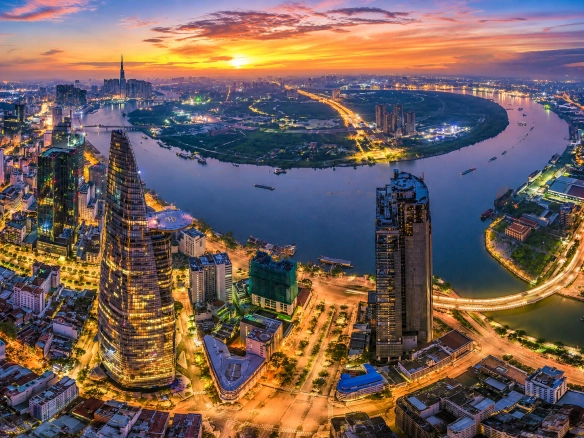
Thailand’s property landscape stands apart as a true utility market, where over 85% of Thai buyers purchase homes for real use — not quick profit. Unlike neighboring markets driven by short-term speculations, Thailand’s real estate is anchored in lifestyle, family stability, and long-term ownership. This grounded demand creates steady growth and resilience, even in volatile regional cycles. For investors, understanding Thailand’s utility-driven mindset unlocks a market built on confidence, culture, and consistent value.
Table of Contents
Introduction – The Speculation Myth
Ask any regional investor about Thailand’s property market and you’ll hear one word repeated — speculation. It’s an easy assumption. Tropical destination, strong tourism recovery, visible foreign demand — it sounds like the setup for another boom-bust cycle.
But Thailand isn’t playing that game.
While cities like Shenzhen, Ho Chi Minh, or even parts of Bali have been driven by rapid price inflation and speculative flips, Thailand’s market remains surprisingly grounded. The majority of local buyers — roughly 85% according to data from the Real Estate Information Center (REIC) and Bank of Thailand household surveys — purchase property for personal use, not short-term profit.
In REIC’s latest national housing report, end-user purchases consistently dominate the transaction mix, with speculative demand accounting for only a small share of total new-unit absorption. The same trend appears across both low-rise and condominium segments, even in major metros like Bangkok.
This quiet fact reshapes how we should read the market. What looks like a speculative playground from the outside is, in reality, a utility-driven ecosystem built on stability, homeownership, and long-term living.
The Data Behind the 85%
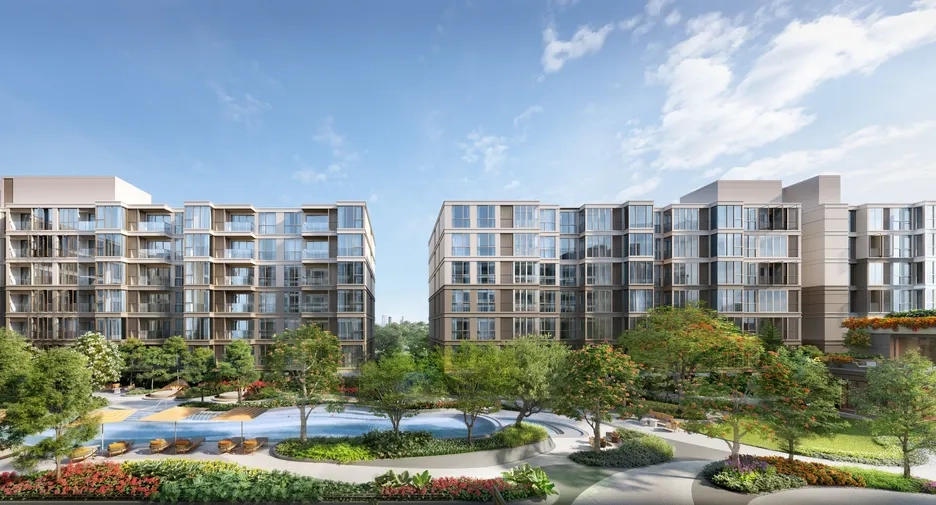
The Real Estate Information Center (REIC) tracks buyer intentions across Thailand’s new housing supply. In its most recent findings, around 85% of domestic property purchases were classified as for personal use — owner-occupied homes, family residences, or second homes intended for long-term living. Only a small fraction — typically below 15% — were identified as speculative or investment-driven.
This is what economists call a utility market. Buyers here aren’t chasing short-term appreciation or rental yield. They’re purchasing for lifestyle, family stability, or intergenerational wealth — priorities that anchor demand even when tourism or foreign capital inflows fluctuate.
Contrast that with Vietnam’s 2018–2020 condo surge or Shenzhen’s 2015–2018 cycle, where pre-sale flipping and leveraged buying drove prices up double digits each year. When policies tightened, both markets corrected sharply. Thailand, by comparison, has avoided those violent swings.
It’s not that prices don’t move — they do. But with such a high share of owner-occupiers, Thailand’s property cycle tends to rise gradually and correct gently, buffered by real end-user demand rather than speculative momentum.
Why Thai Buyers Buy for Use
Thailand’s property market is deeply shaped by culture as much as by credit.
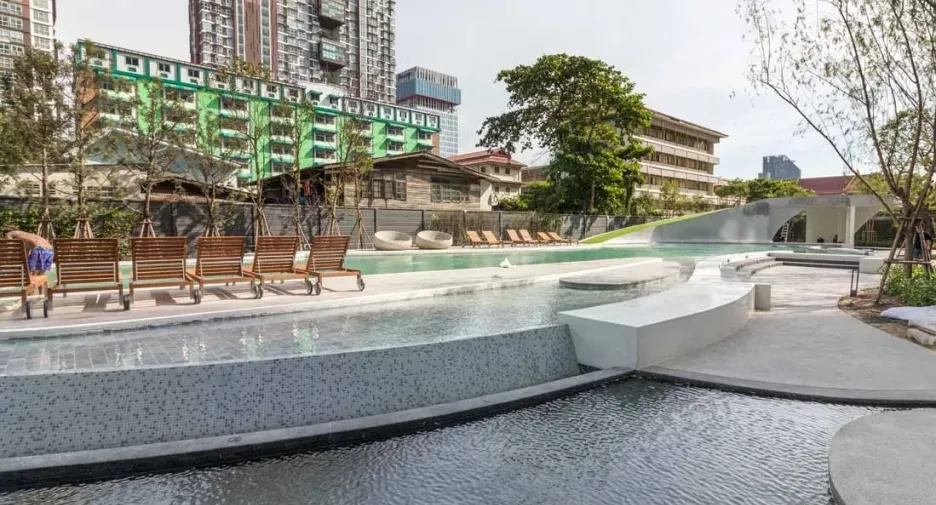
On the cultural side, homeownership carries emotional weight. Many Thai families see property not as a speculative asset but as a marker of stability and respectability — something passed down across generations. Multi-generational living remains common, and suburban land plots or low-rise homes are often bought with long-term family needs in mind. Even younger urban buyers tend to purchase condominiums for convenience and independence, not for flipping.
Financial structures reinforce this grounded behavior. Access to high-leverage credit is limited compared to markets like China or Vietnam. The Bank of Thailand’s loan-to-value (LTV) regulations require substantial down payments — typically 20–30% for second homes — reducing speculative borrowing. Coupled with a conservative banking culture, speculative risk-taking simply doesn’t scale.
Then there’s the psychology of security. Many Thai buyers prefer tangible, local assets over financial instruments, especially during periods of political or global uncertainty. Real estate, in this sense, is viewed less as a high-yield trade and more as a safe, usable store of value — a home today, an inheritance tomorrow.
These layers — cultural pride, cautious credit, and conservative finance — combine to produce a market where utility consistently outweighs speculation. It’s less thrilling than boom cycles elsewhere, but it’s also far more resilient.
How This Shapes Market Stability
A market built on real occupancy behaves differently — and more predictably — than one built on speculation.
Because most buyers purchase for use, Thailand faces a far lower risk of fire sales or oversupply collapses. Even during external shocks — such as the 2020–21 tourism shutdown — prices in most regions corrected modestly but held firm. Homeowners continued servicing mortgages, and developers slowed launches rather than dumping inventory.
This stability shows up in price performance. Bangkok condominium prices, for example, have risen only 2–4% annually on average since 2018, but with far less volatility than regional peers. The pace may seem slow, yet it reflects genuine end-user absorption rather than speculative froth.
Developers have adjusted accordingly. New launches are increasingly targeted toward live-in buyers — focusing on layouts, amenities, and payment plans suited to families and professionals rather than short-term investors. The era of mass speculative pre-sales, once common in emerging Asian markets, is largely absent here.
Meanwhile, the Bank of Thailand’s LTV caps and prudent credit culture keep leverage in check. Borrowers must show stable income and commit meaningful equity upfront. The result is a market that grows slower, but stronger, with limited systemic risk and long-term confidence among both local and foreign participants.
What It Means for Foreign Investors
For foreign investors, Thailand’s utility-led market demands a shift in mindset.
In many regional markets, the playbook is simple: buy early, ride the pre-sale wave, exit before completion. That logic doesn’t work here — not because Thailand lacks growth, but because the drivers are fundamentally different.
With 85% of purchases made for personal use, the Thai market rewards patience, livability, and long-term positioning. Returns tend to come from a mix of steady rental yield and slow capital appreciation, not from speculative spikes. In practice, that means success hinges on selecting projects with strong end-user appeal — proximity to schools, infrastructure, healthcare, and daily convenience — rather than short-term hype.
Foreign buyers who understand this dynamic tend to perform better. They focus on quality over leverage, rental performance over paper gains, and view ownership as a hybrid — part lifestyle, part portfolio anchor. In other words, they invest like locals: for use first, yield second.
This perspective also helps explain Thailand’s resilience. When a market’s foundation is real occupancy rather than speculation, downturns become shallow and recoveries more reliable. For investors accustomed to volatile cycles, “boring” may actually be the new smart.
The Speculative Edge Still Exists — Selectively
None of this means Thailand is entirely free of speculation. It simply means the speculative layer sits on top of a fundamentally stable base, rather than defining it.
Certain sub-markets still attract short-term investors — particularly downtown Bangkok condominiums, resort zones like Phuket and Pattaya, and pre-sale launches with strong branding or foreign demand. These areas can deliver quick capital gains when conditions align, but they’re also the first to soften when sentiment shifts or foreign inflows slow.
Developers understand this balance. Many now segment their portfolios — maintaining one or two “flashy” investor-friendly projects to capture momentum, while keeping the bulk of their pipeline focused on end-user products. This dual-track strategy cushions risk while allowing opportunistic growth.
For investors, the takeaway is to identify where utility and speculation overlap. That’s where Thailand’s best risk-adjusted plays often emerge — projects with genuine rental demand, but positioned in areas that still enjoy upward price pressure.
In short: the speculative edge is still there, but it’s a scalpel, not a wave. Used thoughtfully, it enhances returns. Chased blindly, it disappears just as fast.
Takeaway – Thailand’s “Boring” Market Is Its Strength
Speculation makes headlines, but stability builds portfolios.
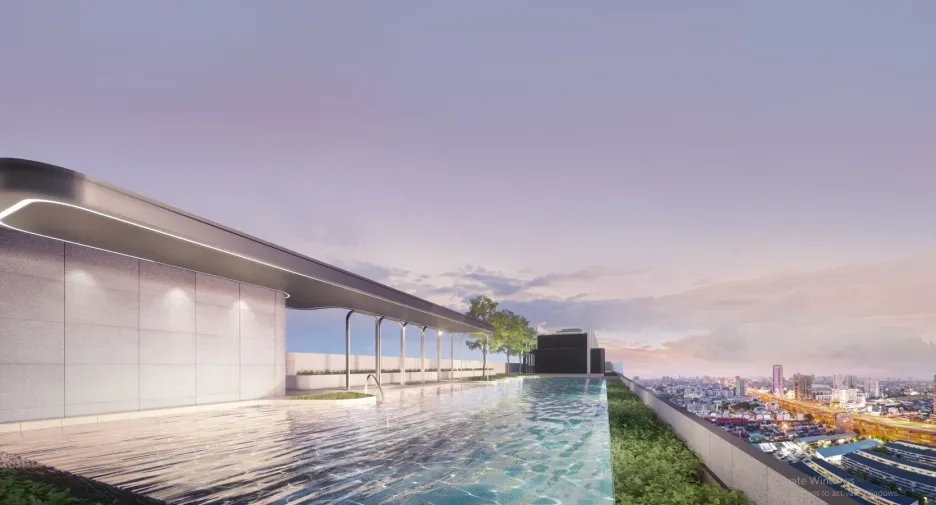
Thailand’s property market may lack the adrenaline of double-digit spikes, yet that’s exactly what gives it long-term value. With the majority of buyers purchasing for use, prices move slowly, liquidity remains steady, and systemic risk stays low. In a region where real estate cycles can turn overnight, that kind of predictability is rare.
For serious investors, the lesson is simple: stop chasing volatility and start studying utility. Thailand’s market rewards those who understand its foundations — cultural, financial, and behavioral — rather than those who expect a quick flip.
This is what makes the country’s “boring” market quietly exceptional. It’s built on real homes, real families, and real use — not speculation. And in the long run, that’s what resilience looks like.
At Hawook, we call it the utility edge — the advantage that comes from seeing Thailand not as a casino, but as one of Southeast Asia’s most fundamentally grounded property markets.
For deeper dives, see also: