
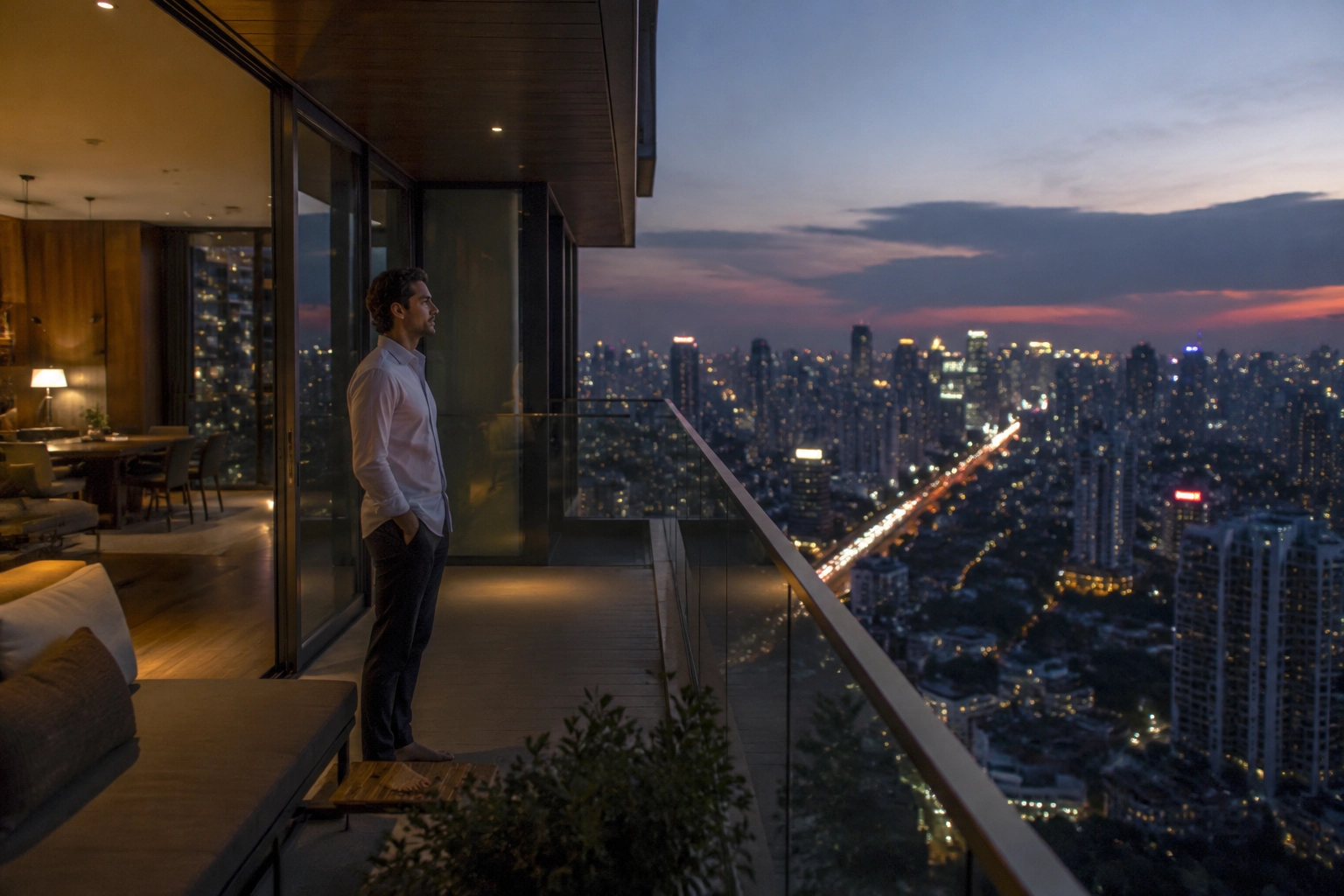
Everyone thinks foreigners can't own property in Southeast Asia, then they meet someone who just closed on a condo in Bangkok. Here's the real, country-by-country breakdown of how to buy property in Southeast Asia as a foreigner, covering Thailand, Bali, Vietnam, Cambodia, Singapore, Malaysia, and the Philippines, what you can actually own, what it costs, and the shortcuts that get people in serious trouble.
Table of Contents
Someone tells me at least once a month that they can’t own property in Southeast Asia, usually right before they ask me how their neighbor just closed on a condo in Bangkok. Both things are true, sort of, and that’s the whole problem. The rules are real, but they’re nowhere near as simple as “no” or “yes.”
Here’s the honest version. If you want to buy property in Southeast Asia as a foreigner, you’re not walking into a wall. You’re walking into a maze with clearly marked doors, as long as somebody shows you where they are. Some doors lead to a freehold condo you’ll own outright. Others lead to a 30 year lease, a residency-linked title, or a company structure that only works if you set it up properly.
That’s what this guide actually is. Not a legal essay, not a stack of statutes to make your eyes glaze over, just a straight walkthrough of what’s real and what’s not in seven markets: Thailand, Indonesia’s Bali in particular, Vietnam, Cambodia, Singapore, Malaysia, and the Philippines. Each one plays by its own rules, and each one has its own version of the shortcut that gets foreigners in trouble.
I’ve seen buyers get talked into a Thai company structure that later cost them the property. I’ve seen people in Bali hand over cash on a handshake lease with no registration behind it. None of that has to happen to you. The information exists, it’s just scattered across lawyers’ offices and forum threads full of bad advice, so I’m putting it in one place.
So let’s start where everyone gets stuck: can foreigners even own property in Southeast Asia, and what does “own” actually mean once you’re standing in front of a title deed.
Can Foreigners Even Own Property in Southeast Asia?
Short answer: no, you can’t own land in your own name in most of these countries. Also short answer: yes, you can own plenty, you just need to know which “yes” applies to you.
That’s the myth right there. People hear “foreigners can’t own land” and stop listening, when the real story keeps going. Land ownership and property ownership are not the same question in Southeast Asia, and once you separate them, the whole thing gets a lot less scary.
Here’s the reality, broken into what actually works and what doesn’t.
What Foreigners Can Typically Own
Across most of these seven markets, there’s a legitimate path to ownership if you use the right structure:
- Freehold condo units, the most straightforward route, available in Thailand, the Philippines (with caps), and Singapore’s non-landed properties
- Leasehold land and villas, common in Bali, Cambodia, and Thailand, where you don’t own the land but you have a long, registered right to use it
- Registered land use rights through residency or a corporate vehicle, like Indonesia’s Hak Pakai title or a PT PMA setup, or Vietnam’s foreign ownership certificate route
- Strata titles in co-owned buildings, the main path in Cambodia
What Almost Nobody Can Own Outright
On the other side, a few things stay off limits no matter which country you’re in:
- Raw agricultural or landed property in your personal name, full stop, across Thailand, Vietnam, Cambodia, Indonesia, and the Philippines
- Anything you get through an illegal nominee shareholder scheme, in any of these countries, no matter how convincing the setup sounds
That second list matters more than people think. It’s not a gray area, it’s the fastest way to lose the money you just spent.
Thailand: Buying a Condo (and Why Land Is a Different Story)
Thailand is the market where most people’s questions start, and for good reason. It has the clearest, most well trodden path to freehold ownership in the region. It also has one of the clearest ways to get yourself into legal trouble if you skip the fine print.
What You Can Legally Own in Thailand
Let’s get the hard limit out of the way first. Foreigners cannot own land directly in Thailand, full stop, under the Thai Land Code. No workaround changes that fact.
What you can own outright is a condo. Under the Condominium Act B.E. 2522 (1979), foreigners can hold freehold title on units within a registered condo building, capped at 49% of the building’s total sellable floor area. The other 51% has to stay in Thai hands. Your freehold title comes in the form of a Chanote, officially the Nor Sor 4 Jor, and that’s the document that actually proves you own the place.
Want a villa, a townhouse, or landed property instead? Or is the 49% quota in your building already full? Then you’re looking at a leasehold, and Thai law caps registered leases at 30 years under Section 540 of the Civil and Commercial Code. You’ll see plenty of developers market “30+30+30” deals like they’re a 90 year guarantee. They’re not. Those renewal terms are personal promises between you and the original seller, not something written into statute, and Thai Supreme Court precedent has confirmed they don’t automatically bind a future owner of the land.
One more thing, and I’ll be blunt about it. Setting up a Thai Limited Company where Thai nominees hold 51% of the shares just to get around the land ownership rule is illegal, not a gray area, illegal, under Section 36 of the Foreign Business Act. Get caught, and you’re looking at up to 3 years in prison, fines between THB 100,000 and 1,000,000, and forced disposal of the land itself. It’s not a workaround. It’s a countdown.
The Thailand Buying Process, Step by Step
The whole process typically takes 30 to 60 days, and it runs in a pretty fixed order:
- Reservation agreement and deposit. You put down 1% to 2% of the purchase price, and it’s non-refundable, so don’t sign this before you’re serious.
- Legal due diligence. Your lawyer pulls the title search at the Land Department, confirms the Chanote is clean, and checks that the building’s foreign quota is still under 49%.
- Sale and Purchase Agreement (SPA). This is the contract that locks in the deal.
- Offshore fund remittance. You send the purchase money from a foreign bank account into a Thai bank account, in foreign currency.
- FET form issuance. The receiving Thai bank issues a Foreign Exchange Transaction form confirming the money came in from abroad specifically for a property purchase.
- Title transfer and registration. Both parties show up at the Land Office, pay transfer taxes, and the Chanote gets reissued in your name.
Step 5 is the one people underestimate. Without that FET form, the Land Office won’t register you as the freehold owner. It’s not paperwork for paperwork’s sake, it’s the actual proof that your money came from outside Thailand, which is a legal requirement for foreign freehold ownership.
What It Actually Costs to Buy in Thailand
The purchase price is only part of the number you should be budgeting. Here’s what typically gets added on top:
| Cost | Rate | Who Pays |
| Transfer fee | 2.0% of appraised value | Usually split buyer/seller |
| Stamp duty | 0.5% of appraised value or sale price | Applies if seller exempt from SBT |
| Specific Business Tax (SBT) | 3.3% | Applies if seller owned property under 5 years |
| Withholding tax | 1.0% (corporate seller) or progressive scale (individual seller) | Seller |
| Legal fees | THB 30,000-100,000, or 1.0-1.5% of value | Buyer |
| Agent commission | 3.0-5.0% | Customarily seller |
| Annual Land and Building Tax | 0.02-0.1% of appraised value | Owner, annually |
Most of these are negotiated or split between buyer and seller, so ask early who’s covering what before you get to closing.
The Nominee Trap (Read This Before You Get Talked Into a Thai Company)
If someone offers you a Thai company structure where a “local partner” holds 51% of the shares so you can technically own land, walk away. I mean that plainly. This is exactly the illegal nominee arrangement the Foreign Business Act was written to shut down, and the penalties are not theoretical: up to 3 years imprisonment, fines from THB 100,000 to 1,000,000, and the land gets forcibly sold off anyway.
Be suspicious of any Thai “partner” in this kind of deal, especially one who isn’t putting in real money and isn’t running an actual business through the company. If the whole point of the company is to hold land on your behalf, that’s the tell. Don’t let a smooth sales pitch talk you into a structure that a court can unwind in a heartbeat.
Bali and Indonesia: Leasehold, Hak Pakai, or PT PMA
Bali runs on a different logic than Thailand entirely. There’s no freehold condo shortcut here. Instead there are three real routes, and which one fits you depends on whether you’re renting a lifestyle, settling in as a resident, or building an actual business.
The Three Ways Foreigners Actually Buy in Bali
Hak Sewa (leasehold) is the one most foreign villa buyers use, and honestly, it’s the easiest to understand. It’s a private lease agreement between you and the landowner, typically running 25 to 30 years. You don’t need Indonesian residency to sign one, there’s no minimum price floor, and it’s not subject to the BPHTB land acquisition tax. If you just want a villa to live in or rent out without wading into corporate paperwork, this is your default.
Hak Pakai (Right to Use) is a step up in permanence, but it comes with a catch: you need a valid KITAS or KITAP residency permit to qualify. In exchange, you get an official, registrable title, not just a private contract. The initial term runs 30 years, extendable by 20, then renewable for another 30, adding up to 80 years total. Regional minimum price thresholds apply here too, for example landed houses in Bali generally need to sit between IDR 2 and 5 billion to qualify.
PT PMA plus Hak Guna Bangunan (HGB) is the route for people who are actually building something, not just buying a home. You set up a PT PMA, a foreign investment company, through Indonesia’s OSS system, and that company can hold an HGB title for up to 80 years. This structure also opens the door to commercial use, including short-term rentals through a Pondok Wisata permit. If you’re treating this as an investment or a business, this is where you end up.
Step by Step: Buying a Villa in Bali
The process shifts slightly depending on which route you take, but it generally follows this order:
- Term sheet or binding letter of intent. You negotiate lease length, extension options, and payment schedule before anything gets formalized.
- Legal due diligence. A licensed PPAT (Land Deed Official) or an independent legal team checks the title at BPN (the National Land Agency), confirms boundaries, zoning, and permit status.
- Company registration. If you’re going the PT PMA route, this is where you register through OSS.
- Execution of the sale deed. For title transfers, this means an Akta Jual Beli signed before a PPAT. For private leaseholds, it’s a Notarial Lease Deed instead.
- Tax settlement and registration. BPHTB and PPh Final get paid, then the deal is registered at BPN.
Timeline wise, private leaseholds typically close in 14 to 30 days. Hak Pakai transfers or PT PMA setups run longer, usually 4 to 12 weeks.
Bali Property Costs at a Glance
The tax picture changes quite a bit depending on which structure you use, so it’s worth knowing which line items apply to you before you commit.
| Cost | Rate | Applies To |
| BPHTB acquisition tax | 5.0% of taxable acquisition value | Hak Pakai, HGB, or Freehold transfers only, not leaseholds |
| Seller Final Income Tax (PPh Final) | 2.5% of transaction value | Title transfers, paid by seller |
| Leasehold withholding tax | 10.0% (with NPWP) or 20.0% (without) | Leasehold income |
| VAT (PPN) | 12.0% | New builds from commercial developers |
| PPAT/Notary fees | 0.5-2.5% of transaction value | All transfers |
| PT PMA setup | USD 1,600-8,000 plus IDR 2.5 billion (~USD 155,000) minimum paid-up capital | Corporate route only |
Notice that leaseholds skip BPHTB entirely, which is part of why they stay the most popular entry point.
Now the part I need you to actually read. Informal “nominee” arrangements, where an Indonesian citizen holds Hak Milik on your behalf through a side agreement, are void from the start in Indonesian courts. Not risky, void, meaning if it unravels you lose your capital completely with no legal recourse. Building on agricultural land or protected green zones known as Jalur Hijau will block your permits and can get your build demolished. And high-density parts of Badung Regency, think Canggu, Seminyak, Uluwatu, are under active construction moratoriums specifically targeting unpermitted developments. Skip the shortcuts here. They’re not shortcuts.
If you’re weighing where in Bali actually makes sense for your budget and goals, [INTERNAL LINK: Canggu vs Uluwatu vs Seminyak comparison] is worth reading before you start touring villas.
Vietnam: Condos, Quotas, and the Pink Book
Vietnam trips people up because the starting premise is different from everywhere else on this list. Here, nobody owns land outright, not foreigners, not Vietnamese citizens, nobody. Once you accept that, the rest actually makes sense.
What Foreigners Can Own in Vietnam
Under the Constitution and the Land Law 2024, land belongs to the “entire people,” administered by the State. That means private freehold land ownership simply doesn’t exist, for anyone. What you get instead is a Land Use Right, or LUR, which functions like ownership in practice even though the legal label is different.
For foreigners specifically, the Law on Housing 2023 and the Law on Real Estate Business 2023 allow you to own residential structures, meaning condos and landed housing inside approved commercial development projects. But there are caps. A single condo building can only be up to 30% foreign owned. Landed houses, villas and townhouses, are capped at 250 units per ward level division. And your ownership term runs 50 years from the date your certificate is issued, though it can be extended. Your proof of ownership is the “Pink Book,” officially the Certificate of Land Use Rights, Ownership of Houses and Other Assets Attached to Land.
One quick aside if you’re of Vietnamese descent. Overseas Vietnamese, known as Viet Kieu, who retain Vietnamese nationality get full legal parity with domestic citizens under the 2024 Land Law. No caps, no nominee structure needed, no workaround required. If that describes you, this section barely applies to you at all.
Vietnam Buying Timeline
Set your expectations early here, because Vietnam moves in two very different speeds. Signing the Sale and Purchase Agreement typically takes 3 to 6 months. Getting your actual Pink Book issued afterward can take another 6 to 24 months. That gap catches people off guard every time.
The stages usually run like this:
- Reservation and booking fee. Typically VND 100 to 200 million to hold the unit.
- Deposit or option contract. Signed before the building even reaches foundation completion.
- Sale and Purchase Agreement. This happens once the developer clears Department of Construction requirements.
- Staged payments. Legally capped at 50% of the property’s value before you get handover.
- Pink Book application. Filed through DONRE after handover, and this is the part that takes the longest.
Plan around that lag. It’s not a red flag on its own, it’s just how the system works.
Vietnam Costs
Here’s what you’re actually paying, beyond the purchase price:
- Registration tax, or stamp duty, at 0.5% of the property value, capped at VND 500 million per asset, paid by the buyer when the Pink Book is issued
- Personal income tax on resale at 2.0% of the gross transaction value, paid by the seller
- Sinking fund or maintenance reserve at 2.0% of the pre-tax purchase price, paid upfront by the buyer at handover
- VAT at 10.0%, already built into new-build developer pricing rather than added separately
- Notary fees running 0.1% to 0.2% of transaction value
Red Flags in Vietnam
A few things to check before you sign anything. Properties located in declared national defense, military, or public security zones are strictly off limits to foreign buyers, no exceptions.
Off-plan units are where the real risk lives. If a developer has mortgaged the project’s land to a lender and hasn’t secured an official bank release guarantee before you sign your SPA, you’re exposed if that project runs into financial trouble. Always ask for that release letter before you commit.
And Pink Book delays are not some rare edge case, they’re common. Unpaid state land-use fees on the developer’s side, or unauthorized changes to the approved master plan, can hold up your paperwork for years. Ask your lawyer to check the developer’s standing on both before you put down a deposit, not after.
Cambodia: Strata Titles and the Trust Route
Cambodia is more permissive than people expect for condos, and more strict than people expect for land. Article 44 of the Constitution keeps land ownership locked to Cambodian citizens and Cambodian legal entities only. Foreigners are barred from owning land directly, no exceptions. But the workarounds here are genuinely well built, not shady loopholes, if you use the right one.
What Foreigners Can Own in Cambodia
There are three real pathways, set up under the 2010 Law on Providing Foreigners with Ownership Rights in Co-owned Buildings and the 2019 Trust Law.
Strata Title, also called Hard Title, is the most straightforward. Foreigners can hold 100% freehold ownership of private units in co-owned buildings, starting from the first floor up. Ground floor and basement units are excluded entirely. Total foreign ownership in a building is capped at 70% of the aggregate surface area.
The Trust structure, under the 2019 Trust Law, is what you use for landed property or villas, where strata title doesn’t apply. A licensed institutional trustee, regulated by the Trust Regulator, holds the legal title on paper. You, as the foreign investor, keep full economic benefit and full control. It’s a legitimate legal tool, but it only works if the trustee is properly licensed.
Long-term leasehold is the third option, running 15 to 50 years. To actually be enforceable against third parties, and not just a private handshake, the lease has to be registered at MLMUPC and annotated directly on the master hard title.
Cambodia Costs and Process
For completed strata units, the transaction timeline typically runs 30 to 60 days. Here’s what to budget for:
- Booking fee: USD 1,000 to 5,000
- Transfer tax (registration tax/stamp duty): 4.0% of assessed property value, customarily paid by the buyer
- Cadastral processing/title transfer fee: roughly USD 600 to 1,000
- Trust setup fee: USD 2,000 to 5,000, plus an annual trust administration fee of 0.3% to 0.5% of asset value for landed structures
- Legal and due diligence fees: USD 1,000 to 3,000
- Annual property tax: 0.1% on properties valued above KHR 100 million, roughly USD 25,000
Soft Title vs Hard Title, the Distinction That Actually Matters
This is the one thing to get right in Cambodia. A “Soft Title” is issued at the local commune or district level, and it cannot grant foreign ownership rights, period. If someone tries to sell you a unit on a Soft Title, you’re not buying legal ownership, you’re buying a dispute waiting to happen. What you need is a “Hard Title” or Strata Title registered with MLMUPC, the actual national land authority. That’s the document that holds up.
Two more things to watch for. Ground floor or basement condo units acquired through unlawful local nominee arrangements are strictly prohibited, no matter how the deal is dressed up. And any Trust arrangement that isn’t registered, or that runs through an unlicensed local proxy instead of a Trust Regulator approved corporate trustee, gives you none of the legal protection the Trust Law is actually built to provide. If your trustee isn’t licensed, you don’t have a trust, you have a promise.
Singapore: The Easiest (and Priciest) Entry Point
Singapore is the one market on this list where the legal side is genuinely simple. No quotas to track, no residency permits to chase, no trust structures to set up. The complexity here isn’t legal, it’s financial, and it’s a big one.
Non-Landed vs Landed, the Line That Decides Everything
Under the Residential Property Act, foreigners can freely buy non-landed private property, meaning condos and apartments, on a freehold, 999-year, or 99-year leasehold basis. No government approval needed, no per-building foreign quota to worry about. This is the route almost every foreign buyer in Singapore ends up using.
Landed residential property is a different story entirely. Detached bungalows, semi-detached and terrace houses, landed strata developments, residential shophouses, all of it requires prior written approval from the Land Dealings Approval Unit, part of the Singapore Land Authority. That approval is granted rarely, and mostly to Permanent Residents who can show exceptional economic contribution to the country. There’s one notable exception: Sentosa Cove, where non-PR foreigners can apply through a streamlined process for landed property intended for personal use.
If you’re not chasing landed property, the legal side of your purchase is genuinely this simple: confirm the unit is non-landed, and the rest is process, not permission.
The Real Cost Is the Stamp Duty
The buying mechanics themselves are clean. You pay an Option Fee of 1% to secure an Option to Purchase, exercise it within 14 days with a further 4%, then Buyer’s Stamp Duty and Additional Buyer’s Stamp Duty become due to IRAS within 14 days of exercising the option. Completion follows 8 to 12 weeks later.
Here’s the number that actually matters. The Additional Buyer’s Stamp Duty for foreigners sits at 60%, following the April 2023 cooling measures, and that rate has held steady through 2024 to 2026. That’s not a typo, and it’s not negotiable. On resale within 3 years, Seller’s Stamp Duty also applies: 12% in Year 1, 8% in Year 2, 4% in Year 3.
On the upside, there’s no capital gains tax, no withholding tax on resale profits, and no restrictions on repatriating your funds. Financing is available too, up to 75% loan to value for a first home loan, though it’s subject to the Total Debt Servicing Ratio, which caps your total monthly debt payments at 55% of gross income.
Before You Commit to Singapore
- Confirm the property is non-landed, or budget serious time for LDAU approval if it isn’t
- Budget for the 60% ABSD on top of your purchase price, not as an afterthought
- Check your TDSR limits before assuming financing will cover the gap
Singapore doesn’t ask you to jump through legal hoops. It asks you to write a much bigger check. Know which one you’re signing up for before you fall in love with a listing.
Malaysia: Minimum Price Thresholds and the MM2H Angle
Malaysia doesn’t restrict what type of property you can buy the way Thailand or Vietnam does. You can buy freehold or leasehold, landed or non-landed, under the National Land Code and Economic Planning Unit guidelines. What Malaysia restricts instead is the price floor, and it changes depending on which state you’re buying in.
State by State Minimum Purchase Prices
Each state sets its own minimum purchase price for foreign buyers, designed to keep the local housing market accessible to Malaysians. Here’s how it breaks down:
| Region | Minimum Price (MYR) |
| Kuala Lumpur / Putrajaya (Federal Territory) | 1,000,000 (all property types) |
| Penang (non-landed, island) | 1,000,000 |
| Penang (landed) | 3,000,000 |
| Johor | 1,000,000 (lower thresholds in special zones like Forest City, JS-SEZ) |
| Selangor (strata only) | 2,000,000 |
On top of these thresholds, foreigners are barred entirely from low and medium cost housing, Malay Reserve Land, and any housing units allocated under Bumiputera quotas. These aren’t negotiable minimums either, they’re hard cutoffs, so check the number for your specific state before you fall for a listing under it.
State Consent, the Step Everyone Forgets
The buying process starts normally enough. You execute the Sale and Purchase Agreement with a 10% deposit, usually a 1% to 2% booking fee followed by the balance on signing. From there, your conveyancing lawyer applies for State Authority Consent under Section 433B of the National Land Code, and this is where things slow down. Expect 2 to 5 months for that approval to come through.
If your transaction involves a corporate structure and exceeds MYR 20 million, you’re also facing Economic Planning Unit review on top of state consent.
Here’s the part people skip and regret. Make absolutely sure your SPA includes a clause making your deposit fully refundable if State Consent gets denied. This gets overlooked constantly, and it’s an expensive thing to overlook, since state consent is not guaranteed just because you’ve signed a contract.
MM2H and Why the Visa Matters for Buyers
In 2024, the Malaysia My Second Home program was restructured into three tiers: Platinum, Gold, and Silver. Each tier requires a fixed bank deposit plus a mandatory property purchase that has to be retained for at least 10 years. If you’re considering MM2H anyway, it’s worth knowing it also unlocks better financing, up to 75% to 80% loan to value, compared to the standard 50% to 70% available to other foreign buyers.
Stamp duty here is tiered: 1% on the first MYR 100,000, 2% on the next MYR 400,000, 3% on the portion between MYR 500,001 and 1,000,000, and 4% above that. Some states and recent federal adjustments have pushed foreign specific rates as high as 8%, or a flat doubled rate, so confirm the current number for your state before budgeting.
On exit, Real Property Gains Tax applies: 30% if you resell within the first 5 years, dropping to 10% from Year 6 onward. That’s a meaningful incentive to hold rather than flip.
One more development worth flagging: the Johor-Singapore Special Economic Zone, or JS-SEZ, introduced property tax incentives between 2024 and 2026 aimed at encouraging cross-border investment. If you’re already looking at Johor, it’s worth checking whether your target property falls inside the zone.
Philippines: Condos Yes, Land No
The Philippines keeps things simple in a way that’s easy to summarize. Condos, yes. Land, no. That’s most of what you need to know before you dig into the details.
The 40% Rule
Under the 1987 Constitution and the Philippine Condominium Act, RA 4726, foreign individuals and corporations can own 100% freehold condo units outright. The catch sits at the building level, not the unit level. Total foreign ownership within a single condominium corporation is capped at 40% of total unit inventory. The remaining 60% has to stay Filipino owned, or held through a qualifying 60/40 domestic corporation.
Land is a different matter entirely. Article XII, Section 7 of the Constitution bars foreign individuals from owning land, no exceptions. If you want landed property anyway, the legal workaround is the Investors’ Lease Act, RA 7652, which allows long-term leases with local landowners. Initial term runs up to 50 years, extendable once by another 25, for 75 years total.
Costs and Financing Snapshot
- Repatriating sale proceeds or rental income abroad requires a Bangko Sentral Registration Document, or BSRD, functioning much like Thailand’s FET form as your proof the funds are cleared to leave the country
- Keep that BSRD paperwork in order from the start of your purchase, not after you decide to sell
That’s the Philippines in a nutshell: straightforward condo ownership within a clear cap, land handled through leasing, and one document standing between you and getting your money back out.
Quick Comparison: Southeast Asia Property Ownership at a Glance
If you just scrolled past seven countries worth of detail and want the shape of it in one glance, here it is. This is your cheat sheet, not your due diligence, so use it to orient yourself before you go back and read the section that actually applies to you.
| Country | Foreign Freehold? | Main Route | Foreign Cap |
| Thailand | Condos only | Freehold condo / leasehold land | 49% of floor area |
| Indonesia / Bali | No | Leasehold / Hak Pakai / PT PMA | N/A |
| Vietnam | Condos, capped | Ownership certificate (Pink Book) | 30% of units per building |
| Cambodia | Condos only | Strata title / Trust | 70% of building |
| Singapore | Yes (non-landed) | Direct purchase | No cap, landed restricted |
| Malaysia | Yes (above threshold) | Direct purchase | Price floor, not a percentage |
| Philippines | Condos only | Freehold condo | 40% equity |
Don’t let “freehold condo” lull you into thinking these markets are interchangeable. Thailand’s freehold comes with a building level quota, Vietnam’s comes with a 50 year clock attached, and Singapore’s comes with a 60% stamp duty bill. Same word, very different deal underneath it.
The Mistakes That Actually Cost People Their Money
Every mistake in this section shows up somewhere earlier in this guide. I’m pulling them together here because when they cost people money, it’s rarely a small amount, and it’s almost always avoidable.
- Illegal nominee structures. A Thai Limited Company with a local partner holding 51% just to get around land ownership rules. A Bali arrangement where an Indonesian citizen holds Hak Milik on your behalf through a side agreement. Both carry the same ending: courts treat these as void or criminal, and you lose the asset, sometimes with penalties on top.
- Unregistered or informal leases and trusts. An unregistered trust in Cambodia running through an unlicensed local proxy instead of a Trust Regulator approved trustee. A Thai “30+30+30” lease sold to you like a guarantee when it’s really just a personal promise between you and the seller, one that doesn’t bind whoever owns the land next. Get it registered, or don’t count on it.
- Confusing Soft Title with Hard Title in Cambodia. A Soft Title issued at the commune or district level cannot grant you foreign ownership rights, full stop. If your title isn’t registered with MLMUPC as a Hard Title or Strata Title, you don’t actually have what you think you have.
- Building where you’re not supposed to. Bali’s protected green zones, known as Jalur Hijau, and the construction moratoriums in Badung Regency. Vietnam’s declared military and defense zones. None of these are gray areas, they’re flat prohibitions, and they end in blocked permits or demolition.
- Skipping the paperwork that lets you get your money back out. Thailand’s FET form, the Philippines’ BSRD, Vietnam’s DICA account documentation. Miss these, and repatriating your own sale proceeds becomes a fight, not a formality.
- Off-plan risk. Buying into a project where the developer mortgaged the land to a lender and never secured a bank release guarantee before you signed your SPA. This shows up most clearly in Vietnam, but the caution applies anywhere you’re buying something that isn’t built yet.
None of this is complicated once you know to look for it. What it takes is doing the looking before you pay anything, not after. Never sign an agreement or hand over a deposit until independent legal counsel has actually reviewed the title and the structure you’re buying into, not the developer’s lawyer, yours.
Financing and Getting Your Money Out Again
Two questions come up right after “can I buy this,” and they’re just as important: can I borrow money to buy it, and can I actually get my money back out later. The answers vary a lot depending on where you’re looking.
Thailand is the toughest spot for financing. Local banks generally won’t lend to non-residents at all, so your realistic options run through cross-border institutions like UOB Singapore or ICBC Thai, offering 50% to 70% loan to value. Vietnam is similarly tight, but for a different reason: under Articles 33, 34, and 43 of the Land Law 2024, foreign lenders simply can’t secure against land use rights. That pushes most foreign buyers toward developer installment plans or bringing in equity from overseas instead of chasing a mortgage.
Cambodia sits somewhere in the middle. Select banks, ABA and Canadia among them, do offer mortgages to non-residents, typically requiring 30% to 50% down, with interest rates around 8% to 10% and terms of 10 to 15 years.
Singapore and Malaysia are the easier end of the spectrum. Singapore offers up to 75% loan to value, though it’s subject to the Total Debt Servicing Ratio capping your monthly obligations. Malaysia runs 50% to 70% for standard foreign buyers, rising to 75% or 80% if you’re holding an MM2H visa.
Getting your money back out matters just as much as getting it in. Thailand requires that FET form as proof your funds originally came from abroad, without it repatriation isn’t happening. The Philippines works through a BSRD, the Bangko Sentral Registration Document, serving essentially the same function. Vietnam channels proceeds through a Direct Investment Capital Account, or DICA, which needs to be set up properly from the start, not after you decide to sell. Singapore and Cambodia are the most relaxed of the group, with no meaningful foreign exchange restrictions standing between you and your money.
The pattern across all of it: financing gets harder the more restricted the land ownership is, and repatriation always comes down to having the right document ready before you need it, not after.
FAQs
Can foreigners buy land in Southeast Asia?
Almost never in your personal name, across every market covered here. What actually works is a leasehold, a corporate vehicle like Indonesia’s PT PMA, or a regulated Trust structure like Cambodia’s, depending on the country.
Which Southeast Asian country is easiest for foreigners to buy property?
Singapore, if your budget can absorb the stamp duty, since non-landed purchases need no quota and no government approval. Thailand comes in close behind, with the widest volume of freehold condo inventory at far more accessible price points.
Is it legal to use a nominee to buy property in Thailand or Bali?
No, plainly. Thailand treats it as a criminal offense under the Foreign Business Act, and Indonesian courts consider these arrangements void from the start. Full detail is back in the red flags section.
How much does it cost to buy a condo in Southeast Asia as a foreigner?
Transaction costs alone, not counting the purchase price itself, typically run from low single digit percentages up to around 5% or more depending on the country. The comparison table earlier in this guide breaks down where each market lands.
Can foreigners get a mortgage to buy property in Southeast Asia?
It depends heavily on where you’re buying. Thailand and Vietnam are the hardest, with limited or no local bank financing for non-residents. Singapore and Malaysia are the most accessible, offering higher loan to value ratios and clearer paths to approval.
Bottom Line
So here’s where we land. “Foreigners can’t own land in Southeast Asia” is technically true almost everywhere on this list, and it’s also the least useful sentence anyone could tell you. The real picture is a set of workable paths, freehold condos, long leaseholds, residency linked titles, corporate structures, regulated trusts, and most buyers who go in informed end up finding the one that fits them.
The people who get burned aren’t the ones who ran into a legal wall. They’re the ones who took a shortcut around it, a nominee deal, an unregistered lease, a handshake trust with someone who wasn’t actually licensed to hold anything. Every red flag in this guide traces back to someone trying to skip a step that existed for a reason.
So here’s my one piece of advice, and I mean this for every single country we’ve covered, no exceptions: talk to licensed local counsel before any deposit changes hands. Not after you’ve fallen in love with the villa. Not after the developer’s “in house lawyer” tells you it’s fine. Before.
Get that right, and everything else in this guide is just details to work through with the right people beside you.
If you want to keep learning without the noise, we share one clear perspective each week in The Hawook Weekly.
It’s focused on Southeast Asia property, written for people who want to understand how things actually work, not chase headlines.
- Practical property intelligence
- Delivered every Tuesday
- Because knowledge is leverage, and leverage creates wealth
You can subscribe here: https://www.news.hawook.co or check out our app here: https://app.hawook.com


Join The Discussion